New Report Addresses Low Black Male Employment Rate
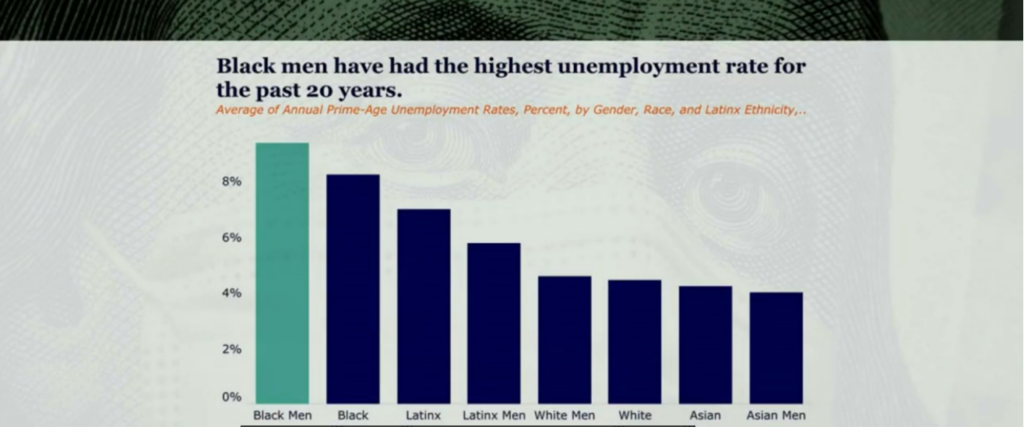
Photos: YouTube Screenshots A new paper from the Center for Economic and Policy Research explores why some of the most common explanations for the low employment rate for Black men do not hold up to scrutiny, and argues that anti-Black discrimination is the most likely explanation for this disparity in the labor market. In the paper – Understanding and Addressing the Extremely Low Employment Rate of Black Men – Algernon Austin observes the low employment rate for prime-age Black men, which averaged 11.4 percentage points below the rate of White men from 2000 to 2025. There have been a range of explanations for this jarring disparity, and Austin examines whether the available data supports these claims. By some accounts, Black workers are thought to be lacking ‘hard skills’ that employers are seeking. Using educational attainment as a proxy for hard skills, the paper shows that this theory comes up short. Black men have a higher educational attainment than Hispanic men, for instance, but have a much lower employment rate. The paper shows that even as the Black male employment rate increases with educational attainment, it is still lower than the White male rate at every level. Taking hard skills out of the equation, when one compares young men (18 to 24 years old) without a high school degree, the employment rate gap between Black workers and White workers actually increases. Similarly, some arguments suggest that Black workers have lower levels of what are known as ‘soft skills’ – the ability to maintain eye contact, carry on friendly conversations with customers, and so on. But again the data do not support this theory; looking at soft skills fields, the employment rate for young Black men (ages 18 to 24) without a high school diploma is roughly the same as that for White men. The advantage that less educated White young men have is in obtaining blue-collar jobs, not the service-sector jobs that require soft skills. Further, the paper shows that these blue-collar jobs where less educated young White men have an advantage are jobs that pay above the overall median wage. This employment rate gap, Austin notes, creates substantial real world impacts. In 2025, Black men ages 16 to 64 needed 1.3 million more jobs to have the same employment rate as White men. This jobs deficit cost Black America roughly $65 billion in lost earnings. The report makes several policy recommendations that could help close this gap, from affirmative action programs that prioritize the recruitment and serious consideration of qualified Black applicants to a national jobs program targeted to communities with low employment rates. In addition, investments in education, especially in early childhood, would yield substantial benefits, as would apprenticeships and other job training programs.
 Black News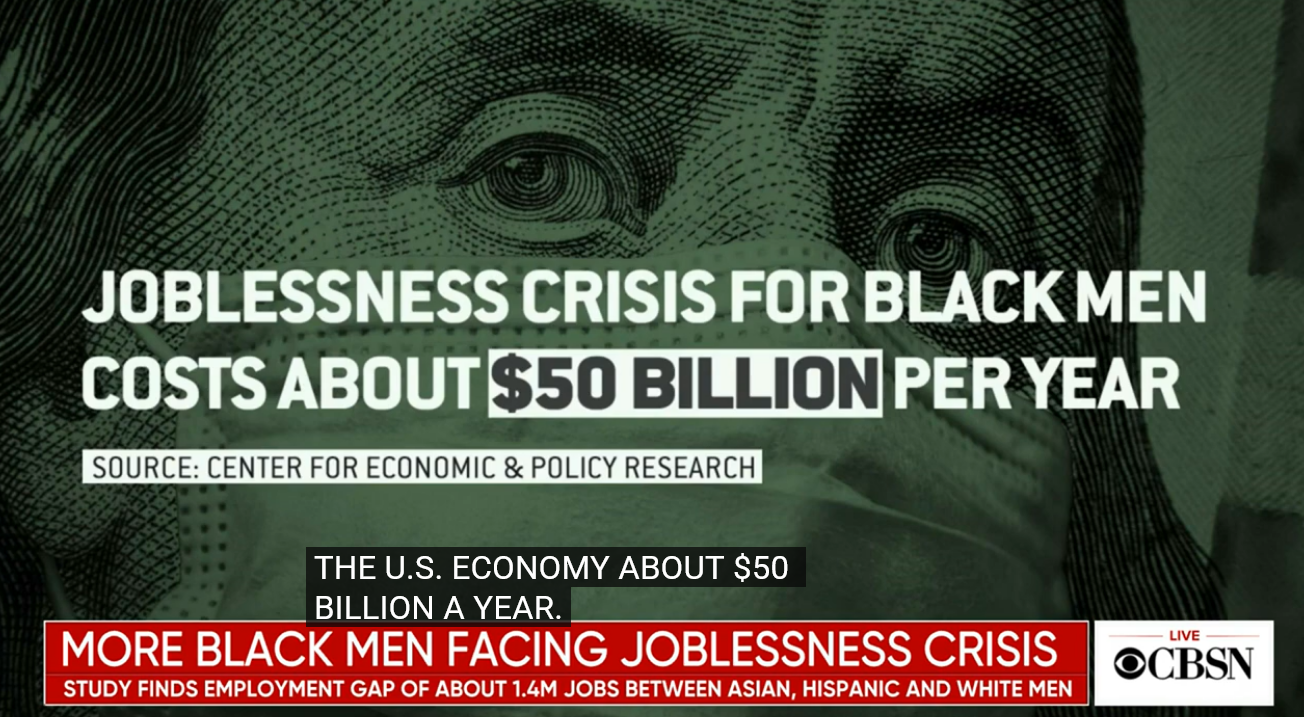
Photos: YouTube Screenshots
A new paper from the Center for Economic and Policy Research explores why some of the most common explanations for the low employment rate for Black men do not hold up to scrutiny, and argues that anti-Black discrimination is the most likely explanation for this disparity in the labor market.
In the paper – Understanding and Addressing the Extremely Low Employment Rate of Black Men – Algernon Austin observes the low employment rate for prime-age Black men, which averaged 11.4 percentage points below the rate of White men from 2000 to 2025. There have been a range of explanations for this jarring disparity, and Austin examines whether the available data supports these claims.
By some accounts, Black workers are thought to be lacking ‘hard skills’ that employers are seeking. Using educational attainment as a proxy for hard skills, the paper shows that this theory comes up short. Black men have a higher educational attainment than Hispanic men, for instance, but have a much lower employment rate. The paper shows that even as the Black male employment rate increases with educational attainment, it is still lower than the White male rate at every level. Taking hard skills out of the equation, when one compares young men (18 to 24 years old) without a high school degree, the employment rate gap between Black workers and White workers actually increases.
Similarly, some arguments suggest that Black workers have lower levels of what are known as ‘soft skills’ – the ability to maintain eye contact, carry on friendly conversations with customers, and so on. But again the data do not support this theory; looking at soft skills fields, the employment rate for young Black men (ages 18 to 24) without a high school diploma is roughly the same as that for White men. The advantage that less educated White young men have is in obtaining blue-collar jobs, not the service-sector jobs that require soft skills. Further, the paper shows that these blue-collar jobs where less educated young White men have an advantage are jobs that pay above the overall median wage.
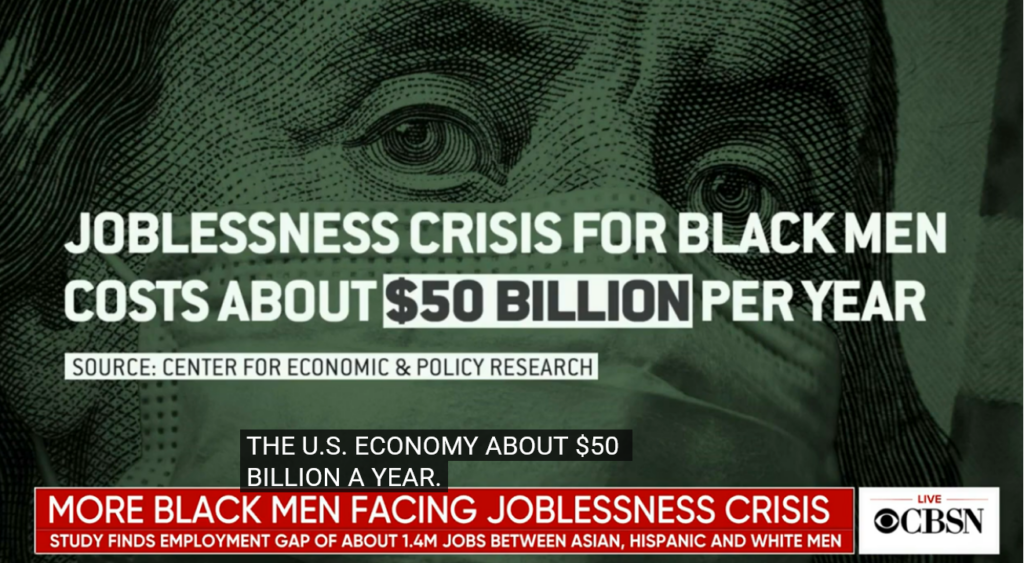
This employment rate gap, Austin notes, creates substantial real world impacts. In 2025, Black men ages 16 to 64 needed 1.3 million more jobs to have the same employment rate as White men. This jobs deficit cost Black America roughly $65 billion in lost earnings.
The report makes several policy recommendations that could help close this gap, from affirmative action programs that prioritize the recruitment and serious consideration of qualified Black applicants to a national jobs program targeted to communities with low employment rates. In addition, investments in education, especially in early childhood, would yield substantial benefits, as would apprenticeships and other job training programs.