Nigeria targets Turkish investors with new deal to unlock $750bn minerals sector
Nigeria has signed a Memorandum of Understanding (MoU) with the Republic of Türkiye to deepen cooperation in its solid minerals sector, opening new opportunities for Turkish investors in a market estimated to hold as much as $750 billion in untapped mineral potential.
 Black News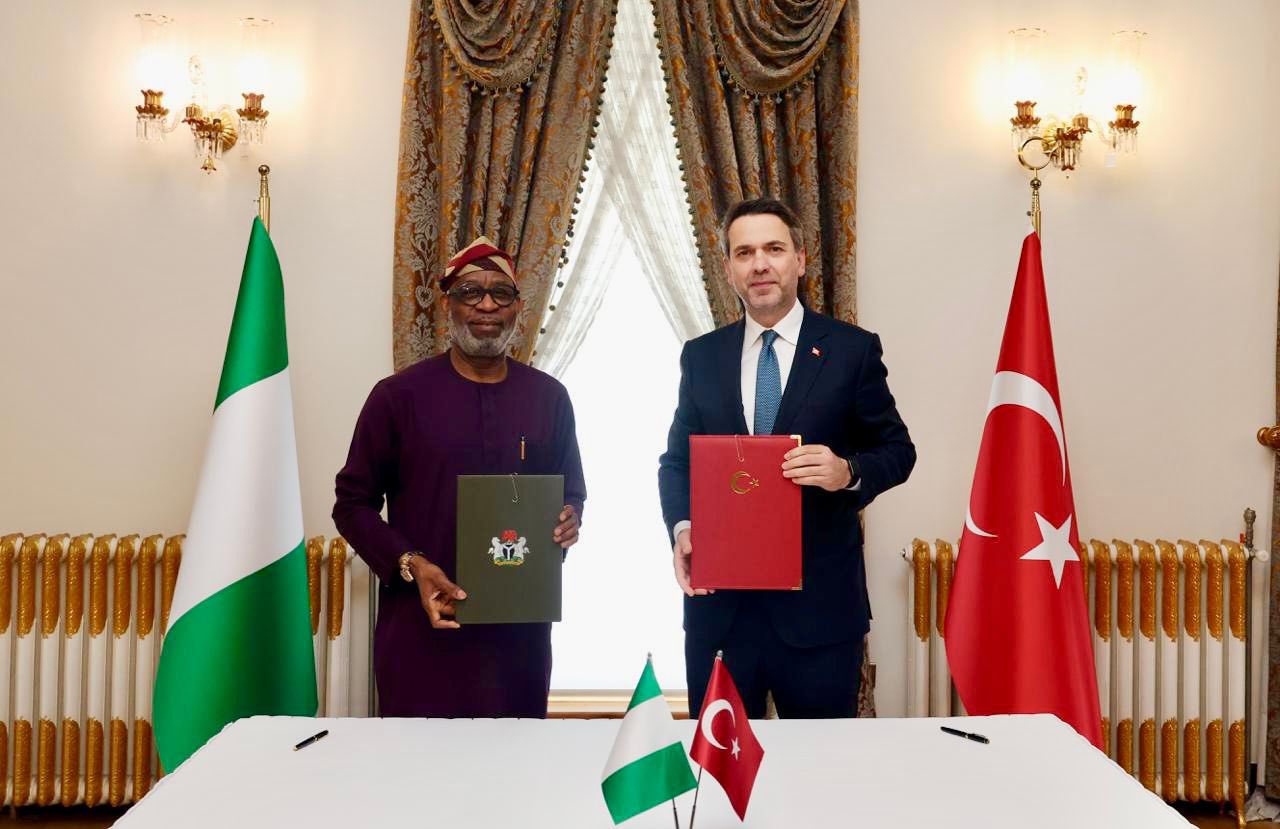

Nigeria has signed a Memorandum of Understanding (MoU) with the Republic of Türkiye to deepen cooperation in its solid minerals sector, opening new opportunities for Turkish investors in a market estimated to hold as much as $750 billion in untapped mineral potential.
- Nigeria has signed an MoU with Türkiye to boost cooperation in the solid minerals sector and attract Turkish investors to its estimated $750 billion mineral market.
- The agreement focuses on mining technology, geological exploration, digital systems, and capacity building, aligning with Nigeria’s industry reforms and transparency goals.
- Nigeria has implemented reforms over the past three years to improve business conditions, fight illegal mining, and increase investor confidence in its mining sector.
- The move comes as African countries increasingly assert control over their resources through stricter regulations and localisation policies.
The agreement is expected to expand collaboration in mining technology, geological exploration, digital systems, and capacity building, as Nigeria seeks to reposition its mining industry as a more structured and investment-friendly sector.
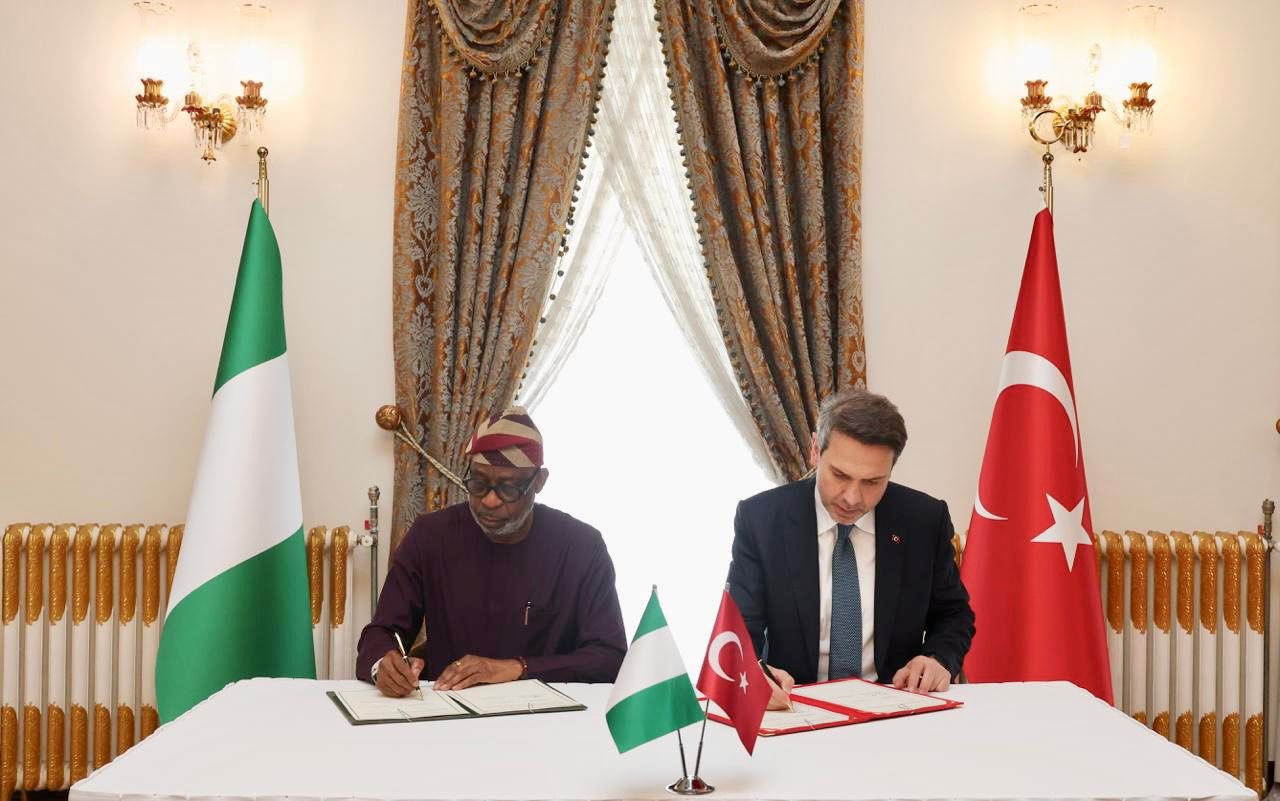
The agreement was signed by Turkish Energy and Natural Resources Minister Alparslan Bayraktar and Nigerian Minister of Solid Minerals Development Oladele Henry Alake on the sidelines of the 2nd Istanbul Natural Resources Summit.
DON'T MISS THIS: Nigeria says it has pulled in $2.6 billion into mining as it seeks US backing to make Africa a global critical minerals hub
According to Nigeria’s Minister of Solid Minerals Development, Dele Alake, the partnership reflects ongoing reforms aimed at improving transparency, strengthening regulation, and attracting serious long-term investors.
"This partnership opens the door to greater collaboration in mining technology, exploration, digitisation, and capacity building. We remain committed to building a mining sector that is transparent, secure, and attractive to serious investors." Alake added.
The Minister further noted that the administration has over the past three years, introduced major reforms, improved the ease of doing business, and intensified the fight against illegal mining.
"These efforts are already restoring investor confidence and driving greater interest in our mining sector." he said
Bayraktar said Türkiye and Nigeria had first signed a mining cooperation agreement in 2021, adding that the latest deal is aimed at transforming the partnership into a more practical and results-driven framework.
“We believe we will take our partnership with Nigeria in energy and natural resources to a much higher level with a win-win approach,” Bayraktar said.
Africa’s shifting resource control strategy
The deal comes at a time when several African economies are tightening control over natural resources through a mix of regulatory reforms, state intervention, and localisation policies.
Countries such as Ghana and Zimbabwe have increasingly asserted greater state influence over mining assets, with Ghana adopting a stricter stance on lease renewals and reviewing major concessions under more rigorous conditions, while Zimbabwe has pushed localisation requirements in key minerals such as lithium and gold to increase domestic value retention.
Industry experts say the trend reflects a broader continental push to ensure that mineral wealth translates into industrial development rather than raw export dependency.
Against this backdrop, Türkiye and China are emerging as two very different external forces shaping Africa’s mining future.
China remains the dominant player, leveraging large-scale state-backed financing, infrastructure-for-resources deals, and deep integration into mineral supply chains across countries such as the Democratic Republic of Congo, Zambia, and Guinea.
Its model is characterised by high-capacity extraction investments and strong control over downstream logistics and processing networks.
DON'T MISS THIS: Nigeria turns to Turkey for investment and security support in $5bn mega deal
Türkiye, however, is positioning itself as a smaller but increasingly active partner, focusing on bilateral cooperation agreements, exploration support, digital mining systems, and technical capacity building rather than direct resource control.
Nigeria’s latest agreement with Ankara reflects this approach, emphasising technology transfer and sector modernisation over ownership of assets.
As competition intensifies for critical minerals, Africa is becoming a strategic arena where China’s scale-driven dominance and Türkiye’s partnership-led expansion are converging on the same objective: securing long-term access to the continent’s mineral wealth.