Opinion | Capital Authoritarianism in the United States: How Power Reshapes Modern Media
Stephen Colbert’s famous late-night show on CBS has officially come to an end. While CBS publicly framed the decision in terms of ratings and creative direction, the timing immediately ignited political controversy across American media circles. Many commentators linked the cancellation to growing tensions surrounding Colbert’s relentless satire of Donald Trump and the increasingly polarized […] The post Opinion | Capital Authoritarianism in the United States: How Power Reshapes Modern Media first appeared on Dailynewsegypt.
 Black News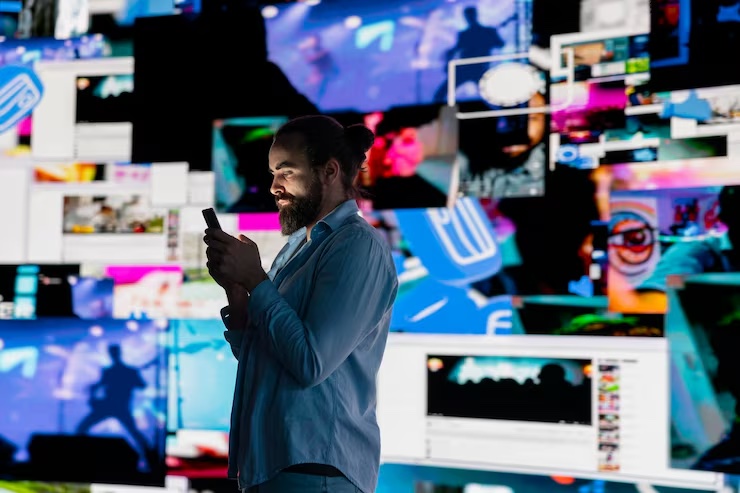
Stephen Colbert’s famous late-night show on CBS has officially come to an end. While CBS publicly framed the decision in terms of ratings and creative direction, the timing immediately ignited political controversy across American media circles. Many commentators linked the cancellation to growing tensions surrounding Colbert’s relentless satire of Donald Trump and the increasingly polarized climate inside US media institutions.
In many authoritarian states, such news would hardly attract attention. Satirists disappear, critical voices are pushed aside, and media institutions gradually adapt themselves to power. But in the United States — a country that long presented itself as the global symbol of free speech and political satire — the implications feel far more serious.
This is no longer simply about one television host or one network decision. It raises a far more dangerous question: What happens when political power and financial power begin merging into a single force capable of reshaping public discourse itself?
Democracies rarely collapse overnight. More often, they erode gradually through fear, economic pressure, institutional dependency, and silent self-censorship. Today, a new form of control appears to be emerging inside modern democracies: Capital Authoritarianism.
Under this model, censorship no longer arrives through explicit government bans. Instead, economic networks, corporate interests, advertisers, platform owners, and politically connected institutions perform the task indirectly. The result is more sophisticated — and perhaps more dangerous. No one officially prohibits speech, yet dissent slowly becomes professionally costly, financially risky, and institutionally inconvenient. Silencing criticism is transformed from a political act into a corporate calculation.
Early signs of this transformation have already appeared within American universities, where funding pressures and political polarization increasingly shape academic expression. Many institutions now navigate sensitive political topics with growing caution, fearing backlash, donor pressure, or reputational attacks. Today, the same pattern appears to be expanding into entertainment and journalism.

The cancellation of controversial programs, the quiet removal of politically sensitive content by streaming platforms, advertiser-driven editorial caution, and the increasing vulnerability of journalists and comedians to organized political backlash all point toward the same phenomenon: a media environment where survival itself increasingly depends on avoiding confrontation with powerful political and economic forces.
What makes this especially alarming is that satire has always occupied a sacred place within American democratic culture. Political comedy in the United States was never merely entertainment. It functioned as a democratic pressure valve — a way to challenge authority, dismantle political mythology, and keep power exposed to public ridicule.
When comedians begin fearing for their careers because of political satire, the issue extends far beyond television. It signals a deeper transformation within the democratic sphere itself.
The irony is profound. The digital revolution that promised unlimited freedom of expression has simultaneously concentrated unprecedented influence in the hands of a small number of corporations and platform owners. Today, companies such as Facebook, YouTube, and X (formerly Twitter) no longer merely host public discourse — they shape it.
Through demonetization, algorithmic suppression, visibility controls, and content moderation systems, these platforms possess enormous power over which voices become profitable, visible, or marginalized. This is what makes modern “Capital Authoritarianism” uniquely dangerous: it does not openly imprison speech; it simply raises the cost of dissent until many voices silence themselves voluntarily.
For this reason, what is happening in the United States should not be viewed as an isolated American controversy. It may instead represent a global warning sign.
The central challenge facing modern democracies is no longer only state censorship. It is the growing alliance between political influence, technological control, and concentrated capital power. Because once the media begins fearing economic punishment more than it values free expression, democracy may continue to exist institutionally while slowly disappearing in practice.
Dr. Marwa El-Shinawy – Academic and Writer
The post Opinion | Capital Authoritarianism in the United States: How Power Reshapes Modern Media first appeared on Dailynewsegypt.