SADC Summit: Senior officials urged to tackle security, economic and climate challenges
IOL South Africa formally assumed the chairpersonship of the Southern African Development Community (SADC) Standing Committee of Senior Officials on Thursday, with Ambassador Tebogo Seokolo saying the regional bloc must confront financial pressures, regional security challenges and improve the implementation of its decisions. Addressing the opening of the Senior Officials Meeting of the 46th Ordinary Summit […] The post SADC Summit: Senior officials urged to tackle security, economic and climate challenges appeared first on NewZimbabwe.com.
 Black News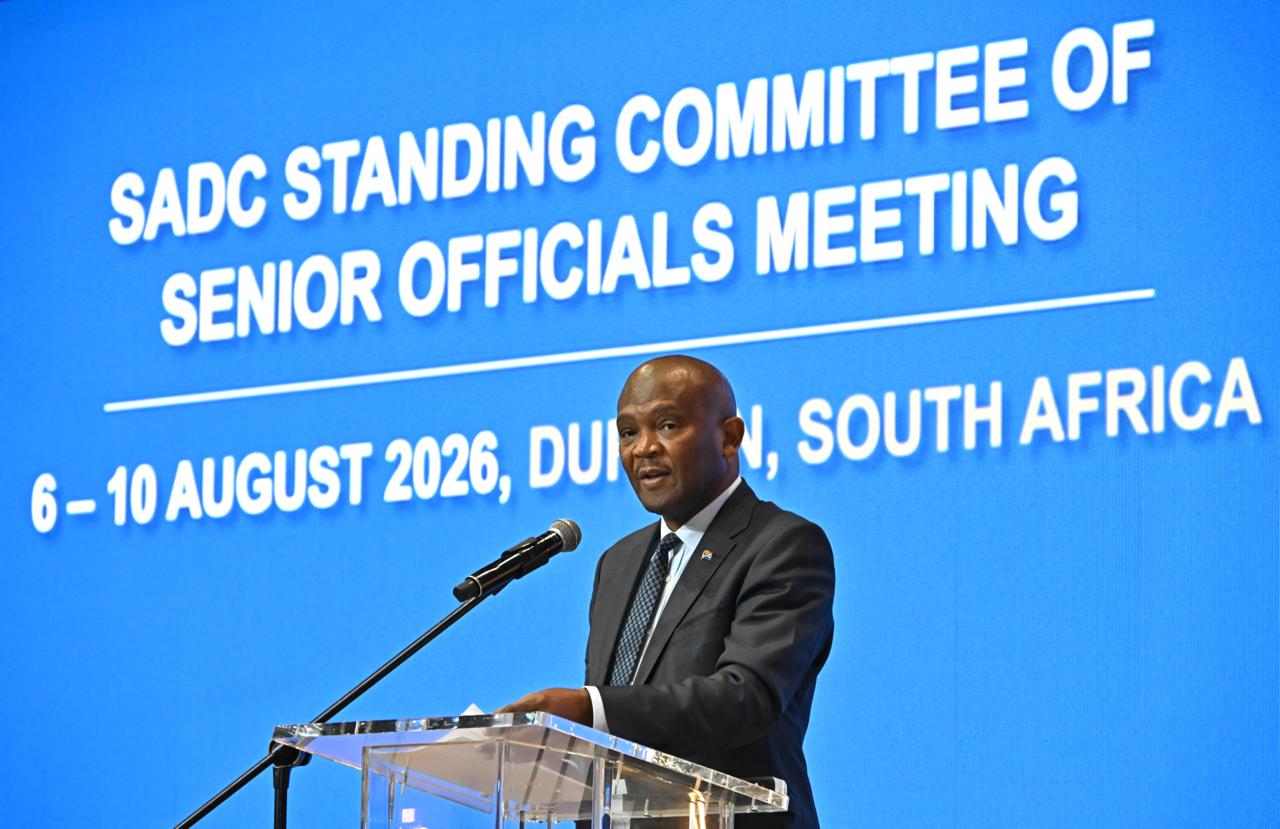

IOL
South Africa formally assumed the chairpersonship of the Southern African Development Community (SADC) Standing Committee of Senior Officials on Thursday, with Ambassador Tebogo Seokolo saying the regional bloc must confront financial pressures, regional security challenges and improve the implementation of its decisions.
Addressing the opening of the Senior Officials Meeting of the 46th Ordinary Summit of SADC Heads of State and Government in Durban on Thursday, Seokolo said South Africa accepted the responsibility with “humility, a deep sense of duty, and an unwavering commitment to the principles and aspirations that unite us as the Southern African Development Community”.
The Standing Committee of Senior Officials is responsible for preparing recommendations for consideration by the SADC Council of Ministers and plays a key role in translating regional policies into implementation.
Seokolo said South Africa’s assumption of the chairpersonship followed its interim leadership of SADC after developments affecting Madagascar, describing the transition as a reflection of the resilience of the regional institution.
“Today marks our formal assumption of the substantive Chairship. This transition is not merely ceremonial; rather, it reaffirms the resilience of our regional institutions and our collective commitment to ensuring continuity in the work of SADC, irrespective of the challenges we may encounter,” he said.
He expressed appreciation to Zimbabwe for its “remarkable sense of camaraderie, solidarity, and selfless leadership” in ensuring continuity in SADC’s work during the transition period, including hosting several statutory meetings.
Seokolo also acknowledged Zambia’s role as incoming chair of SADC, saying South Africa looked forward to working with Zimbabwe, Zambia and other member states in advancing the region’s agenda.
Seokolo said the committee’s responsibility extended beyond discussions, as officials were expected to ensure that SADC decisions were practical, measurable and capable of being implemented.
“We are entrusted with ensuring that the Council of Ministers receives strategic, well-considered and implementable recommendations. We serve as the bridge between policy formulation and implementation,” he said.
Seokolo said the quality of the officials’ work would determine how quickly regional commitments translated into tangible improvements for citizens across Southern Africa.
“The quality of our work will therefore determine not only the effectiveness of the Council’s deliberations, but ultimately the pace at which our regional commitments are translated into tangible improvements in the lives of our people,” he said.
He said the agenda before senior officials reflected an increasingly complex regional and global environment.
“The agenda before us is both extensive and consequential. It reflects the breadth of the regional integration programme and the growing expectations placed upon our Community to respond effectively to an increasingly complex regional and global environment, which is characterised by geopolitical uncertainty, economic volatility, climate-related shocks, public health challenges, and evolving peace and security threats,” Seokolo said.
Among the issues facing the regional bloc, Seokolo highlighted financial sustainability, saying SADC’s finances remained under pressure due to difficult fiscal conditions affecting member states and declining donor support.
Regional peace and security would also remain a priority, particularly due to continued instability in the eastern Democratic Republic of Congo (DRC).
“Peace and security remain among our greatest preoccupations, particularly in light of the continuing destabilisation of social and economic livelihoods in the eastern Democratic Republic of the Congo,” Seokolo said.
He also expressed South Africa’s condolences following deaths linked to the Ebola outbreak in the DRC and reaffirmed solidarity with the Congolese government and people.
Seokolo said industrialisation remained central to SADC’s efforts to drive economic transformation, create employment and achieve shared prosperity.
He said this required continued investment in infrastructure development, trade integration, food and nutrition security, energy security, climate resilience, public health, gender equality, youth empowerment and stronger institutions.
The senior officials’ meeting will also consider issues related to strengthening monitoring and reporting systems, resource mobilisation, sustainable financing and reforms aimed at improving the effectiveness of SADC institutions.
Seokolo said officials had spent significant time refining mechanisms to improve the quality and implementation of SADC decisions.
He said the region’s future depended on strengthening co-operation among member states and ensuring that SADC’s programmes translated into tangible benefits for communities.
“Over decades, SADC remained a symbol of solidarity, collective self-reliance and regional co-operation,” Seokolo said.
He urged delegates to approach the meeting in a spirit of co-operation and consensus.
“Let us approach every agenda item not simply as representatives advancing the narrow interests of our respective member states, but as custodians of the collective spirit and shared future of our region,” he said.
The post SADC Summit: Senior officials urged to tackle security, economic and climate challenges appeared first on NewZimbabwe.com.