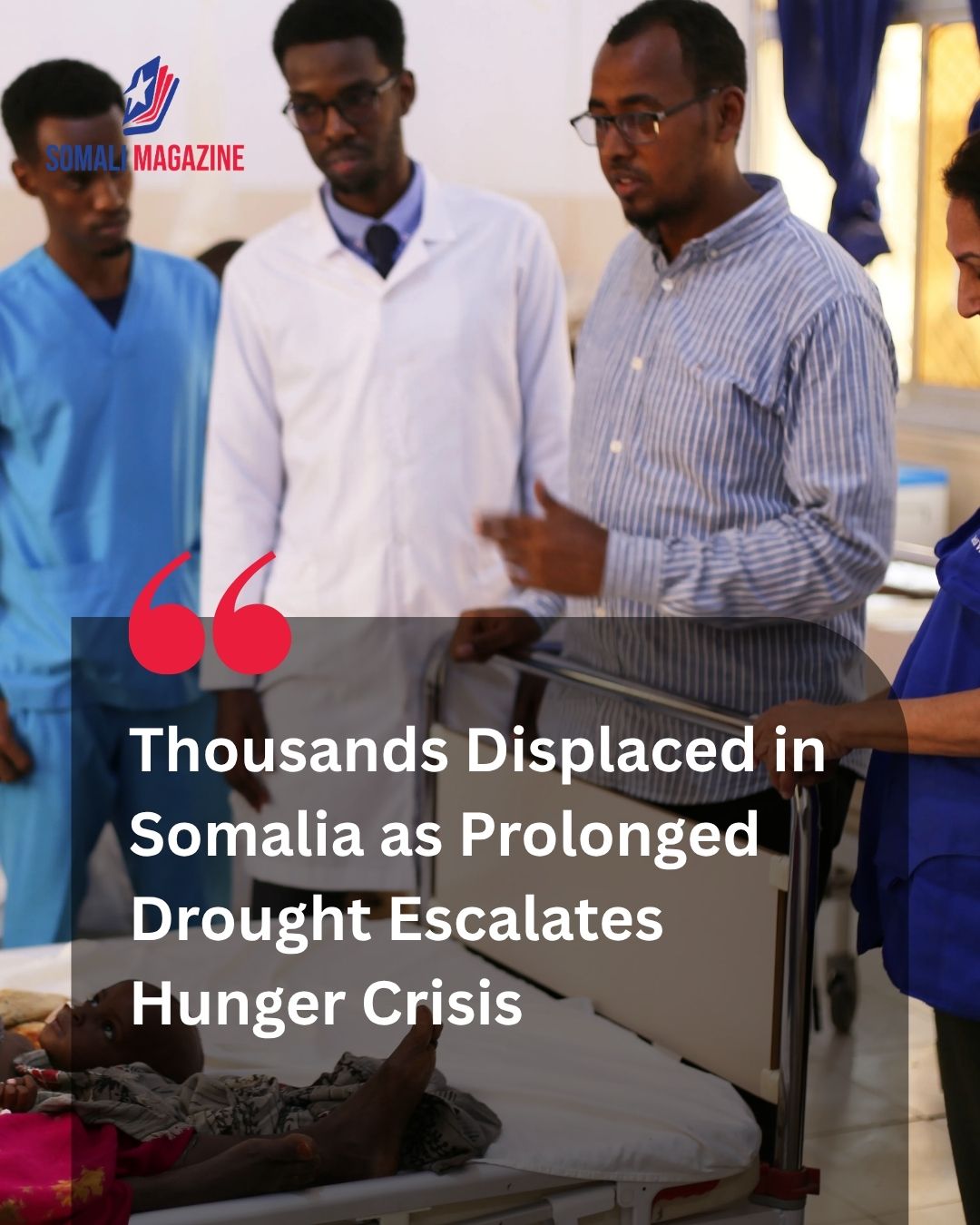
Driven from rural communities by relentless climate shocks and depleted resources, thousands flee yearslong drought in Somalia as hunger deepens and aid shrinks across the Horn of Africa. According to international relief agencies and the Somali Disaster Management Agency, prolonged dry spells, compounded by persistent insecurity and economic pressures, have forced hundreds of thousands of farming and pastoralist families to abandon their homes in search of water and emergency food supplies. Displaced residents from regions such as Middle Jubba, Bay, Bakool, and Gedo continue to stream into urban displacement hubs like Baidoa, where makeshift informal settlements are rapidly expanding beyond operational capacity.
Humanitarian organizations report that approximately two million people in Somalia are currently experiencing emergency levels of food insecurity, marking a sharp increase compared to previous evaluations. Data from global hunger monitoring systems indicate that nearly half of all children under five across the country face acute malnutrition, leaving local healthcare workers and regional nutrition wards overwhelmed. Relief teams operating in central and southern regions note that multiple consecutive years of failed crop harvests and widespread livestock mortality have exhausted community coping mechanisms, leaving displaced families reliant on diminishing external aid.
The escalating displacement crisis is further complicated by severe global funding shortfalls and steep reductions in humanitarian assistance budgets. Organizations such as Plan International highlight that essential services in urban camps, particularly the commercial trucking of drinking water, remain severely constrained, leaving roughly one in five displaced families without reliable water access. Furthermore, aid directors warn that the fragile situation could be severely exacerbated by impending climate shifts, as meteorologists forecast a high probability of El Niño conditions bringing extreme rainfall and destructive flooding later in the year.
In response to the deteriorating conditions, federal authorities and international non-governmental organizations are urgently appealing to donor nations for immediate capital injections to support frontline operations. Medical personnel in regional field centers report that in addition to nutritional deficits, displaced children are increasingly vulnerable to waterborne and vaccine-preventable disease outbreaks. As local municipalities struggle to absorb incoming arrivals, international humanitarian leaders reiterate that thousands flee yearslong drought in Somalia as hunger deepens and aid shrinks, underscoring the vital need for sustained global intervention to avert a widespread catastrophe.

 Black News