South-South media needs its own climate narrative, says Tsinghua Prof
South-South media needs its own climate narrative, says Tsinghua Prof
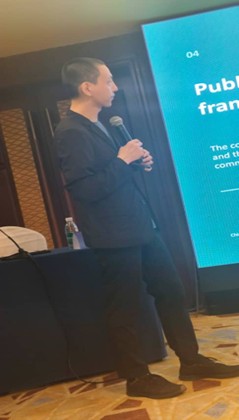
Speaking at the CGTN & CIDCA Global Development Initiative International Media Training Programme, Prof. Zeng, Director of the Center for Climate Communication and Risk Governance, argued that climate reporting should be framed as a story of *responsibility and transformation*, not just emissions.
“Environmental protection is easy to understand,” Prof. Zeng said. “But we have relied on the old model of economic development for too long. Now we are moving to a new step with less impact.”
He pointed to China’s green sector as a new growth engine. Examples include EV batteries, electricity storage, and new grid systems that improve energy security. By relying less on fossil fuels and building a cleaner energy system, China is also enhancing energy resilience.
China’s “dual carbon” goals, peak emissions by 2030 and carbon neutrality by 2060 are often reported as targets. But Prof. Zeng suggested a different reporting cue: start not with China as a “mentor,” but with the transformation problems China itself is trying to solve.
“Green development has different dimensions,” he noted. “Environmental protection is just one layer. There are also industry upgrading, energy security, and social impacts.”
Since 2020, China has become more active in global climate governance. Prof. Zeng described a shift “from left to right, from a rule-taker to a solution provider.”
At COP and other forums, China now runs a “China Corner” with events and negotiations. Beyond diplomacy, China is spreading technology and market solutions especially EVs, renewable capacity, and clean tech to other countries.
“In China’s media today, we talk more about solutions,” he said. “What kind of new solutions can we have to tackle this challenge?”
But this transition also brings challenges. Prof. Zeng noted the issue of “just transition” in China, where rapid industrial change creates tension over who benefits and who pays. “A credible story is not a perfect story,” he said. “It has tension in it.”
This is where South-South cooperation becomes critical, Prof. Zeng argued. He added that many countries in the Global South face more severe development and adaptation challenges. "They are also more likely to face justice problems, with vulnerable groups and affected communities hit first and hardest."
“Global South media needs its own climate narrative,” Prof. Zeng said. That narrative should not simply copy Western frames focused on mitigation and targets. Instead, it should connect climate to development needs, adaptation, technology transfer, and equity.
Prof. Zeng concluded by stating that a strong South-South climate narrative will help ensure the voices of the most affected countries are heard, and that climate action is understood not just as an environmental issue, but as a development issue.
Speaking at the CGTN & CIDCA Global Development Initiative International Media Training Programme, Prof. Zeng, Director of the Center for Climate Communication and Risk Governance, argued that climate reporting should be framed as a story of *responsibility and transformation*, not just emissions.
“Environmental protection is easy to understand,” Prof. Zeng said. “But we have relied on the old model of economic development for too long. Now we are moving to a new step with less impact.”
He pointed to China’s green sector as a new growth engine. Examples include EV batteries, electricity storage, and new grid systems that improve energy security. By relying less on fossil fuels and building a cleaner energy system, China is also enhancing energy resilience.
China’s “dual carbon” goals, peak emissions by 2030 and carbon neutrality by 2060 are often reported as targets. But Prof. Zeng suggested a different reporting cue: start not with China as a “mentor,” but with the transformation problems China itself is trying to solve.
“Green development has different dimensions,” he noted. “Environmental protection is just one layer. There are also industry upgrading, energy security, and social impacts.”
Since 2020, China has become more active in global climate governance. Prof. Zeng described a shift “from left to right, from a rule-taker to a solution provider.”
At COP and other forums, China now runs a “China Corner” with events and negotiations. Beyond diplomacy, China is spreading technology and market solutions especially EVs, renewable capacity, and clean tech to other countries.
“In China’s media today, we talk more about solutions,” he said. “What kind of new solutions can we have to tackle this challenge?”
But this transition also brings challenges. Prof. Zeng noted the issue of “just transition” in China, where rapid industrial change creates tension over who benefits and who pays. “A credible story is not a perfect story,” he said. “It has tension in it.”
This is where South-South cooperation becomes critical, Prof. Zeng argued. He added that many countries in the Global South face more severe development and adaptation challenges. "They are also more likely to face justice problems, with vulnerable groups and affected communities hit first and hardest."
“Global South media needs its own climate narrative,” Prof. Zeng said. That narrative should not simply copy Western frames focused on mitigation and targets. Instead, it should connect climate to development needs, adaptation, technology transfer, and equity.
Prof. Zeng concluded by stating that a strong South-South climate narrative will help ensure the voices of the most affected countries are heard, and that climate action is understood not just as an environmental issue, but as a development issue.


 Black News