Supreme Court Ruling Puts Congresswoman Terri Sewell’s Alabama District at Risk
 Black News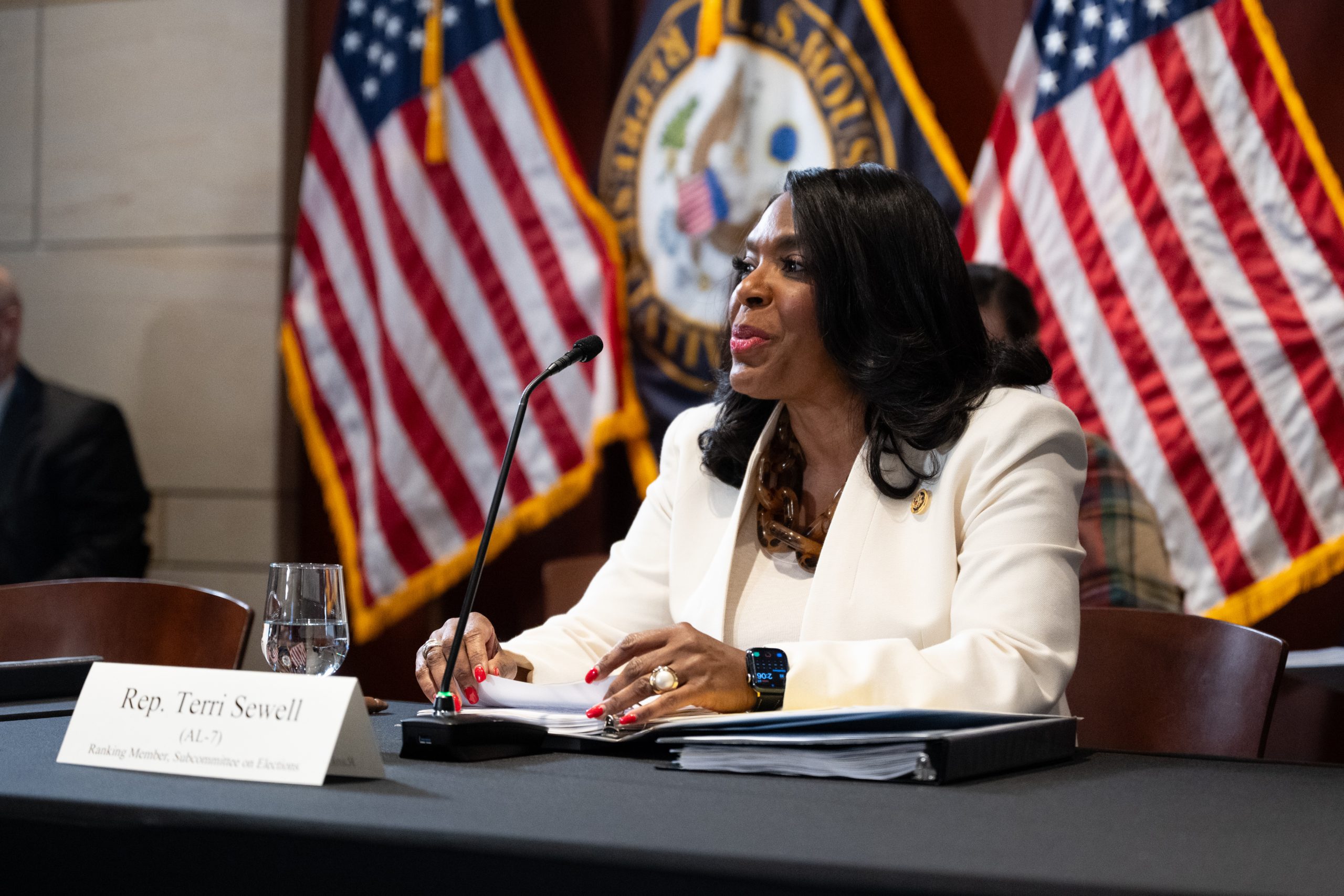
Second of Three Parts
By Mia Watkins | For the Birmingham Times
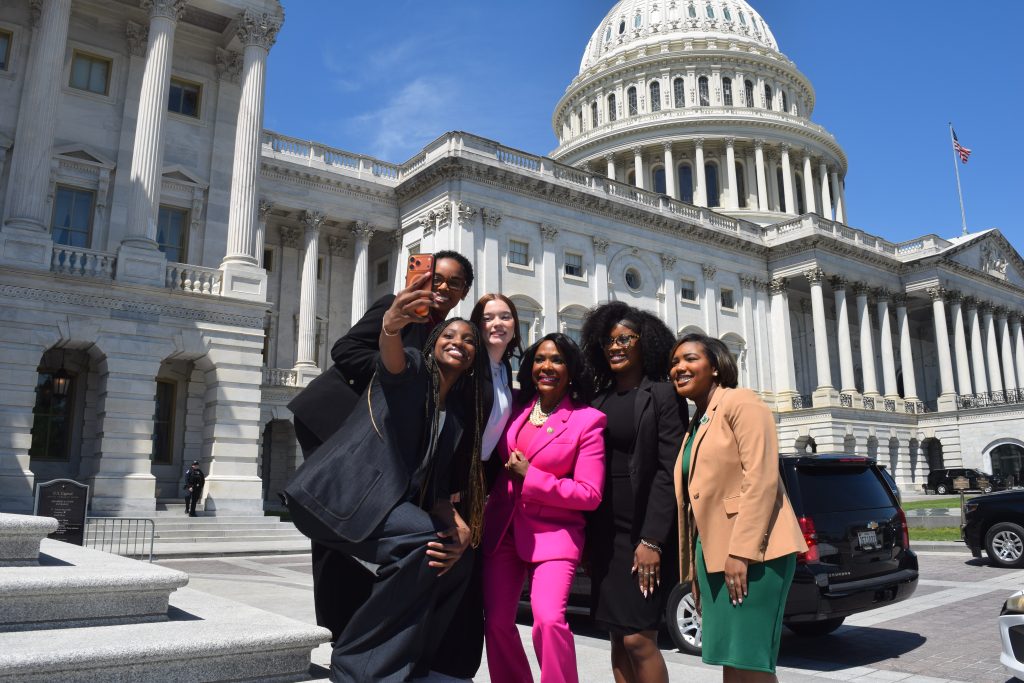
The U.S. Supreme Court’s decision in a case that gutted Section Two of the landmark Voting Rights Act is throwing Alabama congressional districts into uncertainty, including District 7, represented by Congresswoman Terri Sewell.
“The Supreme Court decision means that partisan gerrymandering is OK, as long as you are gerrymandering for political reasons, even if the result takes away or dilutes the voting power of Black and minority voters,” Sewell said. “That is a slap in the face of generations of our foremothers and forefathers that fought for the right to vote right here in Alabama.”
Section Two increased minority representation in Congress. The Supreme Court’s decision struck down a majority-Black district in Louisiana that was established based on the section, saying it relied too heavily on race. Justice Samuel Alito called the map that included the district an “unconstitutional gerrymander.”
In the days following the blow to what some call the crowning achievement of the Civil Rights Movement of the 1960s, Republicans in several southern states, including Alabama, have been calling for congressional redistricting, primarily affecting districts representing minority voters.
The Alabama legislature passed two bills that trigger a special election in August in Districts 1, 2, 6, and 7 now that the Supreme Court has lifted a blockage of a 2023 congressional map. The map was initially blocked because it did not include a second majority-Black district. This led to the creation of District 2 and the election of Rep. Shomari Figgers.
The election could result in Sewell having to vacate her seat, which she has held since 2011 as the first Black woman elected to Congress from Alabama.
During her time in office, Sewell launched Project R.E.A.D.Y., a job readiness program for the district, hosted an annual job fair for the past 14 years for constituents, helped secure a $20 million TIGER grant for public transportation in Birmingham and helped the city secure a federal tech hub designation.
‘We Cannot Go Back’
“Taking race completely out of the equation harms those communities that are not the majority,” said Alabama State Senator Merika Coleman. “That’s not just African Americans, but other communities of color being able to choose their candidates, especially in the southern states that have that history of discrimination, that history of marginalization, the history of disenfranchisement.”
The fight dates back to the Reconstruction Era, according to Sewell.
“It was so pervasive in the state of Alabama and in the Deep South that from Reconstruction until 1992, with Earl Hilliard being elected, is 115 years of no representation, Black people had no representation in Congress,” she said. “It’s just bonkers, we cannot go back to the day when African Americans make up 29-percent of the vote in Alabama, and they have no representation.”
The decision could trickle down to state offices as well, according to Coleman.
“We are already in a super-minority,” she said. “Out of 140 members, we only have 35 African Americans and 38 Democrats. How much more do these people want?”
Sewell’s mentor and former federal judge, U.W. Clemon, said the Supreme Court stated that it was not overturning the court’s previous decision about Alabama congressional maps.
“We are, I think, protected on that ground,” he said. “And there was an issue presented in our case that the Supreme Court did not address. We had an argument or position that the state should have used what is known as the whole county concept in drawing congressional districts. The Alabama Constitution requires the legislature to keep counties whole in redistricting.”
Clemon represents state senator Bobby Singleton in a lawsuit that eventually led to Rep. Figures’ district being established, giving Alabama two Black members of Congress for the first time.
Clemon, who has been in the redistricting fight since he was in law school in the late 60s, doesn’t think that the state will be successful in its redistricting efforts.
“As we stand today, the districts are protected,” he said.
He filed a motion on May 5 that requires Secretary of State Wes Allen to show why he shouldn’t be held in contempt because the state promised in 2025 that they wouldn’t try to change District 7 and 2 until after the 2030 Census.
“They put it in writing,” he said. “And here it is less than a year later, they go back on their word and are trying to change it.”
For Sewell’s part, she has called on Congress to protect the voices of minority voters in the U.S. and is working on retooling the John R. Lewis Voting Rights Advancement Act. She also said that everyone has a part to play in fighting disenfranchisement.
“We have to vote like we’ve never voted before,” she said. “We’ve got to use every tool in the toolkit, which means we have to organize, we have to register folks to vote. When you think about the fact that half a million folks just sit at home and don’t vote in Alabama, we’ve got to activate these people. We’ve got to remind them that our vote is our power. They wouldn’t be working this hard to take away the vote if it wasn’t that important.”