Tanzania’s sole billionaire seeks a $100 million role in Africa's richest man's $17 billion project
The richest man in Tanzania, Mohammed Dewji, seeing Dangote’s refinery expansion in East Africa, has decided to get in on the action.
 Black News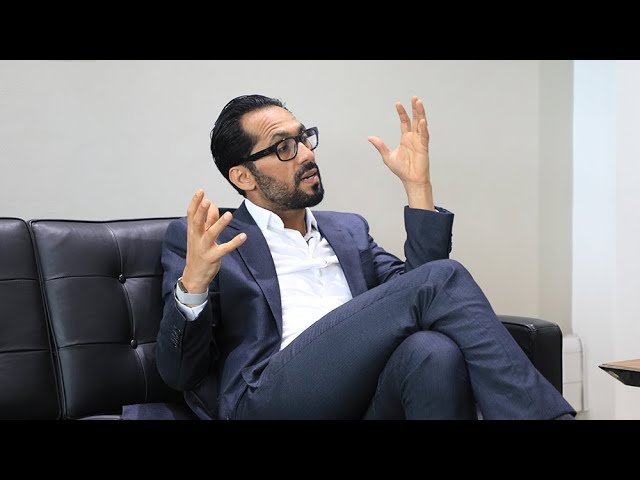

The richest man in Tanzania, Mohammed Dewji, seeing Dangote’s refinery expansion in East Africa, has decided to get in on the action.
- Tanzania's richest man, Mohammed Dewji, plans to invest $100 million in Aliko Dangote's proposed refinery project in Kenya.
- Dewji expressed a preference for investing in Tanzania but is open to co-investing in Kenya and plans to reach out to Dangote.
- Dangote's refinery project in Kenya is expected to start this year, attracted significant investor interest, and will be funded through a mix of local funds, bonds, and an IPO.
- The planned refinery in Kenya would be among East Africa's largest industrial projects, with an estimated cost between $15 and $17 billion.
The Tanzanian billionaire recently disclosed his intentions to invest $100 million in Dangote’s planned refinery in Kenya.
“I have spoken to Aliko; what he is doing in Nigeria is unbelievable, and as a matter of fact, I will also reach out to him, that if he's putting a refinery in East Africa, I will co-invest," the Tanzanian billionaire stated.
"I would lean more toward Tanzania than in Kenya,” Dewji said in an interview on Thursday, as seen on Bloomberg.
However, he did not rule out his participation should Dangote select a location within the region's largest economy.
A Dangote executive said there was plenty of investor interest in the project, which Kenyan President William Ruto expects to begin this year.
According to an official, the project has generated substantial investor interest.
“So many potential investors have been approaching us,” the executive said.
Mo Dewji’s $100 million pledge to Dangote reflects his confidence in the East African regional market, particularly Kenya.
In May, it was reported that MeTL Group, owned by Tanzanian billionaire Mohammed “Mo” Dewji, is building a $50 million soft drinks plant in Mombasa to produce Mo Cola, Mo Xtra and Mo Malto, with plans to sell Mo Cola at a fraction of Coca-Cola’s retail price.
Against this backdrop, PepsiCo would gain a second independent production base in Kenya once Varun Beverages begins manufacturing carbonated soft drinks at the Nakuru facility.
Given the impending establishment of the Dangote refinery in Kenya, it is logical for the Tanzanian billionaire to serve as a major investor in a market with which he is highly familiar.
Dangote refinery in Kenya
![L-R: Africa's richest man and founder of Dangote Group, Aliko Dangote and President William Ruto of Kenya. [X, formerly Twitter/William Ruto]](https://ocdn.eu/pulscms/MDA_/1c29a8db725dca6a71195ea47b5ec58b.jpg)
A few days back, Aliko Dangote unveiled his plans on financing his proposed refinery in Kenya, offering new insight about one of the continent's most ambitious energy projects.
He noted that the refinery will be funded using a combination of domestically generated funds, bonds, and revenues from the Dangote Petroleum Refinery's scheduled initial public offering (IPO).
The proposed listing is said to have attracted significant investor interest since Dangote announced plans to float a stake in the refinery.
However, no official offer has yet been launched, and Nigeria's Securities and Exchange Commission recently clarified that it has not received or approved an IPO application.
DON'T MISS THIS: Africa’s richest man crosses the $35 billion mark, standing as the world's 65th richest person
In May, Dangote disclosed in an interview with the Financial Times that he is looking to establish a refinery in East Africa, preferably Kenya’s coastal city of Mombasa owing to its large port and strong fuel demand.
According to The Financial Times, the proposed refinery would be one of East Africa's greatest industrial projects, costing between $15 and $17 billion.
It would outperform Uganda's collaboration with UAE-based Alpha MBM Investments, which is building a $4 billion refinery with a capacity of 60,000 barrels per day in Kabaale, Hoima District, with plans to begin operations in late 2029 or early 2030.
East and Central Africa now have only one functioning refinery, in contrast to South Africa's seven, North Africa's twenty-one, and West Africa's fourteen.