Tish Murtha’s searing documentation of broken Britain
Vandalism on a Grand Scale — Capturing youth unemployment and poverty in north-east England during the ’80s, the photographer never lived to see her work published. A new photobook by British Cultural Archive brings her eye-opening work to light.
 Black News
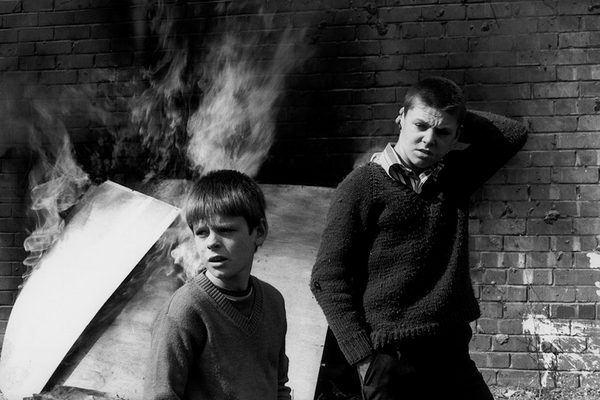
Vandalism on a Grand Scale — Capturing youth unemployment and poverty in north-east England during the ’80s, the photographer never lived to see her work published. A new photobook by British Cultural Archive brings her eye-opening work to light.
The horrors of Victorian England continued long after the eponymous sovereign’s death, with swaths of the nation struggling against a Dickensian fate well into the 20th century. But photographer Tish Murtha (1956-2013) would not go down without a fight. With the publication of Vandalism on a Grand Scale (British Cultural Archive), Murtha’s impassioned vision and voice searing with rage against the machine is restored to its rightful place.
The book pairs Murtha’s photographs with her powerful Youth Unemployment essay, her words echoing from beyond the grave: “Behind empty pathetic talk of increased leisure opportunities and freedom from repetitive labour stands the spectre of enforced idleness, wasted resources and the squandering of human potential,” Murtha wrote. “This is vandalism on a grand scale.”
The publication of the book coincides with the new exhibition, Tish Murtha & Kuba Ryniewicz: Close to Home at the Baltic Centre for Contemporary Art in Gateshead, reaching a new generation who refuse to look away. “Tish wasn’t interested in softening reality,” says Paul Wright, Founder of the British Culture Archive (BCA). “The photographs deal with unemployment, poverty, inequality and the consequences of political decisions. They ask difficult questions. She wasn’t simply making images. She was making a record of the injustice she saw around her.”
Murtha carried this knowledge from a young age as the third of 10 children born to Irish Catholic parents. The family moved to the West End of Newcastle, where they lived in a council house in Elswick, then dubbed “the worst square mile in England”. Her father walked the streets picking scrap, compelling the children to work alongside him as soon as they were old enough.
After leaving school at 16, Murtha worked various low level jobs. Then one day she happened upon a camera in an abandoned building and everything changed. With encouragement and support, she applied to study with Magnum Photos member David Hurn at his newly established School of Documentary Photography at The University of Wales, Newport, in 1976. The admissions interview went quicker than most. When Hurn asked why Murtha wanted to be a photographer, she told him, “I want to take pictures of policemen kicking children.” With those words, she was in.
In 1979, Murtha began the series, Youth Unemployment, chronicling the brutal landscape in which her family lived at the dawn of the Thatcher regime. Her poignant, poetic scenes of love and survival set against a backdrop of economic collapse were first exhibited at the Side Gallery in Newcastle. But Murtha never lived to see the work published, dying destitute at the age of 56 in 2013.


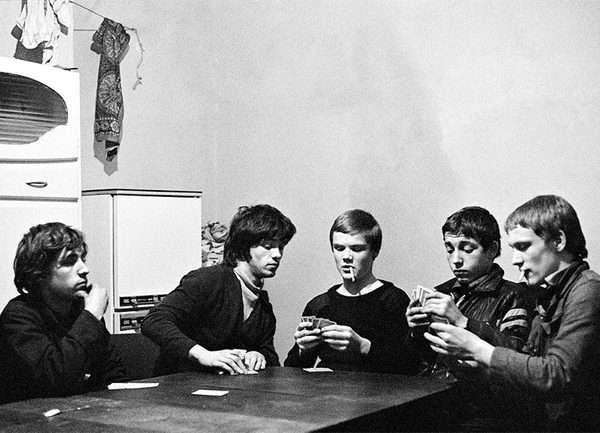
Her daughter, Ella Murtha, took up the mantle and lead the charge, publishing Youth Unemployment in 2017. It marked a turning point, not just in Tish Murtha’s posthumous career, but for Wright, who first saw it shortly after setting up BCA. “I was in my late thirties and spent a lot of time looking for photography that I felt needed more attention, particularly by overlooked photographers,” he says. “The photographs blew me away. What struck me most was how real it felt. I couldn’t understand why it wasn’t more widely known. That really stayed with me.”
Nature abhors a vacuum, and so does Wright. He contacted Ella Murtha, and in 2019 they collaborated on an exhibition at The Social in 2019. “Since then we’ve worked together across exhibitions, publishing projects, print releases and archive development,” Wright says. “The idea for Vandalism on a Grand Scale came from a feeling that Youth Unemployment deserved to be back in print in a serious and accessible form. For me, publishing isn’t just about reproducing photographs. It’s about ensuring important work remains visible.”
Tish Murtha & Kuba Ryniewicz: Close to Home is on view 4 July 2026 – 4 April 2027 at the Baltic Centre for Contemporary Art in Gateshead, England. Vandalism on a Grand Scale by Tish Murtha is published by British Cultural Archive.
Miss Rosen is a freelance arts and photography writer, follow her on X.
Buy your copy of Huck 83 here.
Enjoyed this article? Follow Huck on Instagram for more from the cutting edge of sport, music and counterculture.
Support stories like this by becoming a member of Club Huck.