Tech, Policy, Trauma and and Economic Security in Entrepreneurship
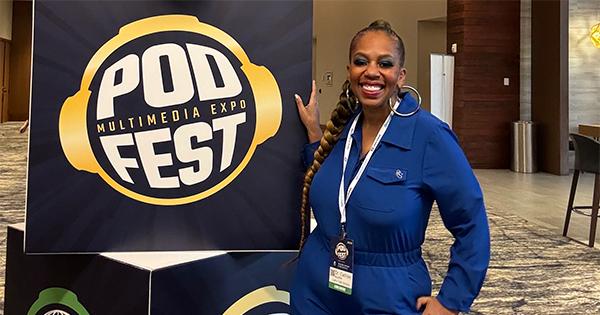
In an exclusive interview with The CanadianSME Black Business Magazine, Meseret Haileyesus, CEO of the Canadian Centre for Women’s Empowerment (CCFWE) and a renowned Economic Security Futurist, shares her transformative approach to economic justice and financial inclusion. Meseret is a systems-change strategist and one of Canada’s most influential voices on financial reform, economic harm, and [...]
 Black News

In an exclusive interview with The CanadianSME Black Business Magazine, Meseret Haileyesus, CEO of the Canadian Centre for Women’s Empowerment (CCFWE) and a renowned Economic Security Futurist, shares her transformative approach to economic justice and financial inclusion. Meseret is a systems-change strategist and one of Canada’s most influential voices on financial reform, economic harm, and empowering marginalized communities.
Meseret Haileyesus is a multi-award-winning Economic Security Futurist, systems-change strategist, and one of Canada’s most influential voices on economic justice and financial inclusion. She is the first Canadian to formally bring economic harm into national public policy discourse and to call for coordinated national and international policy responses in the Canadian Parliament.
She is the Founder and CEO of the Canadian Centre for Women’s Empowerment (CCFWE), Executive Leader of the World Executive Council for Economic and Financial Inclusion, Founder of Elementh, and co-founder and advisor to multiple national and global initiatives integrating digital healthcare innovation, financial systems reform, climate justice, and public policy to advance long-term economic security.

You’ve become one of Canada’s leading voices on economic harm and financial inclusion, influencing federal budgets, Parliamentary debates, and new codes of conduct in the financial sector. What personal experiences first pushed you to turn your own navigation of systemic barriers into a career reshaping economic policy for others?
My path into economic policy began through lived experience. As an immigrant woman building a life and career in Canada, I faced systems that looked equal on the surface but were not always equitable in practice. I experienced financial barriers, professional roadblocks, and moments where access to opportunity depended more on background than potential.
Those experiences shaped my perspective. Instead of seeing them as isolated challenges, I began to understand them as part of a broader structural issue affecting many women, especially newcomers and racialized women. I realized that when women face financial exclusion or economic instability, it is not just a personal setback. It affects families, communities, and future generations.
That awareness pushed me to move from navigating systems to helping reshape them. I wanted to ensure that other women would not have to struggle silently through the same barriers. Today my work focuses on advancing financial inclusion, influencing policy, and building pathways that allow women and underserved communities to participate fully and confidently in the economy.
You were the first person to bring “economic harm” into Canada’s national policy discourse and helped advance measures like coerced‑debt protection and livable basic income. For readers who may be new to the term, what is economic harm—and why is it so critical for entrepreneurs, especially women and equity‑deserving founders, to understand?
Economic harm is the financial damage that occurs when systems, policies, or relationships restrict someone’s ability to earn, build assets, or maintain economic safety. It sits at the intersection of systemic harm and violence. In this context, financial control, coerced debt, blocked access to bank accounts, employment sabotage, forced financial dependency, and financial surveillance become tools of power and restriction. These harms often begin subtly in intimate relationships environments and are reinforced by systems that fail to recognize or respond effectively.
Economic harm is not only personal. It is structural. Systemic barriers in banking, employment, housing, and legal systems can deepen the impact of violence by limiting survivors’ ability to rebuild financial independence and long term stability.
For entrepreneurs, especially women and equity deserving founders, understanding economic harm is essential. Many are building businesses while recovering from financial loss, damaged credit, interrupted careers, or trauma caused by both systemic inequality and gender based violence. Without acknowledging these realities, access to capital and growth opportunities remain unequal.
Naming economic and systemic harm allows entrepreneurs and policymakers to design safer and more inclusive financial systems. When we address economic harm within the broader gender based violence framework, we move beyond survival toward long term economic security, innovation, and equitable participation in the economy.

Your work sits at the intersection of technology, finance, healthcare, and climate transitions. Where do you see emerging technologies—like fintech and AI—creating new vulnerabilities for women and marginalized communities, and what would a “tech‑safe” future look like in practical terms?
Emerging technologies are reshaping finance, healthcare, and climate systems at remarkable speed. While they create opportunity, they also introduce new vulnerabilities, particularly for women and marginalized communities.
In fintech and AI, we are seeing algorithmic bias in credit scoring, automated loan denials without transparency, and digital banking systems that can be misused for financial surveillance or control. In healthcare, data driven systems may overlook gender and racial disparities if datasets are incomplete or biased. In climate transitions, access to green financing and digital identity tools can unintentionally exclude those without strong credit histories or formal documentation. When digital systems become gatekeepers to opportunity, those already marginalized face amplified risk.
A tech safe future requires intentional design. It means transparency in algorithms, gender responsive data standards, trauma informed digital financial products, and regulatory frameworks that prioritize equity and privacy. It also means survivor centered safeguards within banking platforms and clear accountability when harm occurs.
Technology should expand economic security, not deepen inequality. A tech safe future is one where innovation is guided by ethics, inclusion, and measurable equity outcomes so that women and marginalized communities are protected, empowered, and fully able to participate in the digital economy.
As a founder, CEO, and global systems‑change strategist, you’ve moved from navigating exclusion as a newcomer to shaping national and international economic frameworks. What have you learned about leading while still acknowledging vulnerability—and how can entrepreneurs use their lived experience as a strength rather than a liability?
I have learned that real leadership does not come from pretending to be strong all the time. It comes from being honest about the journey. As a newcomer, I navigated exclusion, uncertainty, and moments where I had to rebuild my confidence and financial stability. Those experiences shaped me. They gave me empathy, resilience, and a clear understanding of what so many women and entrepreneurs face quietly.
For a long time I thought vulnerability was something to hide. Instead, I discovered it is a source of clarity and connection. When I speak openly about barriers I have faced, it allows others to see possibility in their own path. It also keeps my leadership grounded in real life, not theory.
For entrepreneurs, lived experience is not a weakness. It is insight. The challenges you have navigated often reveal gaps in systems and markets that others cannot see. Your story can guide innovation, build trust, and shape solutions that are truly needed.
When we stop seeing our experiences as limitations and start seeing them as wisdom, we lead differently. We build with purpose, we lead with compassion, and we create spaces where others can rise with us.

For Black and equity‑deserving entrepreneurs who feel discouraged by financial gatekeeping, systemic bias, or confusing policy systems, what is one concrete step you’d encourage them to take—and one mindset shift you’d invite them to adopt—as they build toward long‑term economic security and impact?
One concrete step I would encourage is this: build financial clarity before seeking capital. Take time to fully understand your numbers, your credit profile, your legal structure, and the funding options available to you. Many entrepreneurs approach banks or investors feeling intimidated. Knowledge changes that dynamic. When you understand your financial position and the policies that affect you, you move from asking for permission to presenting a strategy. Seek out mentors, community based lenders, and networks that understand your context. Do not navigate complex systems alone.
The mindset shift I invite is this: gatekeeping is not a verdict on your worth. Systemic bias is real, but it is not a measure of your potential. When a door closes, it may reflect structural limitations, not your capability. Shift from internalizing rejection to analyzing the system. Ask, what is the pattern here and how can I position differently or advocate for change?
Long term economic security is built with strategy and resilience. Your lived experience has already trained you to adapt and innovate. When you combine that resilience with financial literacy, strong networks, and a clear vision, you move from surviving systems to shaping them.
Disclaimer:The views and opinions expressed in this interview are those of the guest and do not necessarily reflect the official policy or position of Black Business Magazine or its affiliates. The magazine is committed to supporting Black entrepreneurs and fostering conversations that promote inclusion and economic empowerment.