The Blue Sharks And The Long Road To Freedom: Cabo Verde, Amílcar Cabral, And The Spirit Of A Nation At The 2026 World Cup
By Don Rojas Photos: YouTube Screenshots|Wikimedia Commons In the summer of 2026, a nation of half a million people scattered across ten volcanic islands in the Atlantic Ocean stopped the world in its tracks. Cape Verde — Cabo Verde in Portuguese — became the smallest-ever nation to reach the knockout stages of a FIFA World Cup, holding European champions Spain to a goalless draw, fighting world champions Uruguay to a 2-2 stalemate, and advancing from the most competitive group in the tournament before finally falling to defending champion Argentina in an extraordinary 3-2 extra-time defeat in the Round of 32 that left even their conquerors shaking their heads in disbelief. But to understand what this football fairy tale truly meant, you must go back not to the qualifying campaign of 2025, not even to the formation of the Blue Sharks as a competitive national team — you must go back to January 20, 1973, when a bullet fired by an assassin in Conakry, Guinea, ended the life of one of the twentieth century’s greatest liberation theorists and most consequential anti-colonial fighters. You must go back to Amílcar Cabral. Portugal’s Vietnam: The Liberation Struggle The long-standing joint colonial administration of Cabo Verde and Guinea-Bissau was terminated in 1879, when both became separate Portuguese territories. Amid the contemporary African decolonization movement, their status was modified in 1951 to “overseas provinces,” and their inhabitants were officially granted full Portuguese citizenship in 1961. Not perceiving these changes as meaningful, however, some members of the colonial population began to agitate for complete independence from Portugal. In 1956, Amílcar Cabral founded the African Party for the Independence of Guinea and Cabo Verde (PAIGC), leading the fight against colonialism and paving the way for independence. Cabral was a figure of rare intellectual and moral force — a prolific Marxian theorist who not only led the war of independence that toppled Portuguese rule in Guinea-Bissau and Cabo Verde but influenced the fight for decolonization across the continent. Trained as an agricultural engineer in Lisbon, he returned to Africa with an understanding of colonial economics and a commitment to revolutionary theory rooted in the specific material conditions of the people he sought to liberate. In 1959, the Portuguese responded with violence and arrests, which convinced the PAIGC that only a path of armed struggle would be sufficient to end the colonial and fascist regime. After a period of military training and political preparation, the PAIGC launched its armed campaign in January 1963. What followed was a thirteen-year war of liberation that came to be known as “Portugal’s Vietnam” — pitting ten thousand members of Cabral’s PAIGC against thirty-five thousand Portuguese troops and mercenaries. The PAIGC was fighting for the independence of not one but two colonies: Guinea-Bissau on the West African mainland and the archipelago of Cabo Verde. Cabral argued that any project for liberation that did not encompass these islands would undermine the fight for Guinean independence, since Portugal and its allies could use Cabo Verde as a military support base from which to launch a counteroffensive. What distinguished Cabral from many revolutionary leaders of his era was the depth of his political and cultural theory. He insisted on what he called “a return to the source” — the recovery of African cultural identity as the foundation of liberation. He understood that colonialism was not only an economic and military project but a cultural one: it operated by convincing the colonized that their history, their languages, and their ways of being in the world were inferior. Liberation required not only political independence but cultural reclamation. On January 20, 1973, Cabral was assassinated by a member of his own movement, widely believed to have been infiltrated by Portuguese intelligence. He did not live to see the independence he gave his life for. But his brother Luís Cabral and the PAIGC continued the struggle. Later that year, on September 24, Guinea-Bissau declared independence. This event — compounded by the other lengthy wars in Portuguese colonies — precipitated a crisis in Portugal that resulted in a successful coup there on April 25, 1974. The Carnation Revolution, as it came to be known, ended the Salazar-Caetano dictatorship and opened the door to decolonization across Portuguese Africa. An agreement was signed between PAIGC and Portugal on December 19, 1974, establishing a transitional government in Cabo Verde. This government organized elections for a National Popular Assembly, which declared independence on July 5, 1975. Aristides Pereira, one of the original co-founders of the PAIGC, became the first President of the Republic of Cabo Verde. A nation born from one of the most determined anti-colonial struggles of the twentieth century stepped into s
 Black News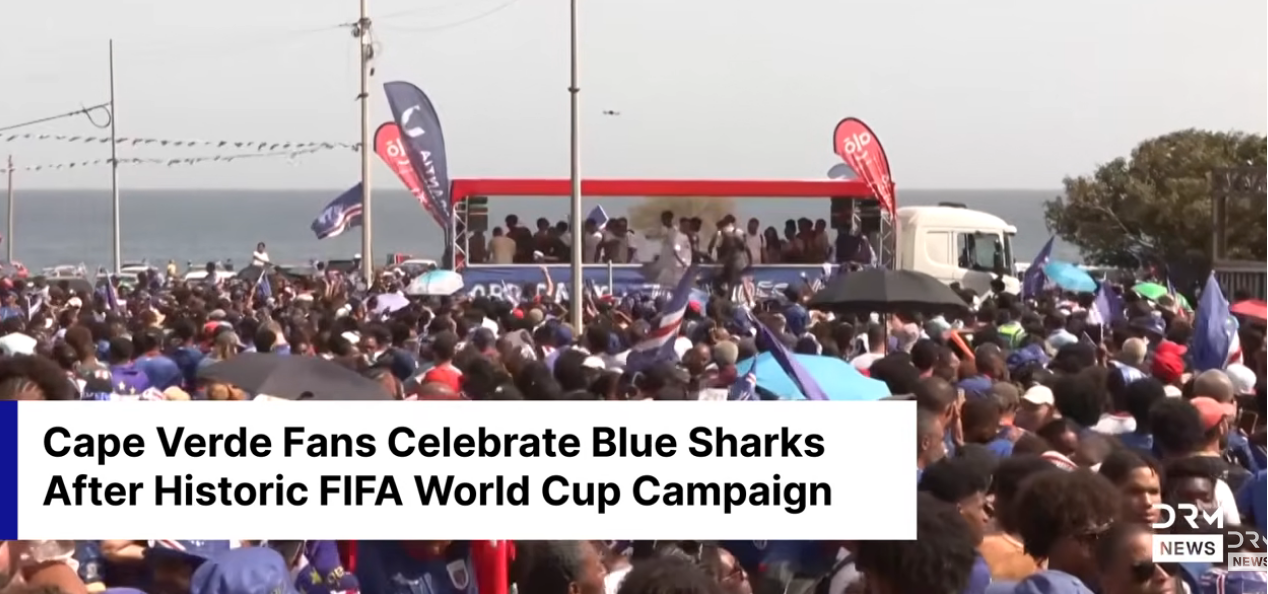
By Don Rojas
Photos: YouTube Screenshots|Wikimedia Commons
In the summer of 2026, a nation of half a million people scattered across ten volcanic islands in the Atlantic Ocean stopped the world in its tracks. Cape Verde — Cabo Verde in Portuguese — became the smallest-ever nation to reach the knockout stages of a FIFA World Cup, holding European champions Spain to a goalless draw, fighting world champions Uruguay to a 2-2 stalemate, and advancing from the most competitive group in the tournament before finally falling to defending champion Argentina in an extraordinary 3-2 extra-time defeat in the Round of 32 that left even their conquerors shaking their heads in disbelief.
But to understand what this football fairy tale truly meant, you must go back not to the qualifying campaign of 2025, not even to the formation of the Blue Sharks as a competitive national team — you must go back to January 20, 1973, when a bullet fired by an assassin in Conakry, Guinea, ended the life of one of the twentieth century’s greatest liberation theorists and most consequential anti-colonial fighters. You must go back to Amílcar Cabral.

Portugal’s Vietnam: The Liberation Struggle
The long-standing joint colonial administration of Cabo Verde and Guinea-Bissau was terminated in 1879, when both became separate Portuguese territories. Amid the contemporary African decolonization movement, their status was modified in 1951 to “overseas provinces,” and their inhabitants were officially granted full Portuguese citizenship in 1961. Not perceiving these changes as meaningful, however, some members of the colonial population began to agitate for complete independence from Portugal.
In 1956, Amílcar Cabral founded the African Party for the Independence of Guinea and Cabo Verde (PAIGC), leading the fight against colonialism and paving the way for independence. Cabral was a figure of rare intellectual and moral force — a prolific Marxian theorist who not only led the war of independence that toppled Portuguese rule in Guinea-Bissau and Cabo Verde but influenced the fight for decolonization across the continent. Trained as an agricultural engineer in Lisbon, he returned to Africa with an understanding of colonial economics and a commitment to revolutionary theory rooted in the specific material conditions of the people he sought to liberate.
In 1959, the Portuguese responded with violence and arrests, which convinced the PAIGC that only a path of armed struggle would be sufficient to end the colonial and fascist regime. After a period of military training and political preparation, the PAIGC launched its armed campaign in January 1963. What followed was a thirteen-year war of liberation that came to be known as “Portugal’s Vietnam” — pitting ten thousand members of Cabral’s PAIGC against thirty-five thousand Portuguese troops and mercenaries.
The PAIGC was fighting for the independence of not one but two colonies: Guinea-Bissau on the West African mainland and the archipelago of Cabo Verde. Cabral argued that any project for liberation that did not encompass these islands would undermine the fight for Guinean independence, since Portugal and its allies could use Cabo Verde as a military support base from which to launch a counteroffensive.
What distinguished Cabral from many revolutionary leaders of his era was the depth of his political and cultural theory. He insisted on what he called “a return to the source” — the recovery of African cultural identity as the foundation of liberation. He understood that colonialism was not only an economic and military project but a cultural one: it operated by convincing the colonized that their history, their languages, and their ways of being in the world were inferior. Liberation required not only political independence but cultural reclamation.
On January 20, 1973, Cabral was assassinated by a member of his own movement, widely believed to have been infiltrated by Portuguese intelligence. He did not live to see the independence he gave his life for. But his brother Luís Cabral and the PAIGC continued the struggle. Later that year, on September 24, Guinea-Bissau declared independence. This event — compounded by the other lengthy wars in Portuguese colonies — precipitated a crisis in Portugal that resulted in a successful coup there on April 25, 1974. The Carnation Revolution, as it came to be known, ended the Salazar-Caetano dictatorship and opened the door to decolonization across Portuguese Africa.
An agreement was signed between PAIGC and Portugal on December 19, 1974, establishing a transitional government in Cabo Verde. This government organized elections for a National Popular Assembly, which declared independence on July 5, 1975. Aristides Pereira, one of the original co-founders of the PAIGC, became the first President of the Republic of Cabo Verde. A nation born from one of the most determined anti-colonial struggles of the twentieth century stepped into sovereignty — fifty years before its football team would step onto the world’s largest sporting stage.
The 50th Anniversary on the Pitch
Cape Verde’s fairy-tale qualification coincided with its 50th anniversary of independence from Portugal. That timing was not lost on anyone in the archipelago, or on the diaspora of Cabo Verdeans spread across the world — in Portugal, the United States, the Netherlands, and Senegal — who watched the Blue Sharks qualify for their first-ever World Cup by topping a qualifying group that included Cameroon and Angola, winning eight of their 10 games.
At the time of their qualification, Cape Verde was noted as the smallest country by land area and the second-least-populated country to qualify for the World Cup, with a land area of 4,033 square kilometres and a population of just under 525,000. They were drawn into Group H alongside Spain, Uruguay, and Saudi Arabia — a collection of footballing powers that would have intimidated any team on earth, let alone a tiny island nation making its World Cup debut.
What happened next belongs to the ages.
Vozinha and the Wall That Would Not Break

It took Cape Verde goalkeeper Vozinha all of his 40 years on Earth to make his World Cup debut. The long, long wait was worth every fleeting second.
Nobody gave Cape Verde a chance. Nobody told Vozinha. At 40 years and 12 days old, he became the oldest player ever to appear in a nation’s first World Cup match. Then he made the number irrelevant. Against Spain — ranked second in the world, the European champions, a squad bristling with stars from the elite clubs of Europe — Vozinha recorded seven saves, holding Spain’s lineup to a shocking 0-0 draw. The veteran keeper was everywhere as the Spanish team and its fans became increasingly frustrated, despite dominating possession and unleashing 27 shots.
Vozinha became the oldest goalkeeper to keep a clean sheet in his World Cup debut and just the second goalkeeper aged 40 or older to make at least seven saves in a World Cup match since 1966. When the final whistle blew, Vozinha hunched over near his net and cried before being embraced by his teammates.
His story is itself a parable of Cabo Verdean resilience. Born in Mindelo, Cabo Verde, Vozinha turned professional at age 25, making his debut for obscure local side Batuque in 2007. After brief spells in Cabo Verde and Portugal, he earned a move to Angolan side Progresso, then plied his trade in Moldova, Cyprus, Slovakia, and back to Portugal. A journeyman’s journey across the margins of the game, sustained by a dream he refused to abandon. At times, Vozinha said, he thought about retiring from the national team, but he “continued because of this dream.” “I work all my life for this, for this moment, for this dream,” he said. “A lot of generations in the past dreamed of this day but they did not achieve. And now the dream comes true.”
Cape Verde furthered their remarkable story with a 2-2 draw against Uruguay, raising hopes of qualification. In their final group game against Saudi Arabia, they played out another goalless draw, and the result was enough to see them qualify for the knockout rounds — the smallest nation in World Cup history to reach that stage.
The Argentina Match: A David for the Ages
Argentina was expected to win comfortably. They were the world champions, ranked second in the world, led by Lionel Messi in what many expected to be his final World Cup. The match was played in Miami on July 3rd. What unfolded over 120 minutes was one of the most extraordinary passages of play in the tournament’s century-long history.
Lionel Messi put his side ahead in the first half, before Deroy Duarte got Cabo Verde level and sent the game to extra time as Vozinha made eight saves. Sidny Lopes Cabral — a name that will forever echo in the history of Cabo Verdean football — scored what CNN described as an all-time great tournament goal with a curling effort from the edge of the area to level the scores again in extra time. The crowd was transfixed. Argentina, the world champions, were being pushed to the very edge by a nation of 500,000 people whose entire football infrastructure would fit into a single training facility at any of Europe’s elite clubs.
The decisive goal did not come until the 111th minute, and only via a cruel deflection off Cape Verde defender Diney Borges that left Vozinha with no chance. The final score, 3-2 after extra time, flattered the favorites. It was a game that will long live in the memory of Cabo Verdeans and soccer fans around the world. When it was over, Lionel Messi went looking for Vozinha. By Vozinha’s own account, the Argentine captain hugged him and said: “You are great.”
The Spirit of Cabral on the Pitch

The connection between Cabral’s liberation struggle and the Blue Sharks’ World Cup campaign is not metaphorical. It is structural. Cabral understood that a people who had been told for five centuries that they were peripheral — that their islands were merely a waystation in someone else’s Atlantic empire, that their Creole culture was a degraded hybrid rather than a living civilization, that their aspirations were irrelevant to the great movements of history — could only be liberated by recovering a profound sense of their own dignity, their own capacity, and their own right to stand on any stage in the world and demand to be reckoned with.
The historic World Cup qualification coincided with Cabo Verde’s 50th anniversary of independence from Portugal. “Now, the whole world knows about Cabo Verde — that’s how you pronounce it, not Cape Verde,” said one fan, with a satisfied smile. “We do everything with a big heart, and it’s there for everyone to see.”
Amílcar Cabral did not live to see independence. He was assassinated before the flag was raised. But he articulated, with greater clarity than perhaps any thinker of his generation, what freedom actually means for a colonized people: not merely the absence of foreign domination, but the recovery of the right to make history — to produce culture, to compete on equal terms, to insist that the world take you seriously.
People were not just cheering saves. They were cheering the idea that a life spent grinding in the shadows can still lead to a single unforgettable summer in the sun. Half an ocean away, an archipelago of ten small islands watched one of its own become someone the entire planet suddenly knew by name.
Fifty years after independence, the Blue Sharks stood on the largest stage in global sport and refused to be beaten — not just in the football sense, but in the deeper sense that Cabral meant when he said that the purpose of liberation was to restore a people’s right to make history. Cabo Verde made history in June and July of 2026, in four unforgettable matches that the world will not forget. Amílcar Cabral, theorist of liberation, father of the nation, would have understood exactly what it meant. A Luta Continua!