How One Teacher’s Locs Changed Her Classroom
Hamilton's new book explores how Black women's hair experiences influence education. She says changing how children think about their hair can also change how they see themselves—and what they believe is possible.d The post How One Teacher’s Locs Changed Her Classroom appeared first on Word In Black.
 Black News

This story originally appeared in The Sacramento Observer.
For years, Eghosa Obaizamomwan Hamilton believed she knew what a teacher was supposed to look like. For years, she regularly straightened her hair to blend into an educational system in which professional standards mirrored Eurocentric norms, and taught the standard curriculum, careful not to stray from the norm.
Then the COVID-19 pandemic forced schools online.
Away from the classroom and the daily scrutiny of institutional expectations, Hamilton began growing her locs. As they grew, however, she found herself centering more Black voices in her classroom. She became more willing to challenge traditional teaching methods.
LEARN MORE: The Joys of Black Hair
Most importantly, Hamilton said, she became more herself..
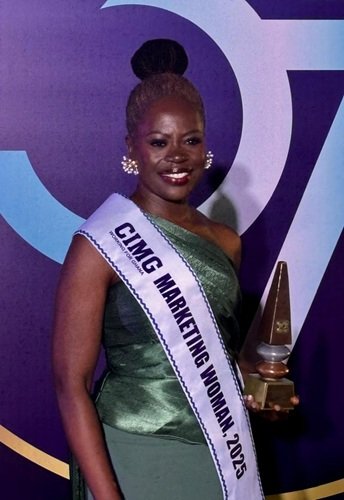
“As I started wearing protective styles and eventually got my locs, I realized my pedagogy was changing with my hair,” Hamilton told attendees during an author talk centered on her new book, “Articulations, A Radical Methodology for Black Pedagogy: Redefining Education Through Black Women’s Hair Experiences“ last month in Sacramento, California. “When I got my locs, I felt like I was fully loaded with having a very Black-centered approach to teaching.”
Appearance and Acceptance
For Hamilton, every Black woman carries a hair story. The sting of chemical relaxers that burned their scalps. Being told their natural hair looked “unkempt” or “unprofessional.” Family, media, schools, or workplaces often deliver the same message: their natural hair is unacceptable and must be changed.
Hamilton argues their stories are far more than memories about appearance.
“They shape how Black women move through educational spaces,” she said. “How do students’ views of their hair impact their experience of school?”
That message connected with many educators in the audience.
As I started wearing protective styles and eventually got my locs, I realized my pedagogy was changing with my hair.
Eghosa Obaizamomwan Hamilton, Educator and author
Tiffany Herndon, an education consultant and founder of the nonprofit College Engine Inc., said Hamilton’s discussion captured a tension Black educators commonly navigate: motivating students to accept their identity while preparing them to succeed in systems that have not always embraced them.
“How much do I ask you to assimilate for advancement?” Herndon said. “And how much of that means losing your identity?”
‘Blackness is Greatness’
For Herndon, the challenge is helping Black students understand that they do not have to sacrifice who they are to succeed.
“It’s that negotiation between self-love and survival,” she said.
As a former high school teacher and Black Student Union advisor, Herndon said educators need to intentionally build spaces where Black students feel seen and appreciated.

“You have to walk the walk,” she said. “You have to have honest conversations, and you have to instill cultural pride. My thing is that Blackness is greatness.”
Hair, she explained, is connected with race, identity, history, and belonging. Before the transatlantic slave trade, African hairstyles communicated family lineage, status, and community. Enslaved Africans often had their heads shaved upon capture, stripping away those cultural markers.
Centuries later, Hamilton argues, Black women still negotiate messages about which hairstyles are acceptable. Those pressures continue despite growing legal protections such as California’s CROWN Act, which prohibits discrimination based on natural hairstyles associated with race.
Hamilton described hair as a “racial marker” that still influences how Black women are perceived in classrooms and workplaces. Her research explores “post-traumatic hair subversion,” the phenomenon of Black women regaining agency after years of hearing their natural hair is less professional, beautiful, or acceptable.
Rather than framing Black women’s hair stories solely through trauma, Hamilton wanted to document the strength and creativity they bring to dealing with those experiences.
Those experiences spoke to Rita Barrera, a seventh- and eighth-grade science teacher in Stockton, California.
‘You Won’t Get a Job’
As a teenager, Barrera admired successful Black women who wore locs, and she wanted to wear them herself. Her mother discouraged the decision.
“‘Don’t do that. You won’t be able to get a job,” Barrera recalled being told.
She wore them anyway, but repeatedly faced questions about whether they were clean or if she had washed her hair. Later, as she experienced hair loss, Barrera said, she worried whether a shaved head would be acceptable.
“I was afraid to show up at my job without any hair,” she said. “Those who wanted to say something negative stayed silent. Those who said, ‘Oh, my gosh, I love it,’ helped lift me up.”
Hairstyle as Self-Determination
Barrera said she has seen progress since California passed the CROWN Act in 2019. She no longer hears colleagues criticizing Black students’ hairstyles. But she believes schools still have work to do.
Many campuses now have “care closets” stocked with hygiene products for low-income students, she said, but few include combs or products for Black hair.
“Even if a [Black] child did need help with their hair, they have nowhere to go,” Barrera said.
Hamilton said authentic change begins with shifting the messages children receive about themselves. She said one participant in her research intentionally wore cornrows to a job interview.
“‘If they have a problem with my hair,’ Hamilton recalled the woman saying, ‘I don’t want to work there.’”
For Hamilton, it was as much an act of self-definition as a hairstyle. She challenged families, educators, and communities to think carefully about the messages children receive about their hair.
“If you’re altering your appearance because of outside pressure,” she said, “there’s danger there.”
RELATED: George E. Johnson Changed Black Beauty — and Black History
Instead, she hopes young people learn to make choices rooted in confidence rather than conformity. That lesson has become strongly personal.
Hamilton, now the mother of a young daughter, said she is constantly aware of the words she uses while doing her daughter’s hair and the messages those words might carry. Every night, she gives her daughter the same affirmation: “I love my hair.”
For Hamilton, those four words are part of a broader vision of liberation, one in which Black children enter classrooms already believing the parts of themselves that institutions have often questioned are worthy, beautiful, and enough.
The post How One Teacher’s Locs Changed Her Classroom appeared first on Word In Black.