The Decline of Pity Party
This essay examines the rise and fall of Pity Party, a series of grassroots mental health art exhibitions that sought to challenge the individualisation and medicalisation of depression while creating dialogical, community-based spaces for healing. By tracing the exhibition practices across different stages between 2017 and 2025, the article highlights the political possibilities created by […] The post The Decline of Pity Party appeared first on Made in China Journal.
 Black News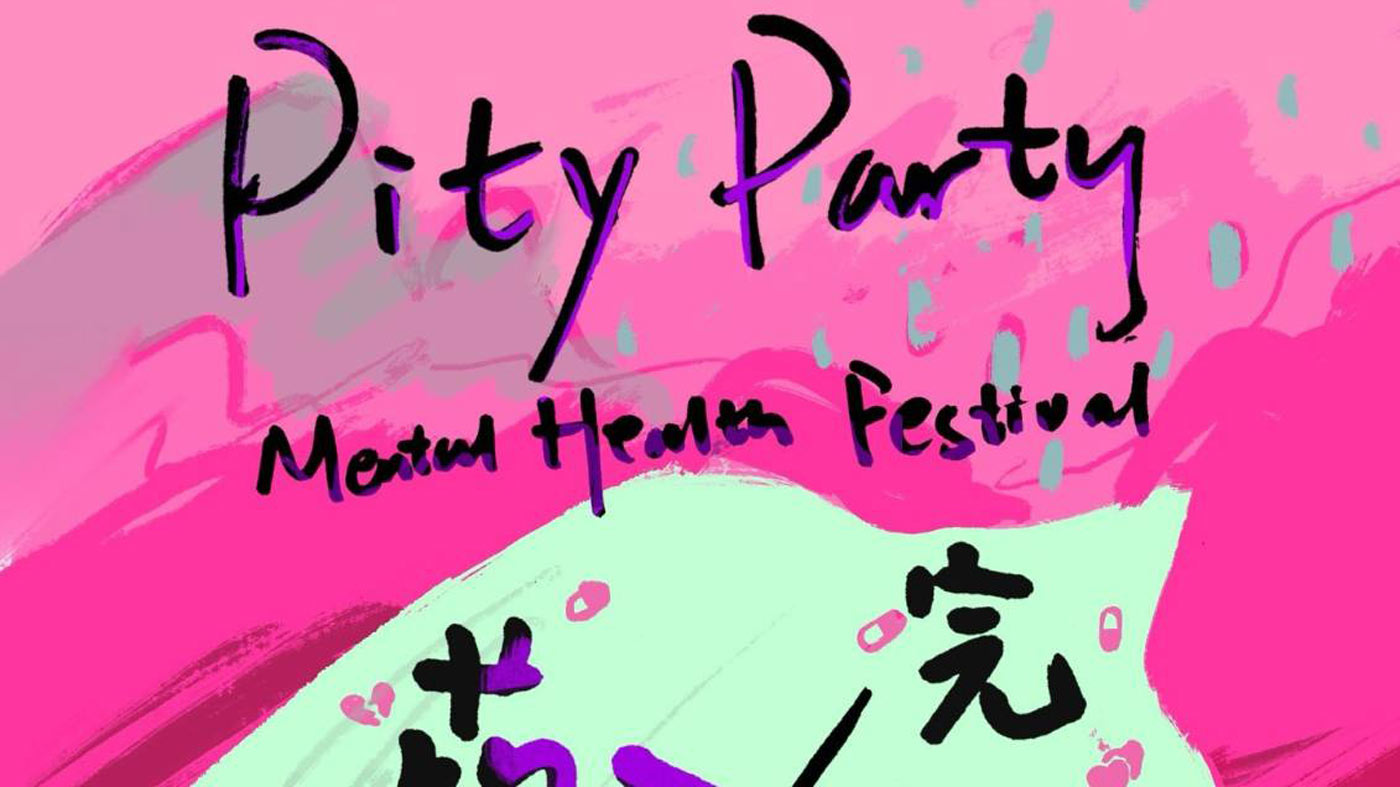

This essay examines the rise and fall of Pity Party, a series of grassroots mental health art exhibitions that sought to challenge the individualisation and medicalisation of depression while creating dialogical, community-based spaces for healing. By tracing the exhibition practices across different stages between 2017 and 2025, the article highlights the political possibilities created by plural and intersectional interpretations of depression, as well as the risks of incorporation, repression, and exhaustion from public action. It suggests that responding to political depression requires not greater scale or influence, but rather sustaining possibilities for action, connection, and expression within limited spaces.
China’s mental health sector has expanded rapidly over the past two decades. Market reforms, rising individualism, foreign pharmaceutical influence, the introduction of Western psychotherapy, and state promotion have led to a rapid spread of psychological knowledge and practices, at least in urban areas. The result has been a ‘psycho boom’ (Huang 2018b), characterised by people becoming increasingly accustomed to psychological language and modes of thinking (Huang 2018a; Yang 2017; Zhang 2020). However, this therapeutic culture often obscures structural problems and limits critique of systemic social injustices (Ng 2009; Xia and Xu 2026; Yang 2017). This is particularly evident in the case of depression. Although social factors are acknowledged in the widely invoked biopsychosocial model of mental health (Engel 1977), they are often treated as background conditions rather than forces shaping both the experience of depression and the ways it is understood.
It is against this backdrop that the concept of ‘political depression’ emerged in Chinese online discourse and went viral during the Covid-19 pandemic. The term can be traced back to two WeChat articles published in 2019 on A Perch for the Thornbirds (刺鸟栖息地), a public account I founded: one was the translation of an article by American psychotherapist Robert Lusson (2017), written in a context marked by political distress after the 2016 election of US President Donald Trump; the other was a short guide on how to cope with political depression (Chen 2019). The pairing of the two articles was intended to highlight the concept and push discussions of political depression beyond a purely clinical framework.
The term itself was grounded in my earlier fieldwork, in which people used it to describe the mental distress produced by a repressive social environment and a perceived lack of justice (Chen 2017). Building on this history, the two pieces aimed to connect depression with broader social conditions and to frame it as a form of social suffering (Bourdieu 1999; Kleinman et al. 1997; Renault 2008), making depression both a language through which public realities can be discussed and a kind of ‘public feeling’ (Cvetkovich 2012). Yet, without face-to-face exchange, debate, and dialogue, online discussions of the concept can drift towards binary thinking: some treat depression as purely socially constructed and deny the internal, physiological reality of suffering, while others adopt a strongly anti-clinical stance, rejecting professional practice altogether. Both positions simplify complex experiences and make public discussion of depression more difficult.
In response to these tensions, A Perch for the Thornbirds evolved into a grassroots organisation aimed at deepening public understanding of the complexity and diversity of mental health, especially depression. In this essay, I examine how Thornbirds’ exhibition series Pity Party changed over a decade, to draw lessons from its attempts to respond to political depression and the surrounding tensions. I approach political depression from a broad critical perspective, going beyond Lusson’s (2017) description of a politically induced depressive episode triggered by the economic system or government. The concept operates on two levels. Experientially, it refers to emotional responses to stressful or unjust social environments. Epistemologically, it raises the question of who has the authority to define depression and why some forms of suffering are recognised as illness while others are ignored. The knowledge and standards that define depression are not neutral but shaped by social and power relations. In this sense, political depression is not only about how politics can produce depression, but also about the politics embedded in the concept of depression itself.
A Perch for the Thornbirds
Before turning to the exhibitions, it is worth describing the organisation behind them and its distinct position within China’s mental health landscape. Thornbirds grew out of my ethnographic research on youth depression conducted between 2015 and 2017 (Chen 2017), drawing together participants from diverse backgrounds, including social work, psychology, anthropology, and psychiatry, and others broadly interested in the topic. Many, including myself, also brought lived experience of mental distress. The group had no formal hierarchy and operated through project-based collaboration and informal networks, with activities mainly taking place in urban cultural spaces, online platforms, and university settings.
Unlike social work organisations rooted in hospitals or residential community settings, Thornbirds does not provide psychotherapy, case management, or daycare services. The organisation shares some values with Western movements led by people with lived experience, such as Mad Pride and the psychiatric survivor movement, but it adopts a less confrontational approach. Unlike these movements, which often challenge psychiatric authority and oppose practices such as involuntary treatment, Thornbirds works through more indirect and varied forms of engagement in a context in which direct confrontation with medical institutions or state authorities is more difficult.
Thornbirds combines social work ethics and skills with grassroots community interests. Its activities include peer support, arts-based community projects, and publication through its WeChat public account. The aim is to highlight the importance of lived experience, encourage public dialogue and critical reflection on mental health issues, and expand the space for public discussion. Between 2019 and 2023, the WeChat account produced 621 posts, including the widely circulated ‘political depression’ series (A Perch for the Thornbirds 2022), comprising 13 articles that gained more than 373,000 views.
The most prominent of these activities is the Pity Party (药玩) exhibition series, which used creative events to explore everyday experiences of depression and related suffering while creating spaces for connection and healing. Although the term originally referred only to the organisation’s 2019–20 exhibitions, and the name and focus of the exhibitions shifted over time, I use Pity Party to refer to Thornbirds’ exhibition practices across the past decade. The name best captures the spirit of the group’s mental health activism during its most grassroots, creative, and vibrant phase.
2017–2019: Rethinking Depression
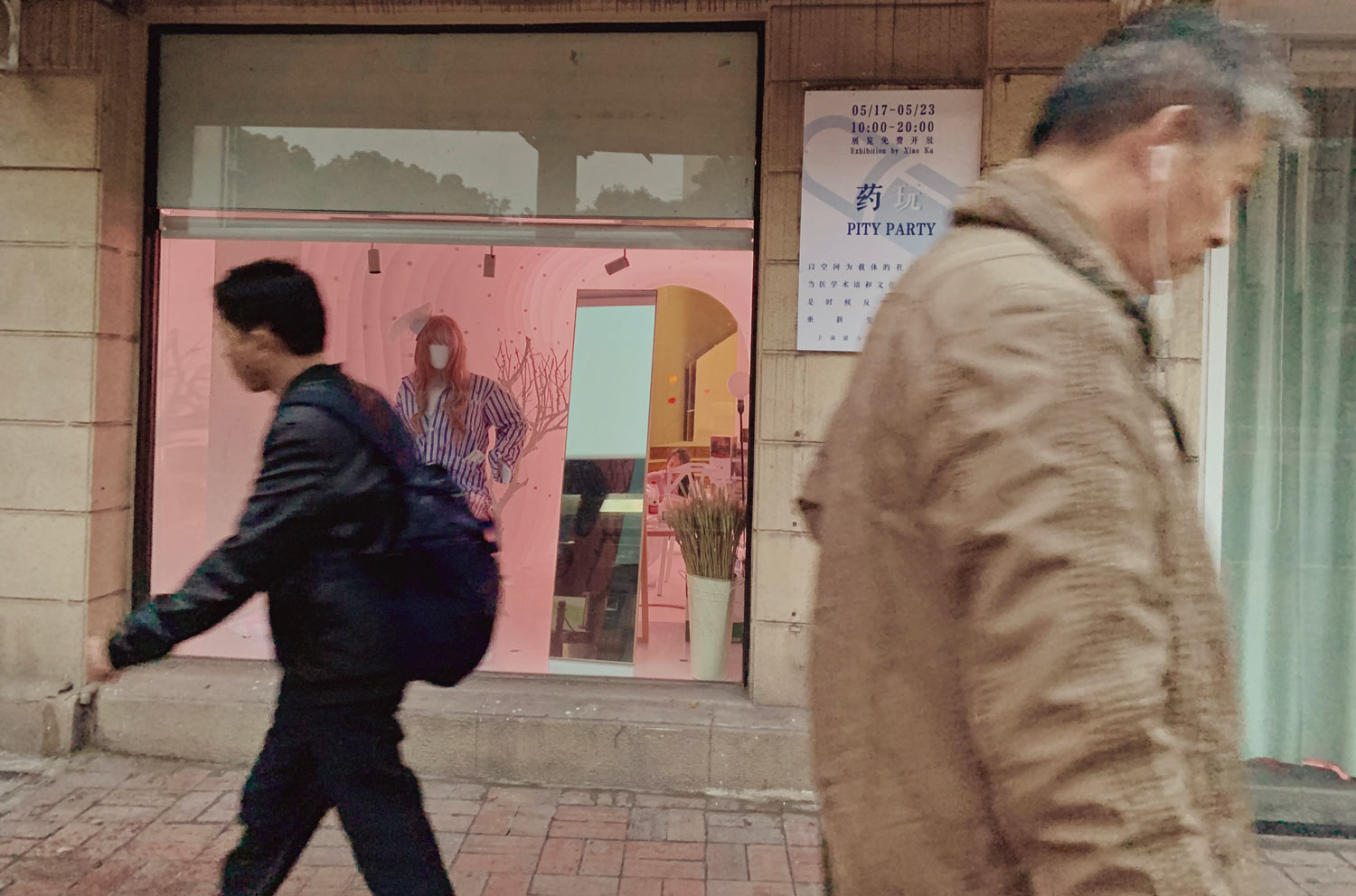
Between 2017 and 2019, the Pity Party exhibitions held in Beijing and Shanghai explored the epistemological tensions surrounding depression. The exhibitions brought together artworks based on my earlier fieldwork as well as collaborative pieces created from lived experience. Rather than presenting depression solely as a clinical condition, the exhibitions questioned the dominance of psychiatric explanations and instead highlighted sociological and anthropological perspectives. Lived experience was treated not simply as testimony but also as a legitimate form of knowledge about depression.
One representative work, ‘A Democratic Vote on Depression’ (关于抑郁症的民主投票), symbolically returned the authority to define depression from medical professionals to the public. Visitors were invited to vote on how depression should be understood and addressed by selecting the statements with which they agreed from a set of 100 descriptions of depression, turning interpretation into part of the exhibition. Another work, titled ‘Your Name’, inscribed different historical and cultural names for depression—such as ‘melancholia’ and ‘neurasthenia’—on a series of masks. By presenting these names, the piece suggested that depression is not a fixed medical object but an experience that is continually renamed, interpreted, and reshaped across different social contexts.
Despite minimal publicity, the exhibitions received strong responses from both mental health communities and general audiences. These reactions revealed a widespread desire for ways of understanding depression beyond psychological and psychiatric frameworks. The exhibition functioned as a non-diagnostic, non-therapeutic public space that enabled dialogue. It also anticipated the later emergence of discussions of political depression, suggesting that depoliticised explanations of depression were increasingly inadequate. When the dominant discourse confines depression to narrow categories such as biochemical imbalance or childhood trauma, it limits people’s ability to interpret their suffering in relation to public life. In this sense, the exhibition space itself became a site where that relationship could be reimagined.
2020–2021: Maddening Intersectionality
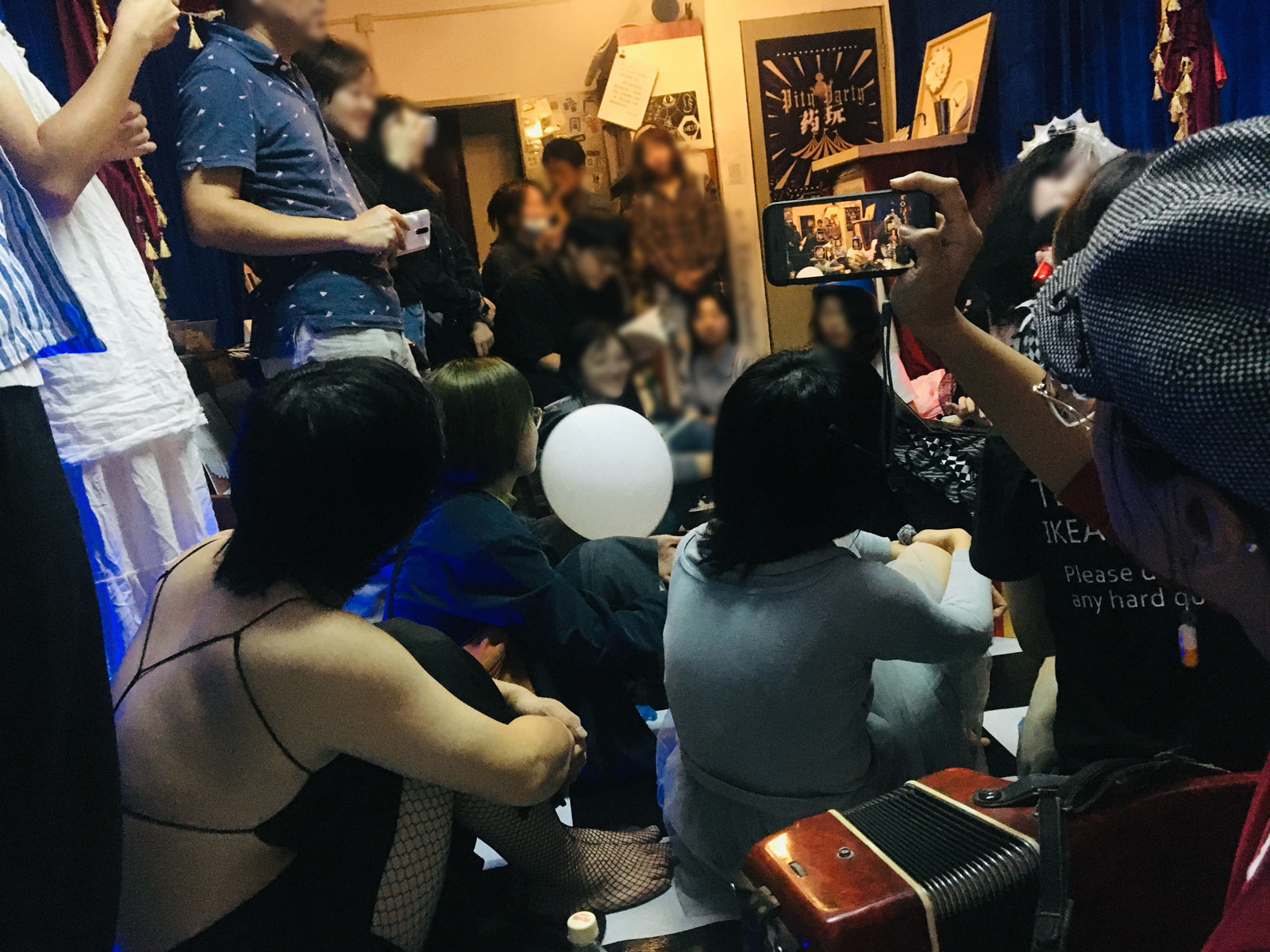
The exhibitions between 2020 and 2021 marked a phase of deepening intersectionality. Two characteristics became increasingly visible during this period. First, the exhibitions began to engage more directly with questions of social justice, reflecting what Joseph (2022: 477) calls ‘maddening intersectionality’: the exhibition became ‘a gathering place for open-ended investigations of the overlapping and conflicting dynamics’ of multiple inequalities (Cho et al. 2013: 788). In response to the Covid-19 pandemic, the 2020 exhibition opened with a rap performance that criticised repressive pandemic control policies and expressed mourning, followed by workshops designed for young people who experienced political depression. In 2021, the exhibition created a space for works addressing gender and the #MeToo movement.
Second, the exhibition developed collaborations with individuals and groups from different fields. Such support had existed since 2017 on a smaller scale, with contributions from the youth collective 706 Youth Space (706青年空间) and grassroots peer support organisation Shanghai Yujinxiang (上海郁今香). In 2020, these collaborations expanded and the project received broader support. The main venue in Shanghai, for instance, was an old public housing building offered by the Dinghaiqiao Mutual Aid Society (定海桥互助社), a socially engaged art organisation originally active in a workers’ residential neighbourhood. Independent filmmakers also contributed generously. Like mental health activism, the independent film scene occupies a relatively marginal position in society and often faces constraints on free expression, and this shared marginality created a sense of resonance across fields. The following year, 2021, marked the project’s most resource-rich period. With support from Mentionso (明想社), a Shanghai-based art studio focused on design activism, Artlink, a Scottish arts organisation focused on inclusive arts, and the British Council, the exhibition was held simultaneously in Shanghai and Stirling, Scotland, bringing together nearly 100 artists and attracting extensive media coverage.
During these two years, the pandemic made social tensions more visible and the term ‘political depression’ was frequently invoked in the exhibitions. Its spread reflected a shift in how depression was understood—no longer only as an individual struggle, but now also a collective effect shaped by shared conditions. In this sense, it drew together a broader public and revealed a potential for mobilisation. The exhibition’s intersections with other issues and other communities further illustrated this shift. When interpreted as a response to structural violence, depression became an emotional resource sustaining civic engagement, a way of transforming distress ‘from medicalized conditions into effective antagonisms’ (Fisher 2022: 80).
2022–2024: Dissent Fading Beneath the Brightness
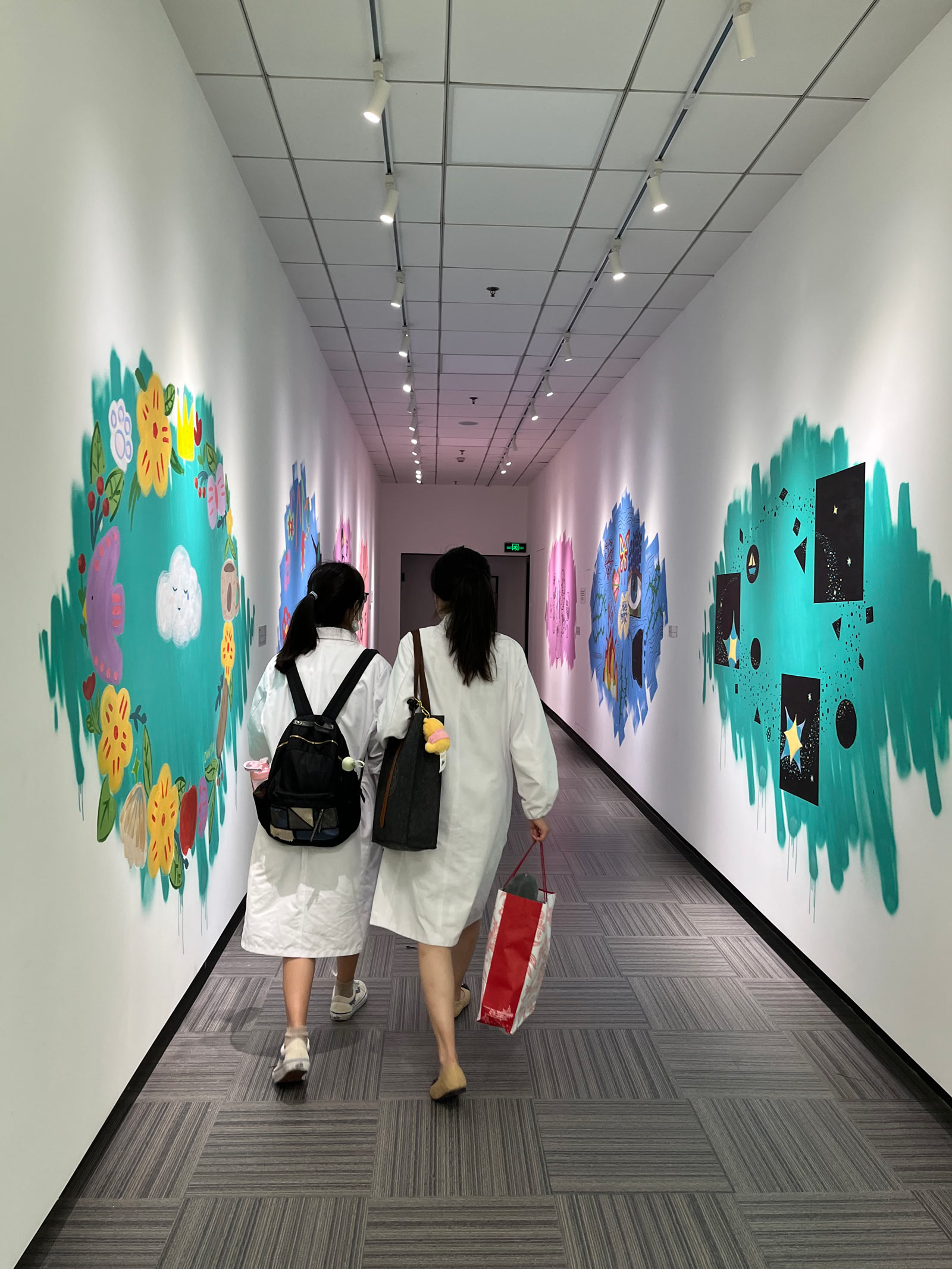
Between 2022 and 2024, the exhibitions expanded in scale, frequency, and audience numbers as institutional involvement deepened. At the same time, the institutional setting placed greater emphasis on aesthetics and a professional image, while direct challenges to psychiatry faded. During these years, the name Pity Party, once tied to the project’s grassroots spirit, quietly disappeared.
This shift began at the end of 2021 when, in recognition of its track record with lived experience communities, Thornbirds was invited to curate exhibitions for Shanghai Mental Health Centre’s ‘No. 600 Gallery’ (600号画廊), a well-known mental health art initiative backed by a public hospital (Chen et al. 2023). From 2021 to 2024, the Thornbirds team invested increasing creative and intellectual resources in No. 600 Gallery. This collaboration addressed several practical challenges previously faced by Pity Party, such as unstable venues, limited audiences, and low visibility. More importantly, working within the institution seemed to offer an opportunity to influence psychiatric practice from within and encourage gradual change.
However, this arrangement overstretched the small Thornbirds team and shifted its priorities. Independently organised exhibitions declined, as more time and labour went towards institutional collaborations. With three to four exhibitions a year, the workload grew while compensation remained negligible. Other problems surfaced. The gallery prioritised visual appeal while neglecting the experiences and discussions that the works were meant to convey. Repeated disregard for copyright and improper use of artworks undermined the trust and commitment of both team members and artists.
As the gallery became a nationally recognised showcase project, Thornbirds faced growing risks from the tightening political environment. After 2022, increasing government pressure over its engagement with gender issues and international collaborations led to the shutdown of Thornbirds’ WeChat account and restrictions on its offline activities. By 2024, due to the violation of artists’ rights and severe burnout within the team, the partnerships with the hospital came to an end and Thornbirds withdrew from the gallery. Under government pressure, it also stopped organising offline activities.
The trajectory of the exhibitions reflects a common dilemma in mental health activism: the simultaneous presence of soft cooptation by institutions and hard repression by authorities. As Thornbirds witnessed at first hand, institutions may selectively adopt parts of marginalised agendas while diluting their critical edge; they may appropriate personal narratives from marginalised communities and reinterpret them in ways that weaken their political force; or they may verbally signal support for vulnerable groups while quietly undermining their goals (Penney and Prescott 2016).
Popular online advice often emphasises the need for action and connection in response to the powerlessness of political depression. Yet, Pity Party eventually reached an impasse through cultivating precisely this kind of action and connection, and its members were exhausted in the process. In this sense, efforts to respond to political depression reproduced a familiar dynamic of political depression: awareness of structural constraints exceeded the ability to transform them. One lesson from this experience is that, in an increasingly restrictive public environment, the ceiling for action on depression or political depression is extremely low. Grassroots initiatives need not produce large-scale social impact. Collaboration with institutions can solve practical problems such as venues, resources, and visibility, but such strategic cooperation does not fundamentally change the political position of grassroots organisations. Official endorsement cannot guarantee long-term safety, nor does it automatically translate into broader legitimacy.
2025: Refusal and Connection
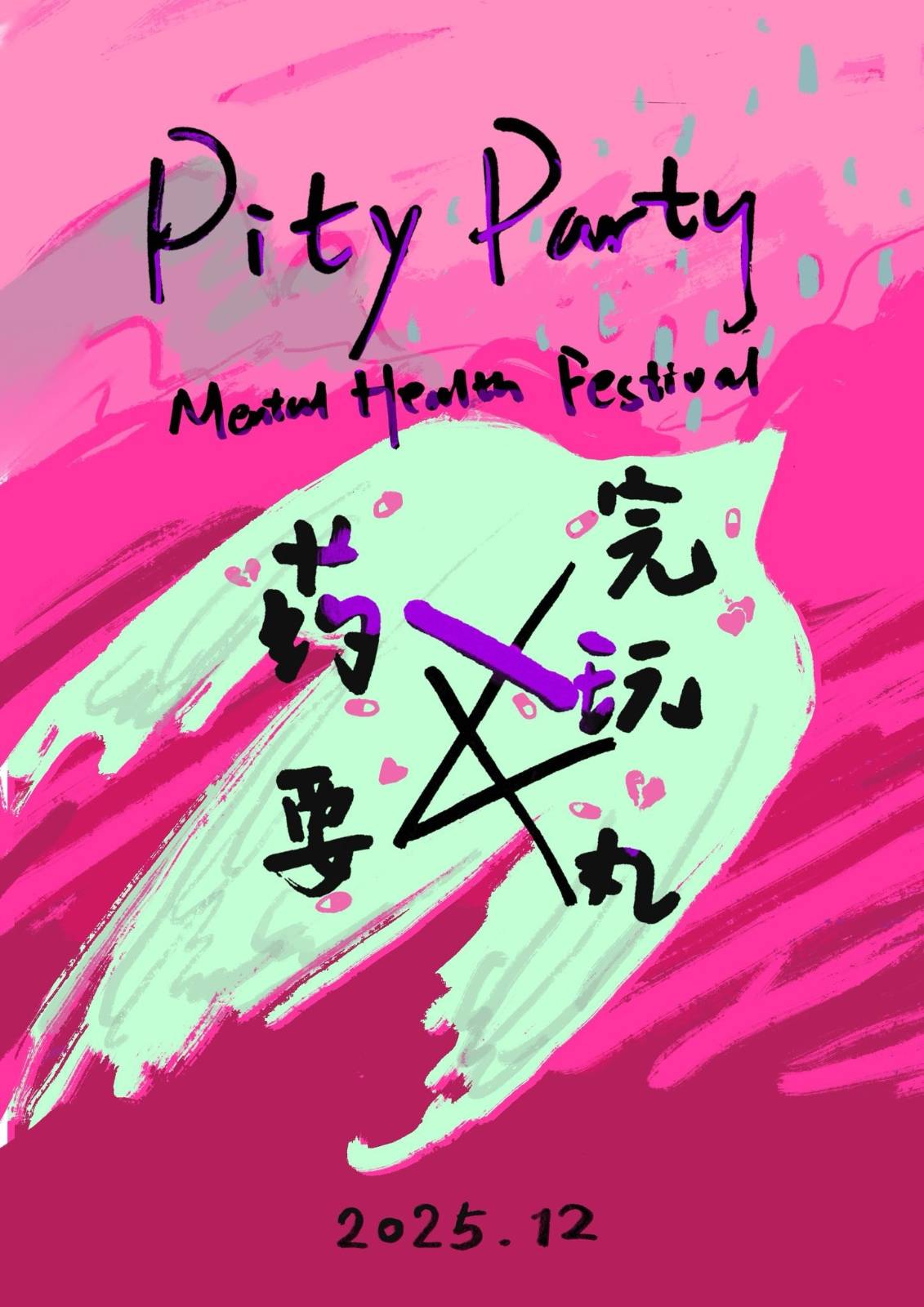
Following these setbacks, the 2025 Pity Party exhibition returned to a more stripped-back, grassroots form. Rather than collaborating with institutions such as the public hospital, the organisers deliberately withdrew into a small, invitation-only online exhibition. It combined a workshop focused on self-care with experimental projects exploring disability-informed feminist practices, internal critiques of socially engaged art communities, and challenges to psychiatric authority. The event was grassroots, independent, and intentionally limited in scale. This format reflected a form of refusal: a refusal to rely on institutional endorsement, professional authority, or broad public visibility as the basis of legitimacy.
All speakers were people with lived experience. The exhibition did not invite experts or frame participants’ stories through professional interpretation. Compared with earlier exhibitions that were more structured and carefully moderated, this gathering allowed greater emotional expression. In one moment, a speaker who struggled to articulate the intertwined inequalities across intimate relationships and public action used an improvised performance to convey feelings that could not easily be put into words. In this setting, vulnerability and disorder did not disrupt the event; they became the basis for connection.
This exhibition suggested a different kind of lesson for responding to political depression. Activists must recognise what resists cooptation and hold on to it. When institutional spaces absorb suffering through polished presentation and controlled formats that make distress legible and manageable, grassroots initiatives offer another possibility. They allow experiences not yet clearly named to appear and they create space for anger, complaint, and grief to circulate. Participants do not gather simply because of shared experience, but rather through the act of bearing uncertainty together. Depression was not resolved, but it was temporarily held through collective witnessing. In this balance between refusal and continued practice, a fragile yet durable form of resilience emerged. The exhibition space thus became what Nancy Fraser (2014) calls a ‘subaltern counterpublic’.
Lessons and Continuity
This essay traced the trajectory of the Pity Party exhibitions over the past decade. The experience reveals both the possibilities and the limits of grassroots responses to political depression in an increasingly restrictive public environment. The concept of political depression, by politicising depression, carries a certain mobilising potential, broadening the range of actors who can collaborate and transforming individual suffering into collective engagement, even as the Pity Party trajectory shows how easily that potential can be absorbed or worn down.
In the future, Thornbirds will continue the small-scale online exhibition model developed in 2025, positioning it as a recurring platform for sustaining connections and fostering experimental practices. This extends its commitments to lived experience as a legitimate form of knowledge, to critical engagement with psychiatry, and to research ethics and labour rights within mental health projects. Rather than pursuing broad public reach, Thornbirds will focus on knowledge co-production with professionals and grassroots advocates. By reducing reliance on resources, visibility, and external validation, it draws a broader lesson from the Pity Party experience: what sustains grassroots practice under pressure is not scale or institutional endorsement but a durable, grounded, and relational form of influence rooted in community—one that allows knowledge and experience to circulate and be adapted across contexts over time.
References
A Perch for the Thornbirds 刺鸟栖息地. 2019. ‘政治抑郁者: 在大海上挣扎前行的夜航人 [The Politically Depressed: Night Voyagers Struggling Forward on the Open Sea].’ A Perch for the Thornbirds WeChat account, 20 August. mp.weixin.qq.com/s/a9CUz_bpMf6f_tfuVcdXrw.
A Perch for the Thornbirds 刺鸟栖息地. 2022. ‘文章汇总|政治抑郁系列 [Collection: Political Depression Series].’ A Perch for the Thornbirds WeChat account, 13 April. mp.weixin.qq.com/s/QKl3m3VAolFeZ8T0cQm1CQ.
Bourdieu, Pierre, ed. [1993] 1999. The Weight of the World: Social Suffering in Contemporary Society. Translated by Priscilla Parkhurst Ferguson. Stanford, CA: Stanford University Press.
Chen, Mengyuan 陈梦媛. 2017. ‘抑郁的寓意:社会工作视角下的抑郁症经验研究 [Defining Depression: An Ethnographic Study of Living with Depression from a Social Work Perspective].’ MA thesis, Nanjing University, Nanjing.
Chen, Mengyuan 陈梦媛. 2019. ‘应对政治抑郁: 这十条建议也许对你有用 [Coping with Political Depression: Ten Suggestions That May Help].’ A Perch for the Thornbirds WeChat account, 30 August. mp.weixin.qq.com/s?__biz=MzU1Nzg1NjU4MQ==&mid=2247484289&idx=1&sn=ae2645a92f7621faf5cd03d19173f74e&chksm=fc2e21abcb59a8bd74ffba377eaf4340146d351de267b5b9356c2ade2be26b31a8c4e26659a2.
Chen, Zhimin, Na Zhong, and Ying Qiao. 2023. ‘Art in a Mental Hospital: The Story of No. 600 Gallery.’ Asian Journal of Psychiatry 83(May): 103516.
Cho, Sumi, Kimberlé Williams Crenshaw, and Leslie McCall. 2013. ‘Toward a Field of Intersectionality Studies: Theory, Applications, and Praxis.’ Signs 38(4): 785–810.
Cvetkovich, Ann. 2012. Depression: A Public Feeling. Durham, NC: Duke University Press.
Engel, George L. 1977. ‘The Need for a New Medical Model: A Challenge for Biomedicine.’ Science 196(4286): 129–36.
Fisher, Mark. 2022. Capitalist Realism: Is There No Alternative? Alresford, UK: Zer0 Books.
Fraser, Nancy. 2014. ‘Rethinking the Public Sphere: A Contribution to the Critique of Actually Existing Democracy.’ In Between Borders, edited by Henry A. Giroux and Peter McLaren, 56–80. London: Routledge.
Huang, Hsuan-Ying. 2018a. ‘From Psychotherapy to Psycho-Boom: A Historical Overview of Psychotherapy in China.’ In Psychoanalysis and Psychotherapy in China, edited by David E. Scharff, 1–30. London: Routledge.
Huang, Hsuan-Ying. 2018b. ‘The Psycho Boom.’ In China Story Yearbook 2017: Prosperity, edited by Jane Golley and Linda Jaivin, 216–18. Canberra: ANU Press.
Joseph, Ameil. 2022. ‘Maddening Intersectionality: Assemblages, Conviviality and Confluence for Epistemic Dissidence.’ In Critical Social Work Praxis, edited by Sobia Shaheen Shaikh, Brenda Anne-Marie LeFrançois, and Teresa Macías, 477–90. Halifax, NS: Fernwood Publishing.
Kleinman, Arthur, Veena Das, and Margaret M. Lock. 1997. Social Suffering. Berkeley, CA: University of California Press.
Lusson, Robert. 2017. ‘Political Depression.’ HuffPost, 13 January. www.huffpost.com/entry/political-depression_b_5879574ae4b077a19d180dbe.
Ng, Emily. 2009. ‘Heartache of the State, Enemy of the Self: Bipolar Disorder and Cultural Change in Urban China.’ Culture, Medicine, and Psychiatry 33(3): 421–50.
Penney, Darby, and Laura Prescott. 2016. ‘The Co-Optation of Survivor Knowledge: The Danger of Substituted Values and Voice.’ In Searching for a Rose Garden: Challenging Psychiatry, Fostering Mad Studies, edited by Jasna Russo and Angela Sweeney, 35–45. Monmouth, UK: PCCS Books.
Renault, Emmanuel. 2008. Souffrances Sociales: Philosophie, Psychologie et Politique [Social Suffering: Philosophy, Psychology and Politics]. Paris: La Découverte.
Xia, Haoran, and Yuchen Xu. 2026. ‘“Officially Diagnosed as X”: Self-Diagnosis Memes as Semiotic Critique in Post-Pandemic China.’ Social Semiotics. doi.org/10.1080/10350330.2026.2628212.
Yang, Jie. 2017. Mental Health in China: Change, Tradition, and Therapeutic Governance. Cambridge, UK: Polity.
Zhang, Li. 2020. Anxious China: Inner Revolution and Politics of Psychotherapy. Berkeley, CA: University of California Press.
The post The Decline of Pity Party appeared first on Made in China Journal.