The Politics of ‘Terrorism’ as a Designation in Eastern DRC
Words matter in conflict, and few carry more consequences than ‘terrorist’. Overused for decades, applied to insurgents, separatists, and state enemies alike, the label has been stretched to the point that it has become analytically meaningless. Yet the problem runs deeper than overuse. State actors may apply the charge of ‘terrorist’ as a justification for excessive force against its enemies. This gives them powerful incentives to keep using the label in pursuit of their own agenda. The UN and US’ designation in 2021 of the Allied Democratic Forces, an armed group operating in north-eastern Democratic Republic of Congo, as an […] The post The Politics of ‘Terrorism’ as a Designation in Eastern DRC appeared first on African Arguments.
 Black News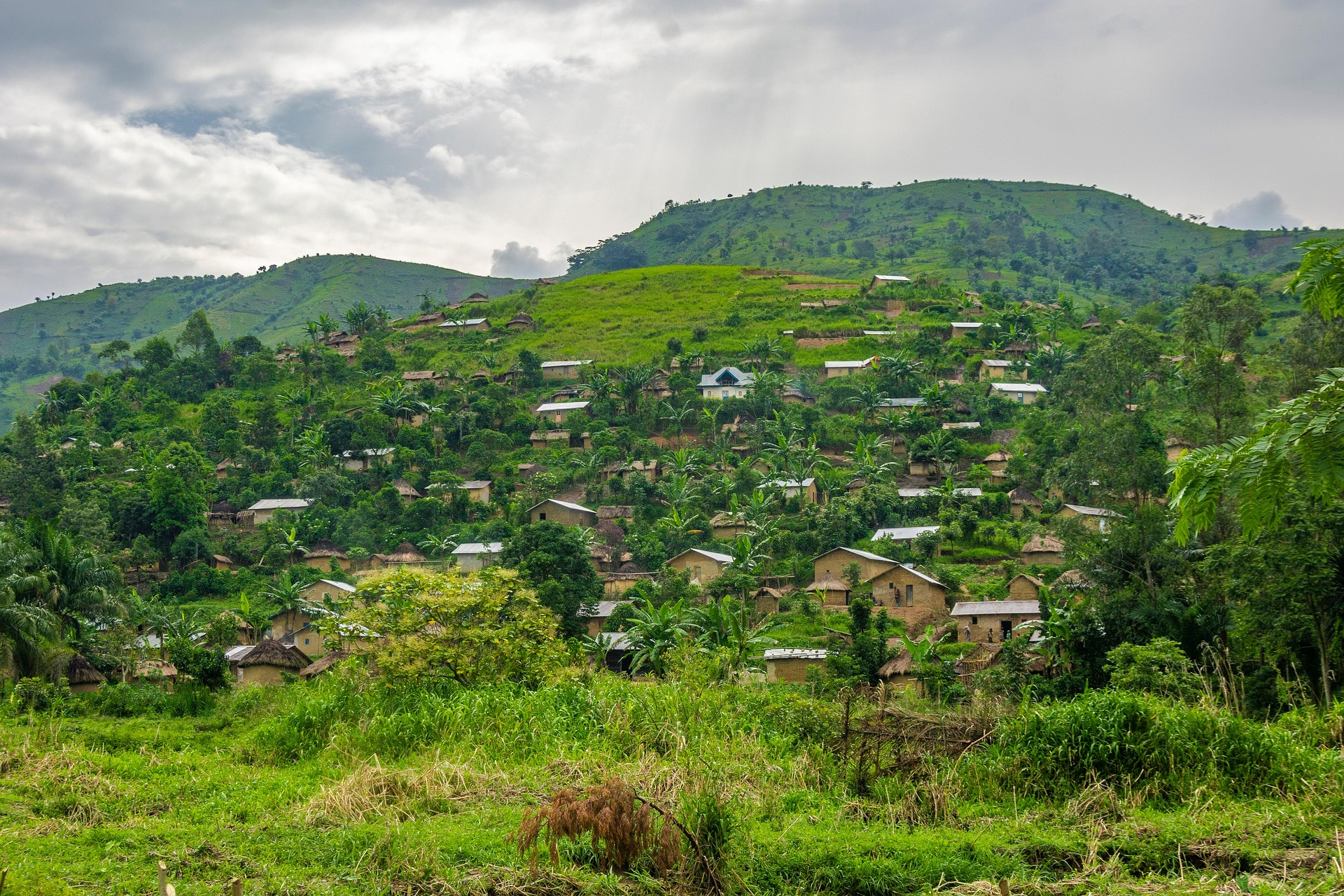
Words matter in conflict, and few carry more consequences than ‘terrorist’. Overused for decades, applied to insurgents, separatists, and state enemies alike, the label has been stretched to the point that it has become analytically meaningless. Yet the problem runs deeper than overuse. State actors may apply the charge of ‘terrorist’ as a justification for excessive force against its enemies. This gives them powerful incentives to keep using the label in pursuit of their own agenda.
The UN and US’ designation in 2021 of the Allied Democratic Forces, an armed group operating in north-eastern Democratic Republic of Congo, as an Islamic State affiliate has shaped policy responses for the last five years. The ADF is a genuine armed threat: the violence it commits is terror in the most literal sense. Founded in 1995 to overthrow Yoweri Museveni’s government in Uganda, the ADF has been based in eastern DRC for three decades. Following sustained military pressure from Ugandan, Congolese, and UN peacekeeping forces (MONUSCO) and the 2015 arrest of its founder, the reconstituted ADF under the new leadership of Seka Musa Baluku adopted a Salafi-jihadist rhetoric. It thereby earned IS recognition as its Central Africa Province (ISCAP) in 2019.
IS affiliation solved two problems simultaneously: it secured external financing and allowed Baluku to consolidate his leadership over a fractured organisation by anchoring his authority in IS legitimacy. For IS, having just lost its last territories in Syria and Iraq, the ADF offered a new province to sustain its global expansion narrative. The relationship has always been less about command and control than about mutual reputational benefit, about strategic alignment rather than operational integration. This distinction should matter for policy formulation.
South Kivu in eastern DRC.
Uganda has been the designation’s most consequential exploiter. This is not to say Kampala invented the ADF problem – the group poses a genuine security threat – but it has systematically inflated that threat for purposes that extend well beyond counterterrorism. Long before IS recognition, Museveni’s government was alleging ADF links to Al-Qaeda and Al-Shabaab, claims repeatedly rejected by the UN Group of Experts. The terrorist framing served regime security priorities: justifying arrests, deflecting scrutiny of security force abuses, and extending the label to political opponents. It also positioned Uganda as an indispensable partner in the US-led ‘war on terror’, unlocking military training, equipment, and financing.
The label also provided legal and political cover for a Ugandan military presence in eastern DRC, which serves economic and geopolitical interests alongside its stated security goals. Under Operation Shujaa, a joint Congolese-Ugandan military operation, Ugandan forces have concentrated in gold-rich areas of Ituri, Beni, and Lubero, along Ugandan-financed road corridors, in territory that constitutes a critical market for Ugandan goods and oil infrastructure around Lake Albert. By 2025, Uganda’s military presence had roughly doubled to some 6,000. The terrorism designation makes this legally viable: it transforms a contested foreign military deployment into a sanctioned, joint counterterrorism operation.
This logic of amplification became evident in June 2025, when Uganda’s top command detained senior military intelligence officers after allegations that they had orchestrated two suicide bombings in Kampala with ADF operatives to secure operational funds and political leverage. No final findings have been published. Yet, the accusation that those tasked with defeating the threat may have manufactured it reveal how Ugandan security forces internalised the designation as a resource rather than as a threat to be suppressed.
Kinshasa has run its own version of this logic. Under Mobutu Sese Seko, the government tolerated and at times supported the ADF as leverage against Uganda. In 2013, facing pressure to confront the Democratic Forces for the Liberation of Rwanda, a Rwandan Hutu militia, Kinshasa found it more convenient to direct attention and military resources toward the ADF, whose threat narrative was easier to project internationally, rather than confronting the FDLR directly, a politically costly operation that risked exposing divisions within the Congolese army. From 2014, authorities attributed mass killings in Beni territory, North Kivu, almost exclusively to the ADF, despite evidence implicating elements of the Congolese army. Over time, “ADF violence” has become a brand appropriated by criminal networks, local militias, and security forces to conceal violence driven by land disputes, trade competition, and local score-settling. The label reshapes which forms of violence become visible, investigable, and politically actionable, and which do not.
What the framing hides
The ADF’s resilience has far more to do with its embeddedness in the Uganda-DRC borderlands than with transnational jihadism. The region is defined by weak state authority, land disputes, cross-border trade networks, and layered competition among armed actors, local elites, and security forces. The group survives because it is entangled in these dynamics, taxing farmers, trading cacao and gold, and exploiting local grievances by offering protection from state predation, settling land disputes, and recruiting from communities marginalised by the state. Most members joined through forced conscription, deception, or the lure of income, not ideological conversion. In areas of prolonged ADF presence, cooperation between local communities and the group often reflects a practical calculation: the ADF will return after military operations, and the state will not.
None of this negates the jihadist dimension of the ADF’s identity. IS connections are real and shape the group’s propaganda, parts of its internal organisation, recruitment and financing. But these elements are constantly reshaped by the local, tactical, and opportunistic logics in which they are embedded.
Why the response keeps failing
The designation has locked in a response architecture that has demonstrably made things worse. In the first five months of this year alone, ADF attacks killed hundreds of civilians across Ituri and North Kivu provinces, with Amnesty International reporting a surge in war crimes including forced marriage, child recruitment, and sexual violence. While joint Ugandan-Congolese operations have been running since 2021, the group is more active now than when they began.
Military pressure by Ugandan and Congolese forces has pushed the ADF into weakly governed areas of north-western Lubero, Mambasa, and Irumu, where it has regrouped, expanded, and terrorised communities into displacement. Demobilisation programmes have been starved of political support because the ADF’s terrorist designation made negotiation politically and legally difficult, narrowing off-ramps for members. The empowerment of auxiliary militias, including Wazalendo groups with their own records of abuse, has blurred the line between protection and predation.
Changing course does not require dismantling the response architecture overnight, but it does require working against its worst features. Within the existing framework, the UN Security Council could re-orient MONUSCO’s mandate and the sanctions regime to prioritise civilian protection and accountability for all perpetrators of violence, not just those carrying an ADF label. The counterterrorism framing should not determine which abuses investigators pursue and which they ignore. Demobilisation and community reintegration efforts, currently treated as secondary to military operations, need political investment and protection. Lastly, international monitors, researchers, and civil society representatives need to actively challenge the pattern of attributing all violence in affected areas to the ADF. Accountability for the full range of perpetrators is a precondition for any durable reduction in violence.
None of this is straightforward. As international pressure on eastern DRC intensifies following the launch of the M23 offensive in 2022, the ADF risks being treated as a manageable side problem amenable to familiar solutions. But those solutions have been tried for five years and created the opposite effect.
As long as the ‘war on terror’ framing remains the only template on offer, authorising military deployments while foreclosing everything else, the civilians of Ituri and North Kivu will keep paying the price for a designation that was never really about them and has made their lives appreciably worse.
The post The Politics of ‘Terrorism’ as a Designation in Eastern DRC appeared first on African Arguments.