The Road to Prosperity: How Namanve Is Rewriting Uganda’s Industrial Story
A few years ago, accessing land inside the Kampala Industrial and Business Park in Namanve was a nightmare. Investors struggled through muddy tracks, trucks routinely got stuck, flooding cut off entire sections of the park during heavy rains, and vast stretches of gazetted industrial land remained undeveloped. Today, that picture is rapidly changing. Modern roads now […] The post The Road to Prosperity: How Namanve Is Rewriting Uganda’s Industrial Story appeared first on Daily Star.
 Black News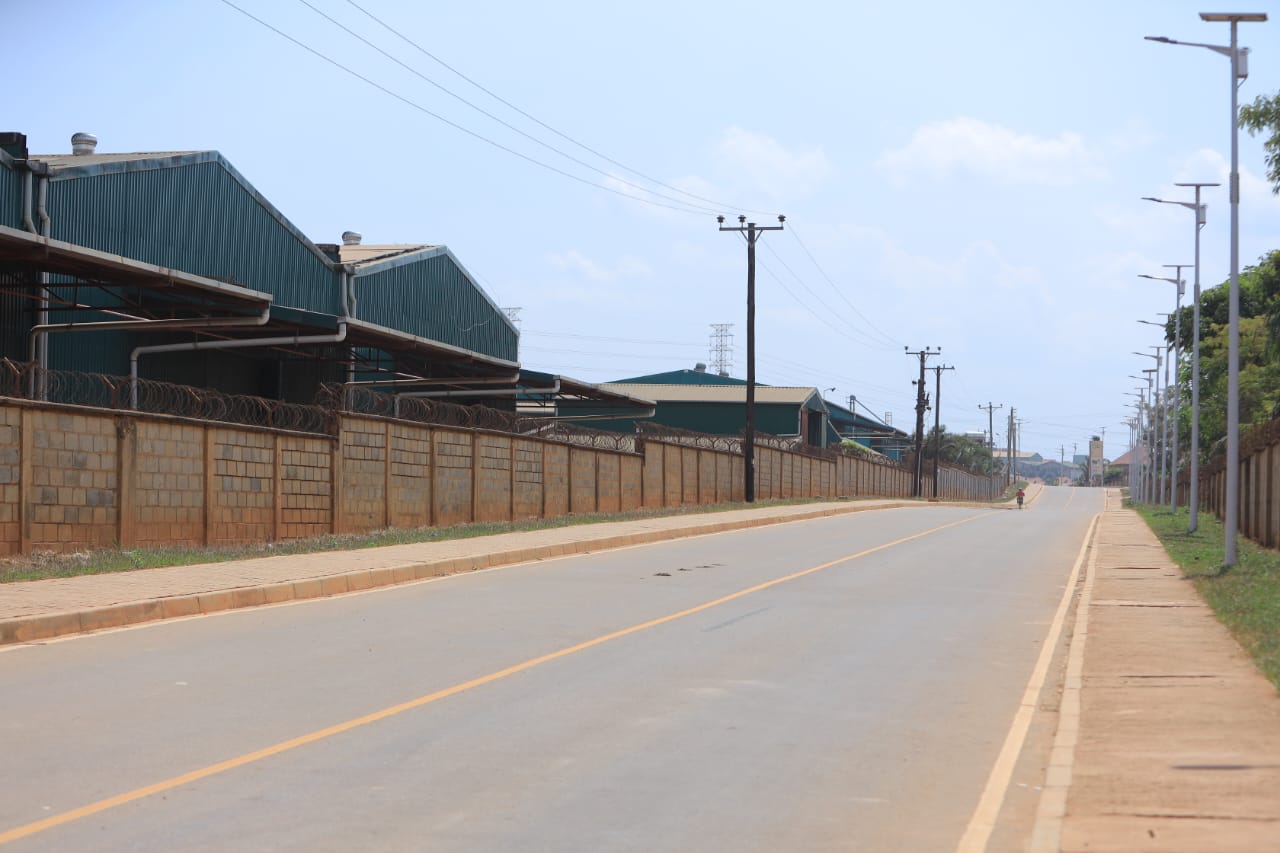
A few years ago, accessing land inside the Kampala Industrial and Business Park in Namanve was a nightmare. Investors struggled through muddy tracks, trucks routinely got stuck, flooding cut off entire sections of the park during heavy rains, and vast stretches of gazetted industrial land remained undeveloped.
Today, that picture is rapidly changing. Modern roads now crisscross the 2,400-hectare industrial city. Solar-powered streetlights illuminate major routes, drainage channels have significantly reduced flooding, and new factories continue to rise almost every month.
At the heart of this transformation is the Namanve Industrial Park Infrastructure Project, one of Uganda’s largest industrial infrastructure investments, now standing at 80 percent completion. The project is funded through a partnership between the Government of Uganda and United Kingdom Export Finance (UKEF), with funding from Standard Chartered Bank, implementation by the Uganda Investment Authority (UIA) and construction by Lagan DOTT Namanve Ltd.
The project is increasingly becoming one of the key enablers of Uganda’s ambitious Tenfold Growth Strategy, which seeks to expand the country’s economy from approximately US$50 billion to US$500 billion by 2040 through industrialisation, value addition and increased exports.
From Wetland to World-Class Industrial Hub
Standing along one of the newly completed roads, Eng Bamanya Andrew the Authorised Representative of Lagandott Namanve Ltd and the regional director for Lagan Group Ltd, recalls the enormous engineering challenge the project presented.
“We started construction in 2018, but many people don’t appreciate that the majority of this area was essentially swamp,” he said.
“Before laying a single layer of asphalt, we had to stabilise the ground by surcharging the soil to create a firm foundation. That process took considerable time, but it was necessary to build infrastructure that will serve Uganda for decades.”
The effort is already paying off.
When construction began, only about 15 factories were under development despite more than 30 investors having acquired land.
Today, the park hosts approximately 480 factories, with nearly 280 already operational.
According to statistics from the Uganda Investment Authority and the Uganda Revenue Authority, businesses operating within the park now contribute about US$3 billion annually in tax revenue.
“When you compare an infrastructure investment of about €215 million against annual revenues of approximately US$3 billion, the economic value becomes very clear,” Bamanya explained.
“The park has also created around 28,000 direct jobs and an estimated 150,000 indirect jobs across supply chains.”
A Magnet for Investment
The improved infrastructure has fundamentally changed investor confidence.
Factories that once sat on inaccessible plots are now connected by paved roads, reliable electricity, dedicated water supply, fibre optic connectivity and enhanced security systems.
International Business Director at Lagan, Gerry Cawley, said the project demonstrates how quality infrastructure creates an enabling environment for industrial growth.
“Infrastructure is far more than roads and drainage. It creates confidence for investors. When businesses know they can access reliable roads, utilities and services, they invest with certainty. What we are seeing in Namanve is the foundation for sustainable industrial growth that will benefit Uganda for generations.”
The transformation has been so significant that virtually all industrial plots within the park have now been allocated.
Government agencies report continued demand from investors seeking space inside the industrial park.
Communities Reap the Benefits
While investors are among the biggest beneficiaries, surrounding communities say the project has transformed everyday life.
Residents of nearby Butto Village remember years when floods regularly submerged homes and roads, making movement almost impossible.
Today, proper drainage has greatly reduced flooding, while increased business activity has created new employment opportunities.
For Oscar Okiring, a resident of Butto Village, the changes are impossible to ignore.
“Before these roads were built, this area was isolated whenever it rained. Floods affected our homes, businesses and transport. Today, we have better roads, improved drainage and increased security because there are more people and businesses operating here. Many young people from our community have also found employment during construction and in the factories.”
Truck Drivers Welcome Better Roads
The improved transport network has equally transformed logistics.
Long-distance truck driver Walusimbi Shafiq, who frequently transports goods to factories inside the park, says delivery times have significantly reduced.
“Previously, trucks would spend hours navigating muddy roads, especially during the rainy season. Flooding made deliveries unpredictable. Today, movement is much smoother, transport costs have reduced and businesses can plan their deliveries with confidence.”
Efficient transport, experts say, is essential for maintaining Uganda’s competitiveness in regional and international markets.
Building Uganda’s Industrial Future
Beyond roads, the infrastructure project includes stormwater drainage, dedicated water supply systems, electricity distribution, fibre optic connectivity, solar street lighting and CCTV surveillance.
Together, these investments are positioning Namanve as Uganda’s premier industrial destination.
Eng. Jameson Olonya, Contract Manager at DOTT Services, says the project represents far more than the construction of roads and utilities. He notes that it is laying the foundation for Uganda’s industrial transformation by providing world-class infrastructure that will attract investment, create jobs, and support sustainable economic growth.
According to him, the project demonstrates what can be achieved through strong collaboration between the Government of Uganda, development partners, the Uganda Investment Authority, and the contractor.
“Our goal has never been simply to complete an infrastructure project, but to create an industrial environment where businesses can thrive, investors have confidence, and communities benefit through employment and improved livelihoods. We are proud to be contributing to a project that will continue driving Uganda’s industrialisation and economic growth for generations to come.” Eng. Olonya said adding that the project is expected to be substantially completed by the end of the year.
Supporting the Tenfold Growth Strategy
As Uganda pursues its goal of becoming a US$500 billion economy by 2040, projects like Namanve are increasingly viewed as critical economic enablers.
Industrial parks provide manufacturers with serviced land, reliable infrastructure, tax incentives and efficient logistics, creating conditions that attract both domestic and foreign investment.
Bamanya said, the Kampala Industrial and Business Park is contributing significantly to employment, exports and government revenue.
For communities surrounding Namanve, however, the transformation is measured less in economic statistics than in everyday realities: safer roads, reduced flooding, better security, growing businesses and thousands of livelihoods supported by a project that has turned what was once an inaccessible wetland into one of Uganda’s fastest-growing industrial centres.
He also paid tribute to the Government of Uganda, development partners and implementing agencies that made the project possible.
“We sincerely appreciate the vision of President Yoweri Kaguta Museveni, whose commitment to industrialisation continues to drive projects like this. We are equally grateful to the Government of Uganda, the Uganda Investment Authority, United Kingdom Export Finance, the British High Commission and all stakeholders whose collaboration has enabled this transformation.”
The post The Road to Prosperity: How Namanve Is Rewriting Uganda’s Industrial Story appeared first on Daily Star.