NAACP Launches $20 Million Plan to Mobilize 6.5 Million Black Voters
As Black voters stand to lose representation, one of the oldest civil rights organizations in the U.S. is leaning on a playbook that allowed it to radically increase Black political participation at the height of Jim Crow. Thirty-three congressional districts. Twenty-thousand volunteers. A $20 million investment. Those are some of the details behind what the […] The post NAACP Launches $20 Million Plan to Mobilize 6.5 Million Black Voters appeared first on Capital B News.
 Black News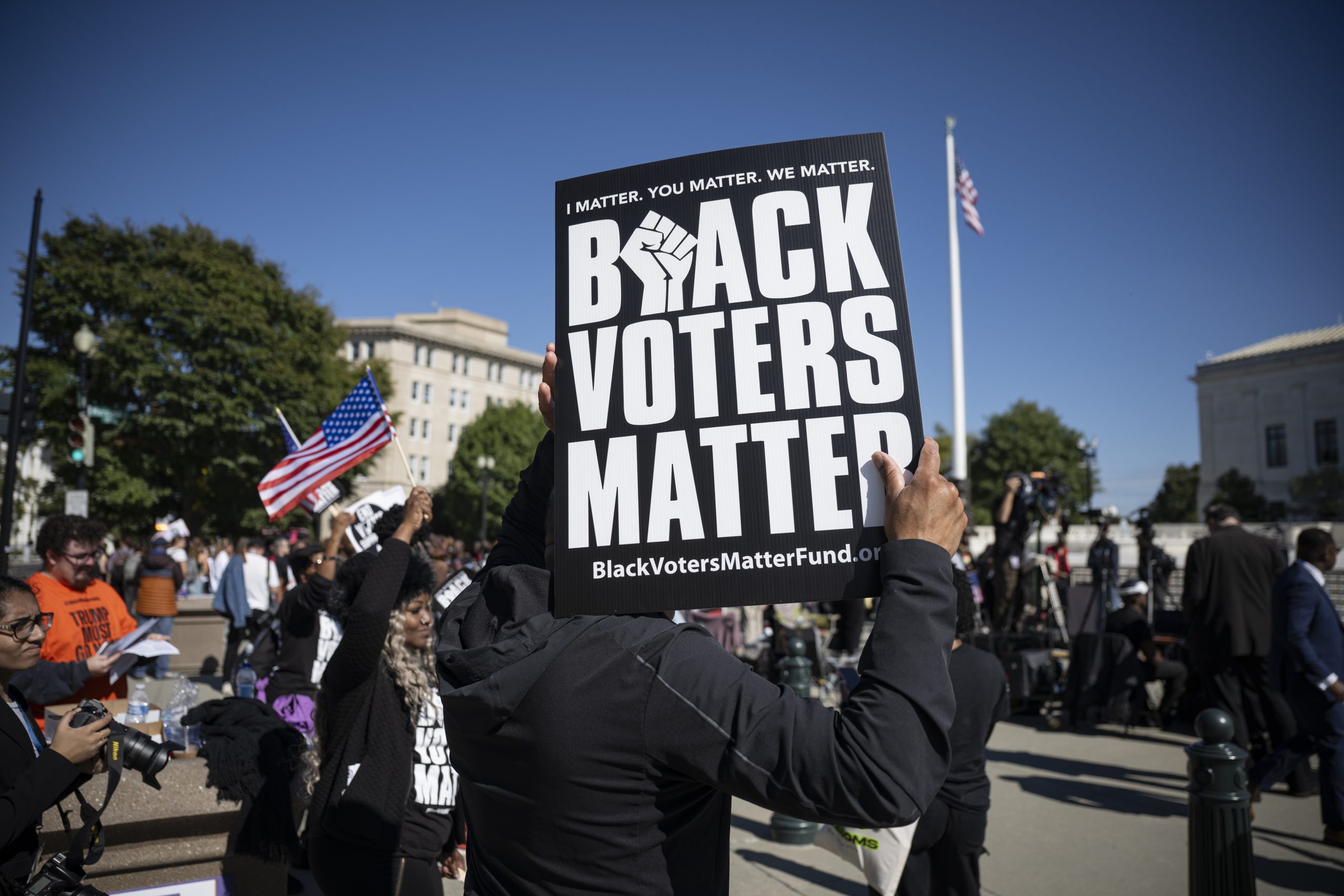


As Black voters stand to lose representation, one of the oldest civil rights organizations in the U.S. is leaning on a playbook that allowed it to radically increase Black political participation at the height of Jim Crow.
Thirty-three congressional districts.
Twenty-thousand volunteers.
A $20 million investment.
Those are some of the details behind what the NAACP says is its largest get-out-the-vote campaign for a midterm election in the organization’s 117-year history. Announced this week following the country’s 250th anniversary, the effort aims to build a massive ground operation in the months leading up to November.
The campaign reflects a new reality. Since the U.S. Supreme Court further undermined federal voting rights protections in April, the responsibility of protecting Black voting power has shifted largely to states and civil rights organizations, and the NAACP is taking up the charge using a decades-old method.
“This isn’t necessarily a change of priorities,” Tyler Sterling, the national director of campaigns for the NAACP, told Capital B. “It’s staying on that same path to ensure that the democracy that Black voters have fought so hard to maintain still works for us.”
The NAACP’s campaign will cover the full arc of the election cycle, from voter registration and door-to-door canvassing to community events and voter education through Election Day. The goal is to reach 6.5 million Black voters through a campaign that will also include radio advertisements and other spots.
The organization has divided the 33 congressional districts into two tiers based on where it believes that its campaign can have the greatest impact. Sterling identified districts in states including Michigan and New York as among its top priorities, while adding that the NAACP is also investing heavily in down-ballot races across the South for positions such as sheriff and county commissioner.
This push builds on various voting rights efforts that the NAACP has rolled out since even before the Supreme Court’s April decision. The organization has sued over congressional maps in Missouri, Tennessee, and Texas that dilute Black voting power, and it has won a legal victory blocking a U.S. Postal Service policy that threatened to limit mail-in voting. The NAACP has also called on Black athletes to refuse to play at public schools in Southern states that have scaled back diversity, equity, and inclusion programs or eroded Black voting rights.
While there’s a tendency to think of the NAACP purely as a legacy organization with questionable relevance to contemporary civil rights struggles, it’s well positioned to lead this historic midterm effort because of its network of trusted local leaders, according to Cornell William Brooks, who was the president of the NAACP from 2014 to 2017.
In many places, he told Capital B, local NAACP chapters are the first call when Black voters encounter problems, whether or not those problems have anything to do with civil rights. And that’s because the leaders of those chapters aren’t parachuting in to save the day — they live in the same neighborhoods, shop at the same grocery stores, and have children participating on the same sports teams as the people they serve.
“The NAACP in most communities is 911 for democracy. It’s just the organization that people call — not metaphorically, but literally,” Brooks said, adding that he commends the NAACP for taking such a bold step and for doubling down on the person-to-person contact that it’s known for. “A small effort would not suffice for this moment.”
A continuation of history
The NAACP’s focus on voter mobilization is rooted in one of the organization’s oldest traditions. Especially throughout the first half of the 20th century, it combined major legal victories with campaigns to register Black voters and expand political participation.
In 1915, the NAACP secured its first significant Supreme Court victory when it won Guinn v. United States, a case that found unconstitutional a grandfather clause that exempted white voters from literacy tests, while it imposed those same tests on Black voters. The landmark decision struck an early blow against Black disenfranchisement in the South.
In 1944, Thurgood Marshall, who at the time was the head of the NAACP’s litigation arm, persuaded the Supreme Court in Smith v. Allwright to overturn a Texas policy that allowed just white voters to participate in Democratic primaries. Since these contests effectively determined election winners, the decision opened the door for Black voters to participate in key races. The number of Black registered voters in the South rose to as many as 800,000 by 1948 and to 1 million by 1952.
Not only did the NAACP register more Black voters, noted Brooks, but it also encouraged people to run for office. One of the people who sought office in the wake of the decision was his grandfather, the Rev. James Prioleau. He didn’t prevail in his race to represent South Carolina’s 6th Congressional District — a seat that U.S. Rep. Jim Clyburn has held since 1993 — but his attempt inspired Black voters to turn out at the polls, Brooks said.

That 1944 win gave new momentum to Florida NAACP leader Harry T. Moore, who created a successful Black voter registration drive through the Progressive Voters League. He and others helped to register roughly 100,000 Black voters, even when they were threatened with violence. Moore and his wife, Harriette, were killed from injuries that they sustained when their home was bombed on Christmas Day 1951.
As in the past, the NAACP intends to confront the latest threats to Black voting power with a response that includes robust voter mobilization. The $20 million get-out-the-vote investment shows that the organization believes that this approach is just as essential now as it was during the Jim Crow era.
“We’re not resting on our laurels,” Sterling said. “We’re using this muscle that is civic engagement to ensure that Black voters are protected, have representation, and can participate in our democracy.”
Read More:
- Black Organizers Are Preparing for a New Era of Voting Rights Battles
- The Plaintiffs Behind Alabama’s Voting Rights Case Are Ready to Fight Again
- Jim Clyburn’s District Is at the Center of a New Fight Over Black Voting Power
The post NAACP Launches $20 Million Plan to Mobilize 6.5 Million Black Voters appeared first on Capital B News.