Turkey and Israel clash for control of the Red Sea as Somalia and Somaliland become strategic battlegrounds
Turkey and Israel are intensifying competition in the Horn of Africa, with Somalia and Somaliland emerging as key battlegrounds for oil, military influence and control of vital Red Sea trade routes.
 Black News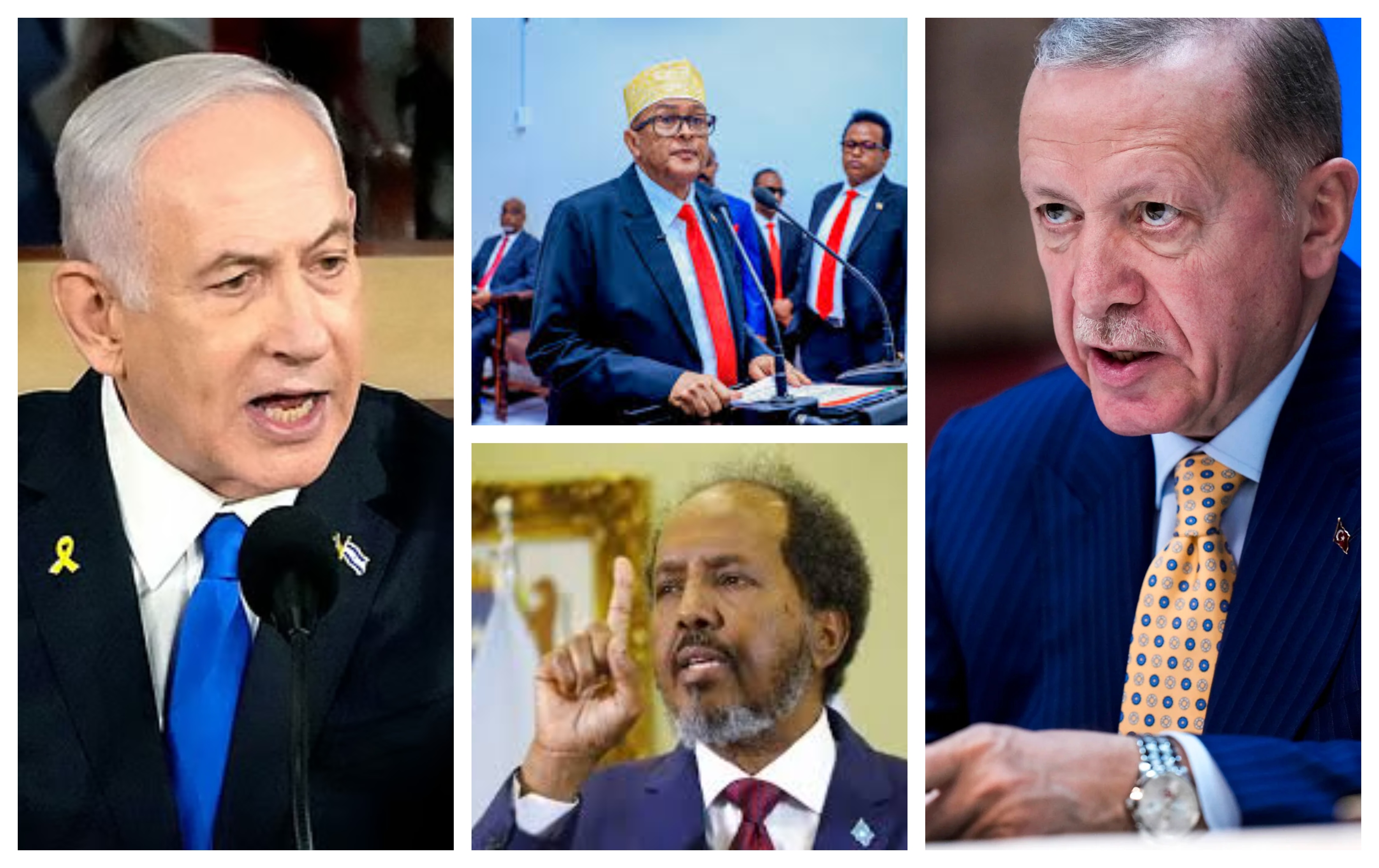


Turkey and Israel are intensifying competition in the Horn of Africa, with Somalia and Somaliland emerging as key battlegrounds for oil, military influence and control of vital Red Sea trade routes.
- Turkey and Israel are intensifying their rivalry in the Horn of Africa, focusing on Somalia and Somaliland for strategic control over energy resources and Red Sea trade routes.
- Turkey has formalized agreements with Somalia for offshore and onshore oil and gas exploration and expanded its military presence with bases and equipment deployments.
- Israel has recognized Somaliland as an independent state and is planning a military base there to monitor Yemen’s Houthis and secure strategic access to the Bab el-Mandeb Strait.
- The competition in Somalia and Somaliland is part of a broader conflict for regional influence, further strained by disagreements over Gaza, Syria, and alliances throughout the Middle East and Africa.
Turkey has consolidated its position through formal agreements with Somalia’s federal government, securing major offshore and onshore oil and gas exploration rights alongside a strong military presence through its largest overseas training base.
Israel, meanwhile, has moved closer to Somaliland after becoming the first country to formally recognise the territory as an independent state and is exploring plans for a military base near the Gulf of Aden to monitor Yemen’s Houthis and secure strategic access to the Red Sea corridor.
Turkey locks in Somalia’s energy reserves
Earlier this year, Somalia confirmed it was ready to begin its first offshore oil drilling operations, with a Turkish government-owned drilling ship expected to arrive off its coast, according to BBC.
The move followed the successful completion of seismic surveys last year by Turkey’s research vessel Oruç Reis, which collected 3D seismic data across key offshore blocks.
Somalia is estimated to hold at least 30 billion barrels of offshore oil potential and around 6 billion cubic metres of natural gas, though much of it remains unproven compared with established producers such as Libya and Nigeria.
Military footprint expands beyond oil
Since 2011, Turkey has become one of Mogadishu’s closest allies, combining humanitarian support, military training and infrastructure investment.
In December 2025, Turkish President Recep Tayyip Erdoğan said Ankara planned to establish a spaceport in Somalia.
Subsequent reports later confirmed that Turkey was exploring a broader aerospace facility, including a spaceport for satellite and possible missile launches, alongside plans for a naval base, while F-16 fighter jets were deployed inside Somalia in early 2026.
In February 2026, Turkey also dispatched ageing U.S.-made M48 and M60 tanks through the streets of Mogadishu in a protected convoy after they were unloaded from a Turkish Navy landing ship.
According to reports, the tanks were deployed to secure Turkish facilities in the Warsheikh area, about 37 miles north of the capital, where Ankara is building the site for satellite launches and broader aerospace operations.
Separately, Turkey recently reopened its $50 million military base in Mogadishu, reinforcing Ankara’s role in Somalia’s security sector and its support for the training of Somali National Army soldiers, including elite units involved in operations against Al-Shabaab.
Israel turns to Somaliland for Red Sea advantage
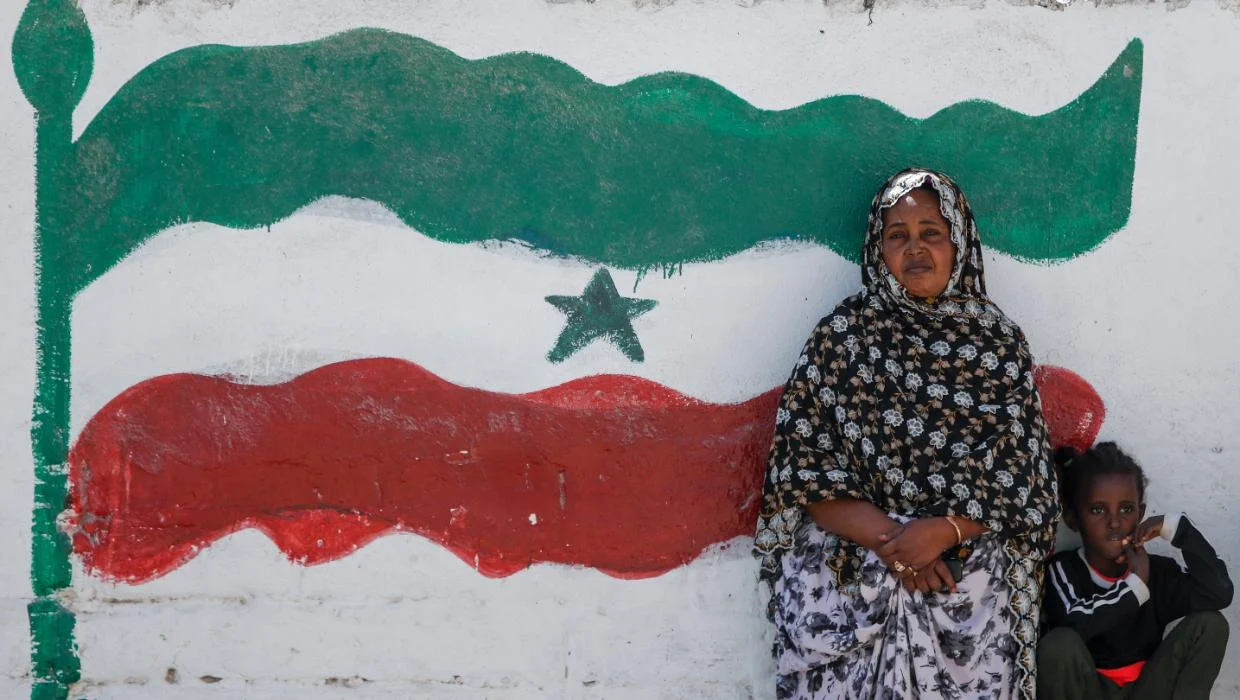
Israel, meanwhile, has focused on Somaliland, whose coastline faces Yemen across the Gulf of Aden.
Prime Minister Benjamin Netanyahu announced in late 2025 that Israel had formally recognised Somaliland, describing the decision as being “in the spirit of the Abraham Accords.”
The recognition triggered strong condemnation from Somalia and several Arab countries, including Saudi Arabia, Palestine, Egypt, Kuwait, Iraq, Jordan and Qatar, all of which rejected the decision as illegal and warned that it threatened regional stability and Somalia’s territorial unity.
Turkey also criticised the move, with President Recep Tayyip Erdoğan calling Israel’s recognition of Somaliland “illegitimate and unacceptable” and later saying it “does not benefit” the region during a February visit to Ethiopia, one of Israel’s key allies in the Horn of Africa.
Despite the criticism, a Bloomberg report in March confirmed that Israel was exploring plans to build a military base in Somaliland to monitor and target Yemen’s Houthis, taking advantage of the region’s strategic location near the Bab el-Mandeb Strait.
Defending the move, Shiri Fein-Grossman, chief executive of the Israel-Africa Relations Institute and a former member of Israel’s National Security Council, told Israeli outlet i24 News: “Everyone just looks at the map and understands what Israel is looking for here.”
“The recognition of Somaliland gives Israel a strategic location near the Houthis in Yemen and comes at a time that Israel needs as many friends as possible.”
Rising diplomatic tensions between Ankara and Tel Aviv
Beyond Somalia and Somaliland, tensions between Turkey and Israel have deepened over Gaza, Syria and wider regional power projection, further exposing a growing geopolitical rivalry between the two military powers.
Middle East Eye reported that Prime Minister Benjamin Netanyahu has increasingly shifted his rhetoric towards Turkey as Ankara expands its influence across the eastern Mediterranean and Africa, particularly around Cyprus and Greece.
In a post on X, Netanyahu accused President Recep Tayyip Erdoğan of “massacring his own Kurdish citizens” and “accommodating Iran’s terror regime and its proxies”.
Turkey responded with sharp condemnation, with officials in Ankara describing Netanyahu as the “Hitler of the era”, citing Israel’s military actions in Gaza and across the region.
While Somalia and Somaliland remain central to their competition in the Horn of Africa, the broader dispute reflects a much wider struggle for influence stretching from the Red Sea to the Middle East, with both military powers seeking strategic bases in the two African territories to strengthen their regional reach.