UN envoy points to fragile progress in Haiti amid ongoing gang violence
Carlos Ruiz Massieu, Special Representative of the United Nations Secretary-General, on Thursday, April 23, 2026, highlighted signs of institutional progress in Haiti while warning that the country remains in a state of extreme fragility due to persistent gang violence. Delivering an address on the situation in Haiti, Massieu described what he called a national paradox—an […] The post UN envoy points to fragile progress in Haiti amid ongoing gang violence appeared first on CNW Network.
 Black News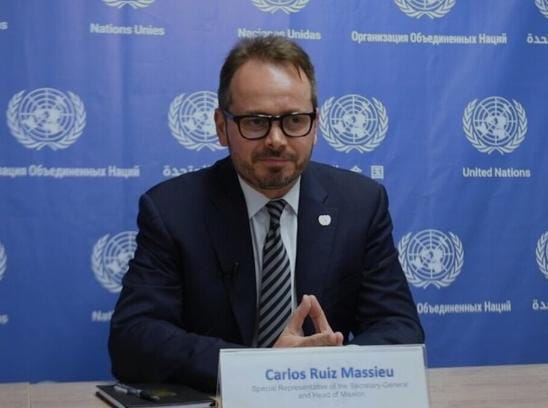

Carlos Ruiz Massieu, Special Representative of the United Nations Secretary-General, on Thursday, April 23, 2026, highlighted signs of institutional progress in Haiti while warning that the country remains in a state of extreme fragility due to persistent gang violence.
Delivering an address on the situation in Haiti, Massieu described what he called a national paradox—an administration steadily rebuilding state functions even as large parts of the country remain affected by insecurity.
He noted that under the leadership of Alix Didier Fils-Aimé, the continuity of the state has been maintained. He also pointed to the National Pact for Stability, signed by a broad cross-section of civil society, as evidence of a commitment to a “Haitian solution” to the crisis.

According to Massieu, the completion of the registration of political parties—achieved for the first time since 2016—represents a major step toward restoring democratic governance. He said this milestone lays the foundation for what the international community considers the only legitimate path forward: credible elections to reestablish constitutional order.
He further highlighted the symbolic and practical significance of the resumption of Cabinet meetings at the National Palace in Port-au-Prince after a three-year hiatus, describing it as a gradual reclaiming of public space in the capital, though he cautioned that such gains remain fragile.
Massieu also pointed to strengthened coordination between Haitian authorities and international partners, including the appointment of key officials to the United Nations Office for Security and Justice in Haiti and closer collaboration with the Gang Repression Force (FRG).
Despite these developments, he warned that the security situation continues to deteriorate in several areas. Recent massacres in Jean-Denis and attacks in the Southeast underscore the continued presence and mobility of armed gangs.
The humanitarian situation also remains severe. Massieu noted that approximately 1.45 million people are currently displaced, living in camps or with host families, while an estimated 6.4 million Haitians are expected to require humanitarian assistance by 2026.
He stressed that achieving long-term stability will require more than security interventions. Among the measures highlighted was the need to revive the National Commission for Disarmament, Demobilization, and Reintegration, aimed at providing alternatives for young people recruited into gangs.
Additionally, he pointed to plans to establish specialized judicial units to address mass and financial crimes, in an effort to tackle longstanding issues of impunity.
Describing the current moment as a “window of opportunity,” Massieu called for sustained international support, invoking a Haitian proverb to underscore the need for collective effort.
He said 2026 must mark a turning point where political gains translate into meaningful improvements in security and daily life for the Haitian people.
The post UN envoy points to fragile progress in Haiti amid ongoing gang violence appeared first on CNW Network.