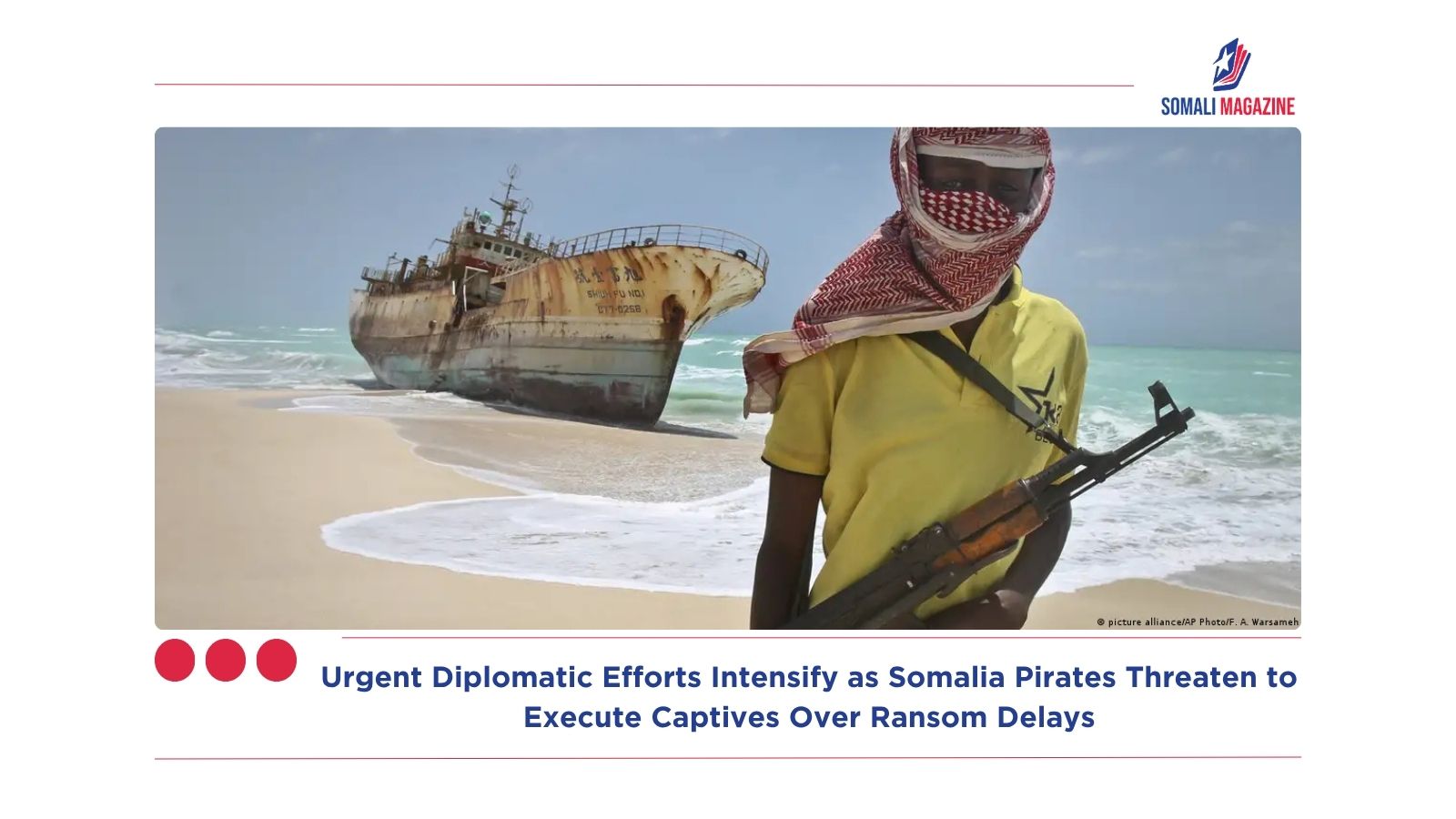
Somalia pirates threaten to execute captives over ransom delays following a severe diplomatic deadlock regarding the hijacked oil tanker M/T Eureka. According to distressing statements released by family members of the twelve crewmen, direct death threats have been transmitted by the heavily armed captors as psychological leverage to accelerate a requested financial payout. The crew, which comprises eight Egyptian nationals and four Indian seafarers, has been held under worsening humanitarian conditions since the foreign-flagged vessel was intercepted in early May near Yemen’s Shabwa governorate. Relatives revealed that while a preliminary settlement of two million dollars had initially been reached with the ship’s owner, subsequent administrative delays in processing the wire transfer triggered intense anger among the hijackers. In response, the criminal networks reneged on the initial agreement, raised their financial demands to three million dollars, and threatened to move specific crew members inland to a remote mountainous region to mount severe psychological pressure.
The critical situation has drawn deep concern from international maritime bodies and national governments, prompting high-level diplomatic coordination to ensure the safety of the hostages. The Egyptian Ministry of Foreign Affairs stated that it is closely monitoring the unfolding crisis through continuous communication with the Egyptian Embassy in Mogadishu and relevant Somali federal authorities. Similarly, Somalia’s Ambassador to Egypt, Ali Abdi Aware, indicated that the federal government is intensifying diplomatic efforts and maintaining strong contacts with all involved parties to resolve the dangerous impasse. Meanwhile, professional maritime syndicates have categorically ruled out direct military intervention, warning that any aggressive rescue operation would entail serious, unmanageable risks to the hostages’ lives. Instead, representatives from the Egyptian Federation of Marine Officers suggest that the severe communiques sent by the captors are primarily intended to force a rapid financial settlement rather than reflecting an immediate intent to carry out the executions.
This highly volatile hostage ordeal has reignited broader global conversations regarding maritime security concerns and the effectiveness of current safety standards for international seafarers. Industry experts note that while Somalia pirates threaten to execute captives over ransom delays to pressure ship owners, these decentralized groups do not seem to possess the highly structured, professional naval networks that dominated the region over a decade ago. Nevertheless, the recent resurgence of armed vessel seizures since late 2023 indicates that regional security instability continues to create hazardous vacuums along this vital international shipping corridor. As family members launch online solidarity campaigns to support the crew, maritime safety authorities are urging stricter regulatory oversight for crews working aboard foreign-flagged vessels navigating high-risk waters. With the strict deadline set by the armed captors rapidly expiring and shortages of drinking water reported on board, international monitors continue to watch whether diplomatic channels can successfully break the deadlock before the crisis turns fatal.


 Black News