When Black Communities Lose Their Vote, Schools Pay the Price
From Reconstruction to today, political representation has helped Black communities secure educational opportunity. Denise Forte warns that new restrictions on voting rights could undermine decades of progress in public education. The post When Black Communities Lose Their Vote, Schools Pay the Price appeared first on Word In Black.
 Black News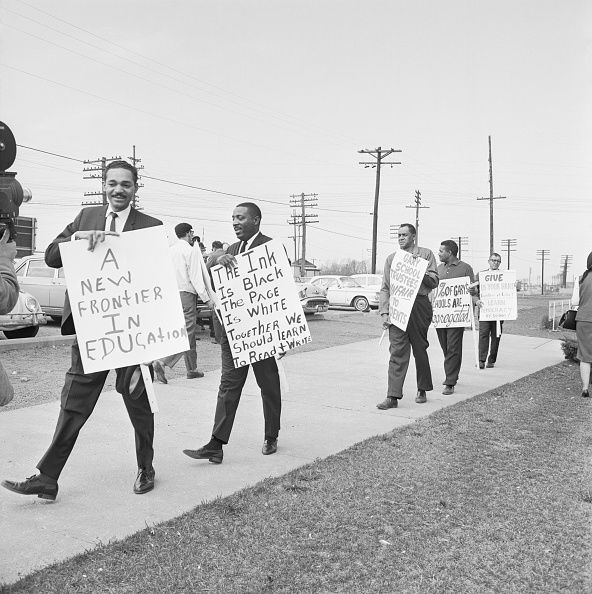

For generations, Black families have C understood that the right to vote and the right to a quality public education are not distinct but inseparable. Education, according to Frederick Douglass, “means emancipation. It means light and liberty.”
That is why the recent Supreme Court decision in Louisiana v. Callais, which gutted a key provision of the Voting Rights Act, is not only a threat to democracy but a direct attack on educational equity.
LEARN MORE: Jim Crow 2.0 Is Becoming Reality, But True History Can’t Be Erased
Because elected officials control school funding, curriculum, accountability and access to opportunity, reducing Black political representation by weakening Black political power ultimately threatens Black communities’ ability to shape the education of their children.
Education and the Vote
The fight for civil rights and justice has always run through America’s classrooms. Elected officials control public school access and quality through funding. Denying access to education has always been central to politicians seeking to deny Black self-determination and political power.
When Black communities lose representation, they also lose power over the systems and schools serving their children.
Political representation influences nearly every public education decision, many of which are made locally: school funding, reading and math investments, history and language arts curricula; library catalogs; student supports and resources; school board representation; and the weight of student, parent, and community voices.
When Black communities lose representation, they also lose power over the systems and schools serving their children.
That reality is especially significant in the Deep South, where generations of Black civil rights activists and their allies fought to secure investments in public education that many communities had long been denied. The Voting Rights Act opened pathways to representation, and representation created access to education resources, accountability, and opportunity.
High-Stakes Fight
The connection is not abstract. Black voters helped elect a new generation of Black leaders across the South, including Mississippi’s Robert Clark, the state’s first Black congressional representative since Reconstruction and later chair of the House Education Committee. Increased Black political power made government more responsive to Black communities and expanded educational opportunities.
The stakes are evident today. By weakening Section 2 of the Voting Rights Act, the Supreme Court has made it harder to challenge maps that dilute Black voting power. It’s no coincidence that, within days of the decision, Louisiana moved to eliminate a majority-Black congressional district, while Alabama was allowed to proceed with a map that did the same.
When Black communities lose representation, they lose influence over decisions that shape their children’s education.
The ongoing attacks on voting rights will weaken Black communities’ ability to advocate for equitable schools and educational opportunity.
Speaking With One Voice
As advocates and communities respond, the conversation must not become siloed. In this moment, advocates must speak in one voice and say: “Public education gives power to the vote. The vote powers public education.”
We must all make clear the consequences of the Supreme Court’s decision that could affect classrooms across the country. We’re likely to see more underfunded schools in Black communities, and more inequitable access to advanced coursework as well as watered-down curriculum, distorted history, and racist disciplinary policies.
The right for Black communities to shape the educational futures of their children must remain intact. The right to responsive representation must endure. The demand of state and federal elected officials is simple: Defend the power of the vote and the power of an excellent education.

Denise Forte is the president and CEO at EdTrust.
The post When Black Communities Lose Their Vote, Schools Pay the Price appeared first on Word In Black.