Why Black male health matters more in 2026
John Bunchy Crear, 74, stands as a living testament to both survival and warning. A longtime community activist and former member of the Black Panther Party, Crear admits he once avoided doctors altogether. “I didn’t go to the doctor for probably two or three years,” Crear said. “When I did, I had a major problem—I […]
 Black News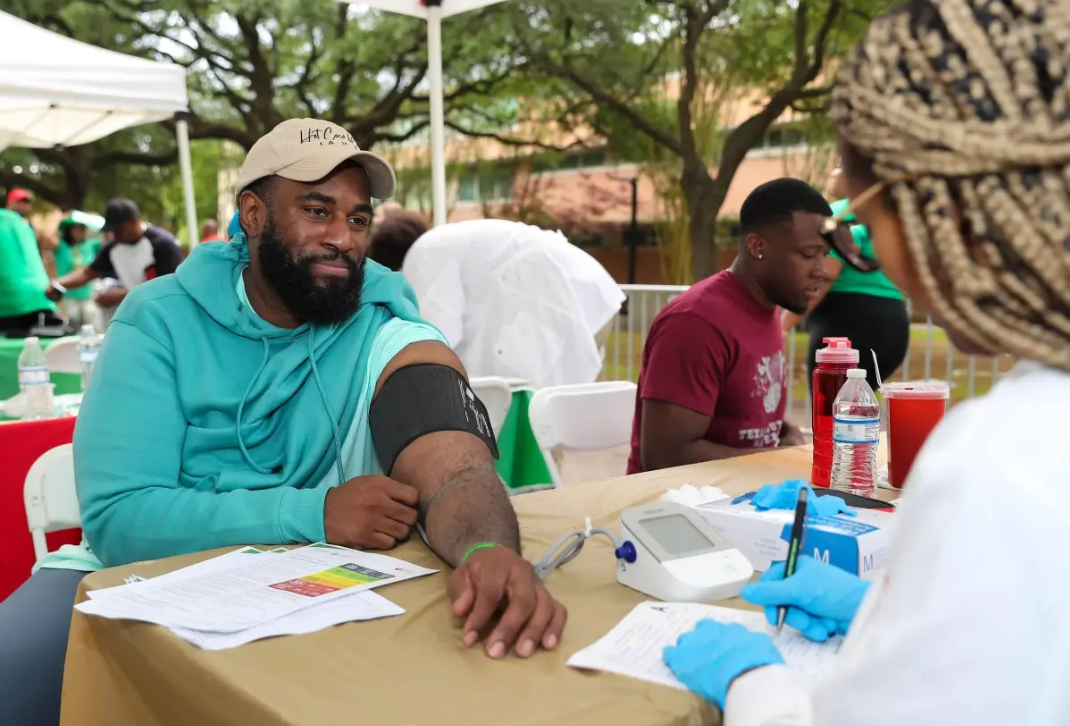



John Bunchy Crear, 74, stands as a living testament to both survival and warning.
A longtime community activist and former member of the Black Panther Party, Crear admits he once avoided doctors altogether.
“I didn’t go to the doctor for probably two or three years,” Crear said. “When I did, I had a major problem—I had bladder cancer. The only thing that made me go was blood in my urine.”

Credit: Aswad Walker/Defender
Even that life-altering diagnosis didn’t immediately shift his behavior. It took witnessing a comrade battle rectal cancer—and enjoy major cost savings through various Medicare programs—to change his mindset.
“That’s when I signed up… and I go for regular check-ups now,” he said.
Crear considers himself fortunate. Many Black men never make that appointment. Many never detect an illness early. And too often, that delay becomes fatal.
In 2026, the stakes are even higher. Longstanding disparities are colliding with new economic and political realities, creating what can only be described as a deepening health crisis for Black men.
The numbers tell a troubling story
The data is stark and consistent. Black men in the United States continue to experience shorter life expectancy—roughly 70 to 72 years—compared to white men, who average closer to 76 to 78.
But statistics alone don’t capture the urgency. What matters is how widespread—and preventable—many of these conditions are.

Credit: Aswad Walker/Defender
Donnell Cooper, executive director of the African American Male Wellness Agency in Houston (AAMWA), points to alarming findings from recent national screenings.
“In 2025, we screened 10,000 Black men… 86% had high blood pressure,” Cooper said. “That is a 911 activation for us.”
Hypertension, often called the “silent killer,” sits at the center of a web of interconnected health issues. Black men are more likely to die from heart disease, face higher rates of diabetes, and are disproportionately impacted by prostate cancer.
Cooper emphasizes a simple but powerful intervention: awareness.
“We want to encourage men to know their numbers,” he said.
Yet awareness alone cannot overcome structural barriers.
Structural forces shaping health outcomes
Health disparities are not accidental. Structural racism, economic inequality, and environmental injustice, all the result of political policies, shape Black men’s health realities.
Access remains a central issue. Black men are significantly less likely to have health insurance or a consistent primary care provider. Experiences of discrimination in medical settings deepen mistrust, discouraging engagement with healthcare systems.

Credit: Aswad Walker/Defender
There is also the issue of “invisibility.” Researchers estimate that approximately 1.5 million Black men between ages 25 and 54 are missing from daily life due to premature death or incarceration—a sobering reflection of systemic neglect.
Even basic necessities like food quality matter. Maurice Blandon, a Gen Z urban gardener, highlights the deterioration of access to nutritious food.
“Everything’s worse,” Blandon said. “The food that’s available to us these days is horrible… We’re getting edible poison now.”
Diet, environment, and access are not separate issues. They’re interconnected forces shaping life outcomes.
2026: A turning point for better or worse
What makes this moment particularly urgent is the convergence of policy changes and economic strain.
Recent federal actions—including major Medicaid cuts and the rollback of Affordable Care Act supports—threaten to push millions out of coverage. For Black men, who already face barriers to care, this could mean fewer check-ups, delayed diagnoses, and worsening chronic conditions.
In Texas, the dismantling of diversity, equity, and inclusion (DEI) initiatives in public institutions has further consequences. These programs have historically helped increase the number of culturally competent providers—an essential factor in improving trust and outcomes.
At the same time, cuts to safety-net hospitals and health disparity research reduce both access and understanding. The result is a compounding effect: less coverage, fewer resources, and rising stress tied to economic instability.
This is not just a healthcare issue—it is a justice issue.
Community-based solutions
Despite these challenges, grassroots efforts are stepping in where systems fall short.

Credit: Courtesy Donnell Cooper.
The AAMWA is one such example. Its 4th Annual Black Men’s Wellness Day in Houston is designed to make healthcare accessible, culturally relevant, and community-centered.
The event, which includes a 5K Run & Walk, combines physical activity with medical screenings and consultations of all kinds.
“We’re empowering men to get their screenings—glucose, BMI, hypertension,” Cooper explained. “Then they can have a one-on-one dialogue with an African-American doctor.”
Set for April 25 at Community Faith Church, the event blends health screenings with family engagement, entertainment, and community resources. Musical artist and actor David Banner, a classmate of Cooper’s at Southern University, will be performing.
“This is a day we call the best day a man will have coming to the doctor’s office,” Cooper said.
But the impact goes beyond physical health. The event also addresses emotional and psychological well-being.
“We often wear masks as husbands, fathers, leaders, and refuse to be vulnerable enough to share underlying issues that can turn into a mental health crisis,” Cooper noted.
By creating spaces for openness, these initiatives challenge stigma and promote holistic wellness.
Why Black male health impacts everyone
The health of Black men cannot be viewed in isolation. It directly impacts families, communities, and future generations.
When Black men are absent—due to illness, incarceration, or premature death—the ripple effects are profound. Economic stability weakens. Family structures strain. Community leadership diminishes.
“In 2025, we screened 10,000 Black men… 86% had high blood pressure. That is a 911 activation for us.”
Donnell Cooper
Conversely, when Black men are healthy, engaged, and supported, the benefits extend outward, strengthening entire ecosystems. This is why the conversation must shift from individual responsibility to collective accountability.
What Black men—and communities—can do now
There are clear, actionable steps that can improve outcomes:
- Prioritize preventive care: Annual check-ups and screenings can catch issues early.
- Know your numbers: Blood pressure, glucose, and cholesterol levels matter.
- Adopt sustainable habits: Regular exercise, improved diet, and quality sleep are foundational.
- Address mental health: Seeking support is a strength, not a weakness.
- Build community connections: Churches, brotherhood groups, and local organizations provide support networks.
- Advocate for systemic change: Policies shape access—civic engagement is critical.
James Aaron, a Baby Boomer, keeps it simple.
“I sleep as much as I can… and try to eat halfway decent,” he said.

Credit: Aswad Walker/Defender
It may sound basic, but consistency in these practices can mean the difference between life and death.
A defining moment
Black male health has always mattered. But in 2026, it carries heightened urgency.
The convergence of systemic inequities, policy shifts, and economic pressures demands a response that blends personal responsibility with structural transformation. As Crear’s story shows, survival often hinges on a single decision: to seek care.
The challenge now is to ensure the decision is not left to chance but is supported by systems, communities, and a collective commitment to Black life.