Why Ethiopia’s Conflicts Keep Returning: The Question Ethiopia’s National Dialogue Cannot Avoid
As Ethiopia’s National Dialogue seeks to chart a path toward peace, it faces an immense task. The Dialogue aims to address some of the country’s most difficult political, historical, institutional, social, and peacebuilding questions. Yet its success may ultimately depend on confronting a more basic question: why do Ethiopia’s major conflicts keep returning? A problem relocated, not resolved One answer lies in a problem that has received too little attention. The challenge of nation-building was not resolved after 1991; it was relocated. As political authority came to be organised through ethnoregional states, regional governments became central arenas for managing recognition, […] The post Why Ethiopia’s Conflicts Keep Returning: The Question Ethiopia’s National Dialogue Cannot Avoid appeared first on African Arguments.
 Black News

As Ethiopia’s National Dialogue seeks to chart a path toward peace, it faces an immense task. The Dialogue aims to address some of the country’s most difficult political, historical, institutional, social, and peacebuilding questions. Yet its success may ultimately depend on confronting a more basic question: why do Ethiopia’s major conflicts keep returning?
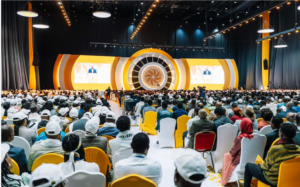
Ethiopia’s National Dialogue Conference, Addis Ababa, 15 July 2026
A problem relocated, not resolved
One answer lies in a problem that has received too little attention. The challenge of nation-building was not resolved after 1991; it was relocated. As political authority came to be organised through ethnoregional states, regional governments became central arenas for managing recognition, representation, and self-government.
This is not an argument against recognition or self-government. Recognition and autonomy expanded opportunities for political participation, representation, and self-rule. But they also changed the way political competition worked. Regional governments became more than administrative units. Through language policy, education, administration, media, public narratives, and territorial claims, regional institutions have often created hierarchies of belonging rather than equal citizenship, making some citizens appear more native, legitimate, or entitled than others. Ethiopia’s recurring conflicts are therefore not only about power. They are also about a system that made identity, territory, representation, and authority increasingly hard to separate.
As these institutions matured, political competition increasingly centred on the representation and defence of communities defined by territory and identity. Contests over leadership, resources, or administration have become securitized struggles over status, belonging, and political survival. While institutions do not cause violence by themselves, they can encourage political actors to present territorial control as a matter of group survival. Losing political power is often experienced not simply as an electoral setback, but as a threat to a group’s place in the political order.
Wolkait, and what it really reveals
This becomes clearest where territory intersects with competing claims of belonging and authority. The Wolkait conflict illustrates the point. Although often presented as a conflict over administrative boundaries, it also reflects deeper questions about membership, government, and the political meaning of territory. Historical claims, constitutional arrangements, ethno-linguistic boundaries, land grievances, displacement, and Ethiopia’s post-1991 regional order all matter. But they do not fully explain why Wolkait became so politically consequential.
The conflict is also about political belonging: who is treated as native, who is seen as a recent settler, and whose authority is considered legitimate. For many Tigrayans, Wolkait’s incorporation into Tigray became part of regional self-government. For many Amharas, it symbolised exclusion from land they regard as historically theirs. It is therefore not only about maps or legal status. It is also about land, memory, identity, representation, and authority.
Wolkait is not an isolated case. Similar patterns appear elsewhere, even when the histories and grievances differ. Addis Ababa offers another example. Its layered history and diverse population show how difficult it is to fit lived belonging into a single ethnic-territorial frame. The continuing conflicts involving the Oromo Liberation Army, an armed Oromo insurgent group, and Fano, a loosely organised Amhara militia movement, illustrate how struggles over security, recognition, and authority become tied to claims about belonging.
Persistent insecurity, displacement crises, and identity-targeted violence across Ethiopia point to a deeper problem. When authority is tied closely to identity and land, basic questions of residence and administration become politically explosive. Politics becomes less about policy or public services, and more about membership, recognition, and control over political space. The human-rights costs can be severe for many citizens, but they are especially acute for people seen as outsiders in the places they live.
This deeper tension is not new. For much of the post-1991 period, the Ethiopian People’s Revolutionary Democratic Front, or EPRDF, contained it through elite bargaining, central control, and a powerful security apparatus. But containment was not resolution. When the EPRDF-led system began to unravel, the war in Tigray and continuing conflicts in Oromia and Amhara exposed contradictions that had accumulated over decades.
The current government inherited this unresolved tension. Its language of national unity, expressed through the Prosperity Party and Medemer, Abiy Ahmed’s philosophy of political synergy and national togetherness, suggests that it recognises the need to rebuild Ethiopia as a shared political community and marks a departure from the previous EPRDF-led system. But this language has not been matched by a clear institutional answer to the regional ethnic-based identity projects that still shape politics on the ground, nor has a shared citizenship identity taken firm root across the country, where national belonging often competes with stronger ethnic, regional, and territorial claims. Pressured by opposition forces, armed movements, and parts of its own ruling-party base, the government has shifted between containing territorialised identity politics, appeasing it, and at times using it tactically.
What the Dialogue must confront
This is why the National Dialogue matters. Its formal agenda touches many of Ethiopia’s deepest divisions. To contribute to durable peace, the Dialogue must confront the institutional arrangements that turn questions of membership, authority, and land into repeated political crises.
Addressing this problem does not require abandoning federalism. It requires reconsidering how regional states function within it. The problem is not ethnic identification itself, which is normal in diverse societies. The challenge arises when regional institutions become the main arenas where these identifications are politicised, organised, defended, and fought over. In such cases, ethnic and political minorities within regions can face insecurity, discrimination, violence and rights violations. Politics then hardens around exclusion rather than citizenship, deepening tensions between ethnic-based regional loyalty and a shared Ethiopian political project.
This also raises a practical question: where should administrative and political belonging be organised? One answer lies in strengthening institutions below the regional level, including zonal, district (woreda), and municipal governments. Regional states can continue to protect language, culture, and self-government without remaining the principal centres of political loyalty, representation, and authority. They should also play a more active role in reconciling regional and national forms of belonging rather than reinforcing them as competing projects. Stronger sub-regional institutions could broaden representation, accommodate diversity within regions, and sustain multiple and overlapping identities within a common political order.
Such reforms would likely face resistance from actors who see existing arrangements as hard-won guarantees of identity, recognition, and self-rule, including local and diaspora ethnonationalist activists and some influential constituencies within the Prosperity Party itself. Some may argue that democratisation is the real answer. But democracy also requires shared citizenship, trust in common institutions, and a political space where opponents are not treated as threats to the group. Their concerns should be taken seriously, but they should also explain how their positions advance peace and equal citizenship rather than deepen fragmentation.
Regional states are themselves diverse, with strong local identities and histories that cannot always be neatly mapped onto a single ethnic-territorial frame. Yet ethnonationalist projects often seek to flatten these differences by promoting a single ethnic narrative and pushing for more homogeneous political communities. Ethiopia needs institutions that preserve diversity while strengthening equal citizenship, national cohesion, and a shared political future.
This does not mean that federalism was a mistake. It means recognition alone is insufficient. Ethiopians already recognise their differences. The challenge is whether those differences can coexist within institutions that sustain a common political future and prevent competing forms of belonging from becoming competing centres of political authority.
The implications extend beyond Ethiopia. For much of the post 1991 period, international partners viewed Ethiopia’s federal order through the lenses of recognition, inclusion, self-government, and conflict management, while paying less attention to the risks of regional institutions becoming vehicles for separate political projects. Once consolidated, these projects make reform harder and conflict easier to mobilise. They encourage political actors, including armed groups, to frame control over territory, institutions, and identity as matters of security, dignity, and political belonging. For a country as central to the Horn of Africa as Ethiopia, this is not only a domestic issue, but also a question of regional stability. Ethnic identity-based mobilisation can deepen exclusion, fuel armed competition, and create forces that are difficult to control.
That is why the National Dialogue must go beyond questions of constitutional design or power distribution alone. Whether Ethiopia amends the constitution, replaces it, reforms federal institutions, or retains the current system, none of these options will be enough unless the Dialogue confronts the deeper problem. Ethiopia’s shared future depends on turning its entangled identities, histories, territories, and forms of belonging into grounds for equal citizenship rather than conflict. The real test is whether Ethiopia’s political actors, especially ethnonationalist forces at home and abroad, including those in power, are ready to make recognition and self-government serve peace and a common political future rather than separate and competing political projects.
The post Why Ethiopia’s Conflicts Keep Returning: The Question Ethiopia’s National Dialogue Cannot Avoid appeared first on African Arguments.