Worth Its Weight: MIRACO and the Enduring Value of Gold
Gold has always carried two kinds of value: the kind the market can measure by the ounce and the kind a family measures by memory. One is printed in financial reports. The other is tucked into jewelry boxes, passed across palms, worn to church, saved for momentous occasions, and pulled out when someone says, “This […] The post Worth Its Weight: MIRACO and the Enduring Value of Gold appeared first on Waymaker Journal.
 Black News
Gold has always carried two kinds of value: the kind the market can measure by the ounce and the kind a family measures by memory. One is printed in financial reports. The other is tucked into jewelry boxes, passed across palms, worn to church, saved for momentous occasions, and pulled out when someone says, “This was your grandmother’s.”
For the Money issue, that distinction matters because gold is not simply beautiful. It is one of the few luxury materials that can serve as an adornment, an asset, and an archive at once. In 2025, the World Gold Council reported that the LBMA gold price set 53 new all-time highs. The average price for the year reached $3,431 per ounce, up 44% year over year, while the average fourth-quarter price climbed to a record $4,135 per ounce. Total annual gold demand, including over-the-counter investment, topped 5,000 tons.
By late June, spot gold still hovered above $4,000 per ounce, even after market dips tied to the dollar, inflation concerns, and shifting interest-rate expectations. Those numbers help explain why gold remains such a compelling symbol in conversations about wealth. It is not only sentimental, but it is also scarce, global, and historically resilient. That context also helps set up MIRACO’s approach to gold as something worn, valued and kept.
RELATED: The House That Mona Built (WayMaker Money Issue 2026 Cover Story)
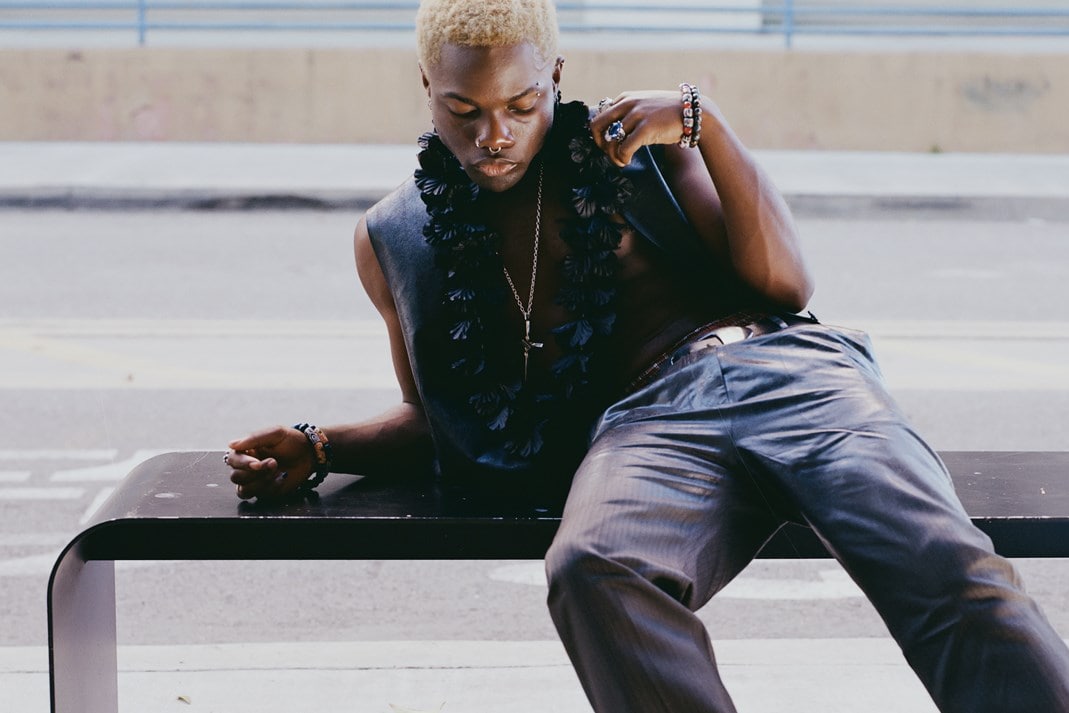
That makes MIRACO, the fine jewelry brand founded by Samira Baraki, a strong case study in how a new generation is thinking about gold and luxury. The brand’s gold pieces are designed around comfort, wearability, and accessibility, using hollow gold to create jewelry with presence yet lower weight. In an industry where fine jewelry is often framed as either unattainable luxury or disposable trend, MIRACO sits in the middle–offering pieces meant to be worn now and kept later.
At MIRACO, I think of every piece as a wearable investment—a modern heirloom you start building the day you put it on, not three generations from now. That’s timeless elegance to me: something that holds both a moment and a lifetime. – Samira Baraki

“Gold is valuable everywhere, and jewelry unifies us as a cultural language across borders. Gold has never just been jewelry to me—it’s currency, it’s equity,” Baraki said. “At MIRACO, I think of every piece as a wearable investment—a modern heirloom you start building the day you put it on, not three generations from now. That’s timeless elegance to me: something that holds both a moment and a lifetime.”
In Black families, jewelry has rarely been just decoration. A gold chain, bracelet, ring, or pair of hoops can mark a life transition as clearly as a diploma or deed. It can celebrate the first job, the wedding, the baby, the birthday, the homegoing, the comeback. That role also helps explain why gold carries meaning beyond style. It is the gift that says someone was saved. Someone chose permanence. Someone wanted beauty to last longer than the occasion.
This history is especially important because traditional pathways to generational wealth have not always been available to Black families. Property ownership, access to credit, fair wages, business loans, and inheritance have all been shaped by exclusion. Against that backdrop, the objects people could buy, hold, repair, and pass down became meaningful. Jewelry could not undo economic injustice, but it could preserve a kind of intimate wealth. It could carry proof of taste, labor, survival, and love, and it leads naturally into Black style as another form of value.
Gold also holds a particular place in Black style. From nameplates and bamboo earrings to pinky rings, pendants, bangles, and layered chains, adornment has long been a language of identity. It can signal neighborhood, faith, family, status, artistry, and self-definition. When Black people have used gold to be seen, it has often been dismissed as excessive. Yet history keeps proving that what is called excess in Black culture is often simply visibility with confidence. That visibility helps frame MIRACO’s everyday approach to fine jewelry.
MIRACO’s approach adds another layer to that conversation. The brand is not asking customers to treat fine jewelry as something distant or ceremonial. It is positioning gold as part of everyday life, something a woman can wear to work, dinner, travel, a school pickup, a meeting, or a celebration. That everydayness is part of its value because the more a piece is lived in, the more meaning it gathers.
“We call it ‘the lightness of luxury.’ Through electroforming, a technique we work with skilled artisans in Italy to perfect, we’re able to create solid 14K and 18K gold pieces—never plated—that have real substance and presence, without the weight that usually comes with that scale,” the jewelry line owner explains. “I wanted MIRACO to challenge the idea that luxury only exists at the highest price points. You shouldn’t have to choose between quality and accessibility, or between substance and functionality. We’re rethinking what luxury has to feel like and who gets to wear it.”
There is also a practical argument here. Unlike many fashion purchases, gold does not disappear at the end of a trend cycle. Its market price moves, sometimes sharply, but its material value remains legible. It can be appraised, insured, repaired, resized, reset, or passed down. A handbag may hold resale value depending on brand and condition. Gold holds value because the material itself matters, which makes the next question less about trend and more about continuity.
That does not mean every jewelry purchase should be treated as an investment portfolio. It does mean that fine jewelry asks a different question than fast fashion. What are we buying that can stay? For Black consumers, that question is both financial and cultural. It is about spending with intention, supporting brands that reflect us, and choosing pieces that can become part of a family’s visual history.
MIRACO enters that space with a clear proposition: the heirloom does not have to begin after three generations. Through this framing, the brand suggests it can begin with the first buyer. It can begin when someone chooses quality over disposability. It can begin when gold touches skin and becomes part of a person’s daily record. In that way, the brand reframes when value starts.
Gold’s market value may rise and fall, but its place in Black family life has always been steadier than the charts. It is what we wear, what we save and what we leave behind. It is a love language with weight, even when the jewelry itself is light, and that is the thread running through this piece.
The post Worth Its Weight: MIRACO and the Enduring Value of Gold appeared first on Waymaker Journal.