Africa and Eurasia Are Working in Partnership – The World Just Hasn’t Noticed
In 2022, Egypt joined as a partner to the Shanghai Cooperation Organisation (SCO), a political, economic, and security organisation of Eurasian states. As Bishkek, Kyrgyzstan, prepares to host the 25th anniversary summit, the evidence shows something quiet but important has already been built not in declarations, but in intelligence centres, counterterrorism agreements, and billion-dollar deals. On the morning of 30 August 2025, Egyptian Prime Minister Mostafa Madbouly sat down with Chinese President Xi Jinping in a guest house in Tianjin. The setting was the SCO Plus Summit, the largest gathering in the organisation’s 24-year history. By the time Madbouly left […] The post Africa and Eurasia Are Working in Partnership – The World Just Hasn’t Noticed appeared first on African Arguments.
 Black News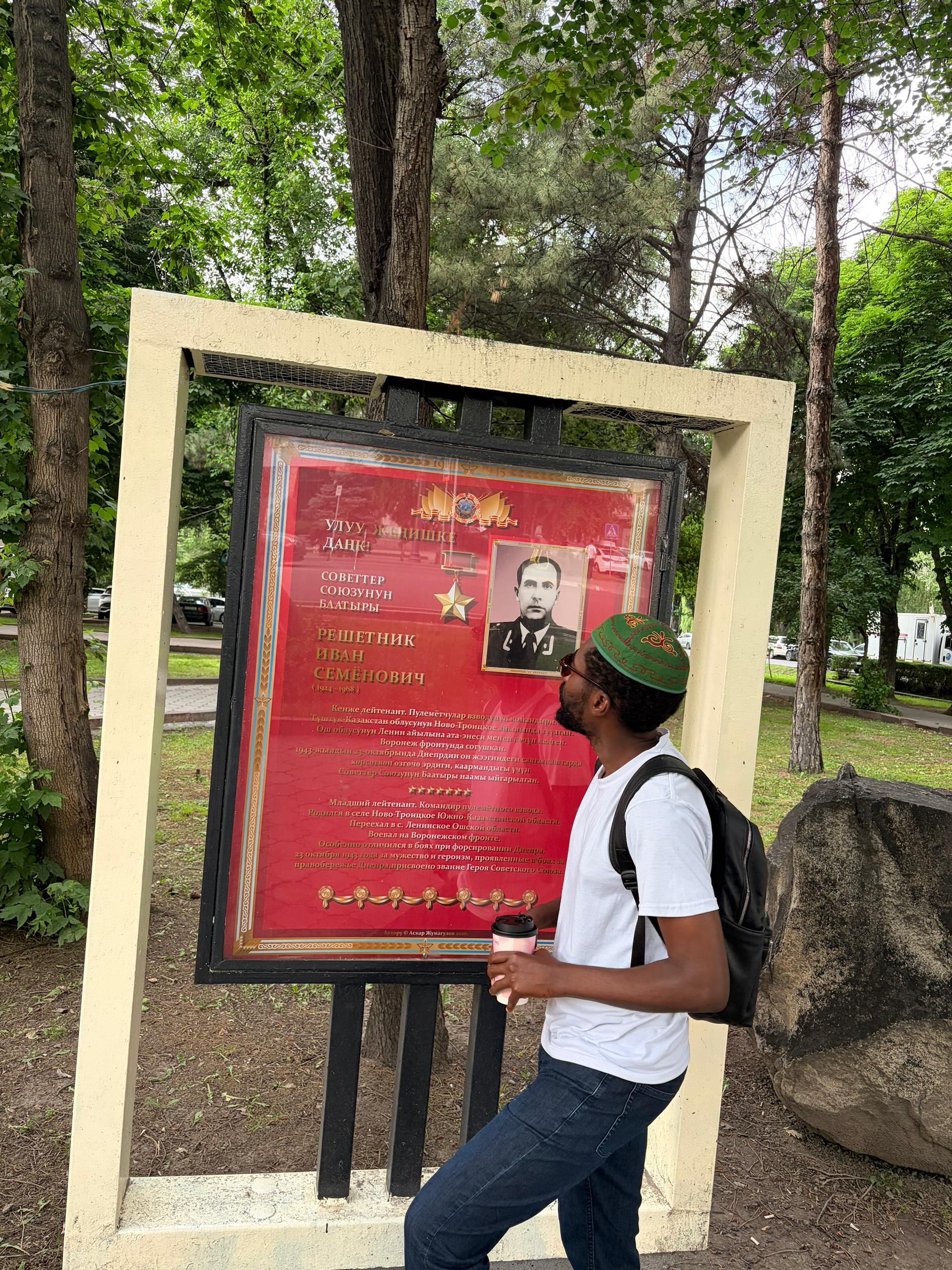
In 2022, Egypt joined as a partner to the Shanghai Cooperation Organisation (SCO), a political, economic, and security organisation of Eurasian states. As Bishkek, Kyrgyzstan, prepares to host the 25th anniversary summit, the evidence shows something quiet but important has already been built not in declarations, but in intelligence centres, counterterrorism agreements, and billion-dollar deals.
On the morning of 30 August 2025, Egyptian Prime Minister Mostafa Madbouly sat down with Chinese President Xi Jinping in a guest house in Tianjin. The setting was the SCO Plus Summit, the largest gathering in the organisation’s 24-year history. By the time Madbouly left the building, Egypt had secured a commitment from China Energy Engineering Corporation to invest one billion dollars in Egyptian renewable energy and desalination projects, with the company agreeing to relocate its regional headquarters to Cairo. On the sidelines of the same summit, Madbouly told Chinese executives directly that Egypt could serve as ‘a regional gateway for expansion into the Middle East and Africa.’
That phrase ‘gateway to Africa’ is doing real institutional work. And yet in most African policy discussions, the Shanghai Cooperation Organisation barely registers. The SCO is still widely understood as a Eurasian club: China, Russia, India, Central Asian states. A security arrangement, mostly. Not Africa’s concern.
That understanding is now outdated. This is the story of how an Africa-SCO relationship is being built — quietly, from the north, through intelligence centres and counterterrorism infrastructure — and why it matters that African voices engage it before the architecture is complete.
The author in a Bishkek park, May 2026 — the host city of this year’s SCO 25th Anniversary Summit.
What Was Built Before the Diplomacy
Most accounts of Egypt’s SCO engagement begin in September 2022 in Samarkand, when the Memorandum of Understanding formalising a dialogue partnership was signed. That framing misses the more important prior chapter.
In December 2018, four years before any formal partnership existed, the SCO’s Regional Anti-Terrorist Structure (RATS), signed a Memorandum of Cooperation with the African Union’s African Centre for the Study and Research on Terrorism in Algiers. RATS is widely assessed as the SCO’s most functional component: a real intelligence-sharing body, not a declaratory one. The 2018 agreement was the first institutional bridge ever built between the SCO and the African security architecture. It happened when no African state held any formal SCO status at all.
What followed was physical infrastructure. In November 2021, Egypt activated the CEN-SAD Counterterrorism Centre in Cairo: a 14,300 square-metre facility connecting the intelligence and security networks of 27 Sahel-Saharan states. Egypt committed 2,000 military scholarships for CEN-SAD member states’ personnel to receive training in Egypt. This centre sits at the junction of three frameworks simultaneously: the AU’s ACSRT, the SCO’s RATS, and the Community of Sahel-Saharan States, giving Egypt a trilateral intelligence hub role no other African state possesses. Egypt’s counterterrorism operations in the Sinai, which degraded the ISIS-Sinai Province to fewer than ten attacks in 2023 according to US State Department reporting, gave it the operational credibility that makes SCO security partners take that hub seriously.
The diplomatic partnership of 2022 formalised a security relationship that already existed. This tells us something important about how the SCO expands: not through formal membership applications first, but through demonstrated operational cooperation through RATS, its most trusted component. For other African states, this is the actual pathway in.
Deals, Not Just Declarations
A legitimate challenge to any analysis of African engagement with the SCO is this: how much of it is real, and how much is statement-making dressed as strategy?
So let us look at what Tianjin 2025 actually produced for Egypt. Beyond the $1 billion CEEC investment commitment, Madbouly’s delegation secured agreements on EV manufacturing in the Suez Canal Economic Zone, water desalination partnerships, and renewable energy cooperation. China Energy Engineering Corporation agreed to move its regional headquarters to Cairo, a corporate decision with real operational consequences, not a communiqué statement. Madbouly told Egyptian state media afterwards that Egypt had left Tianjin with ‘concrete commitments, not just expressions of goodwill.’
The Suez Canal provides the structural foundation beneath all of this. Approximately twelve per cent of global maritime trade passes through it. China’s Belt and Road Maritime Silk Road depends on it. When the SCO Development Bank was announced at Tianjin – which still remains in planning stages – Egyptian officials immediately framed their gateway role around channelling eventual Bank financing toward African infrastructure projects. Whether that aspiration materialises depends on governance decisions being made right now, including at the Bishkek summit in September.
Why September Matters
I am writing from Bishkek as the city is preparing for the Heads of State Summit in September. The SCO Development Bank’s governance structure will be finalised there. Whether dialogue partners like Egypt can access Bank financing, the question that determines whether the SCO becomes a real development partner for Africa or remains primarily a security and normative forum, will be answered in the months around that summit.
Algeria’s dialogue partnership application is also expected to advance. Should this occur, a discernible pattern may emerge in which the Shanghai Cooperation Organisation (SCO) develops a North African tier of partners. These partners would be connected to the African continental security architecture and integrated into the Belt and Road Initiative (BRI) connectivity, thereby framing the relationship in terms of South-South solidarity. Once established, this pattern would likely shape expectations for subsequent African states considering engagement.
African analysts, policymakers, and civil society voices should be part of the conversation shaping that pattern, not arriving after it has already been formed. The architecture being built right now, in Bishkek and in the governance negotiations around the Development Bank, is not inevitable. It is being chosen. That is an argument for engagement, not a reason for complacency.
The post Africa and Eurasia Are Working in Partnership – The World Just Hasn’t Noticed appeared first on African Arguments.