Africa races to stop deadly Ebola outbreak as funding nears $500 million and deaths climb
Africa has secured nearly $500 million in emergency pledges as health officials warn that a fast-spreading Ebola outbreak linked to a rare virus strain is beginning to outpace containment efforts across Central Africa.
 Black News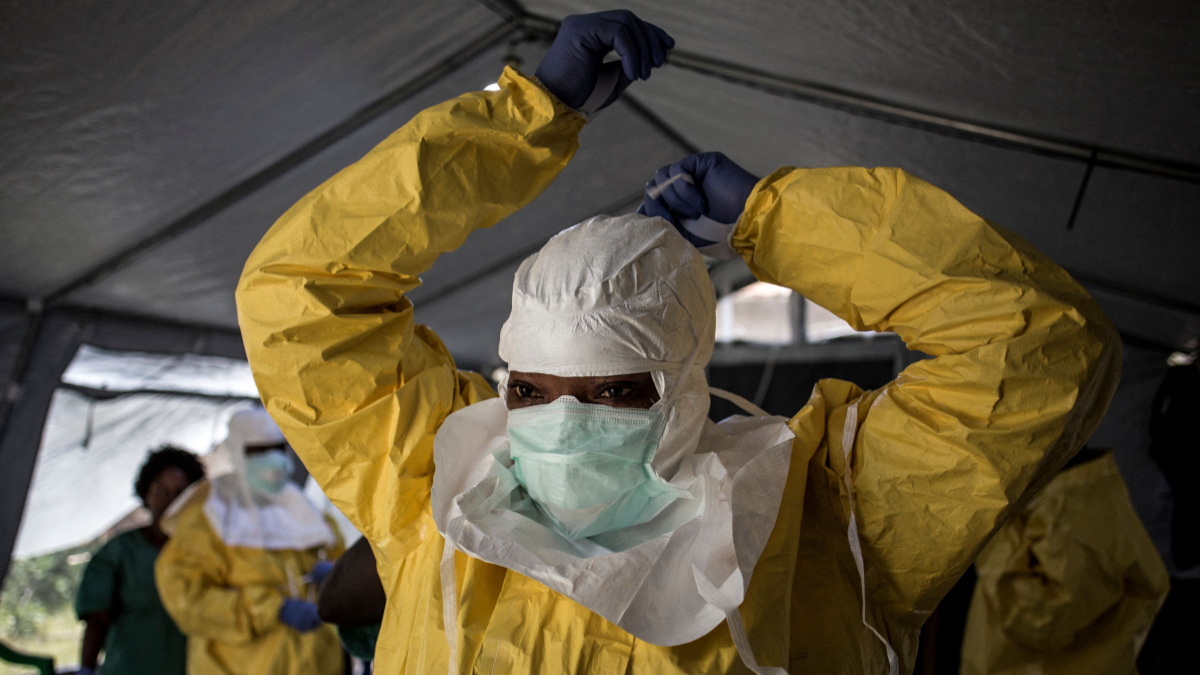
![A health worker in protective gear responds to Ebola cases in eastern DR Congo after the WHO declared the outbreak a global health emergency amid fears of wider regional spread. [Photo by John WESSELS / AFP]](https://ocdn.eu/pulscms/MDA_/51f180db561c719d6629c1ae412a584a.jpg)
Africa has secured nearly $500 million in emergency pledges as health officials warn that a fast-spreading Ebola outbreak linked to a rare virus strain is beginning to outpace containment efforts across Central Africa.
- Africa has secured nearly $500 million in emergency pledges to combat the fast-spreading Bundibugyo Ebola outbreak in Central Africa.
- The rare Ebola strain currently has no approved vaccine or targeted treatment, raising concerns among global health authorities.
- The WHO says the epidemic is “outpacing” response efforts as deaths continue to rise across affected regions.
- Major funding commitments from the World Bank, the US, European partners, and the UN aim to strengthen containment and save lives.
Governments and international partners announced approximately $498.8 million in commitments during a high-level ministerial meeting to strengthen response operations in affected and high-risk countries, according to Jean Kaseya, Director General of the Africa Centres for Disease Control and Prevention.
The funding push comes as the death toll linked to the Bundibugyo Ebola Virus rises to 220, prompting growing concern from global health authorities.
“At the moment, the epidemic is outpacing us,” said Tedros Adhanom Ghebreyesus, warning that the outbreak is spreading in an increasingly complex environment.
Unlike previous Ebola outbreaks, the Bundibugyo strain currently driving infections across parts of Central Africa has no approved vaccine or targeted treatment — a reality that has intensified fears among health officials and humanitarian agencies.
The rare virus strain has only been linked to two previous outbreaks: one in Uganda in 2007 and another in eastern Democratic Republic of the Congo in 2012.
Most existing Ebola vaccines and antibody therapies were designed specifically for the more common and deadlier Zaire strain, which caused the devastating 2014–2016 West African epidemic that killed more than 11,000 people.
![World Health Organisation (WHO) Director-General Tedros Adhanom Ghebreyesus speaks during a press conference on the Ebola outbreak in the Democratic Republic of Congo and Uganda, at the UN health agency's headquarters in Geneva on May 20, 2026. [Photo by Fabrice COFFRINI / AFP via Getty Images]](https://ocdn.eu/pulscms/MDA_/476baa565dc2f97ad48693c0363e06e0.jpg)
Africa CDC said the latest commitments reflect growing continental coordination as governments attempt to prevent a wider regional health crisis.
“Trust, coordination, and rapid response remain critical to stopping transmission and saving lives,” Kaseya said in a statement shared on X.
Major funding commitments announced during the meeting included $160 million from the World Bank for Congo, $82 million from the United States, and roughly $57 million from European partners.
Last week, the United Nations Office for the Coordination of Humanitarian Affairs also announced an additional $60 million emergency allocation after the World Health Organisation declared the outbreak a Public Health Emergency of International Concern.
The outbreak continues to hit the Democratic Republic of the Congo and Uganda hardest.
Authorities in the DRC have recorded 906 suspected cases, including 105 confirmed infections and more than 220 suspected deaths. Uganda has so far confirmed seven cases and one death, with officials saying most infections are epidemiologically linked.