African banks sit on $2.5 trillion as leaders race to bring electricity to 300 million people
African development finance institutions are intensifying efforts to mobilise African capital for one of the continent’s most ambitious infrastructure programmes, as leaders seek to connect 300 million people to electricity by 2030.
 Black News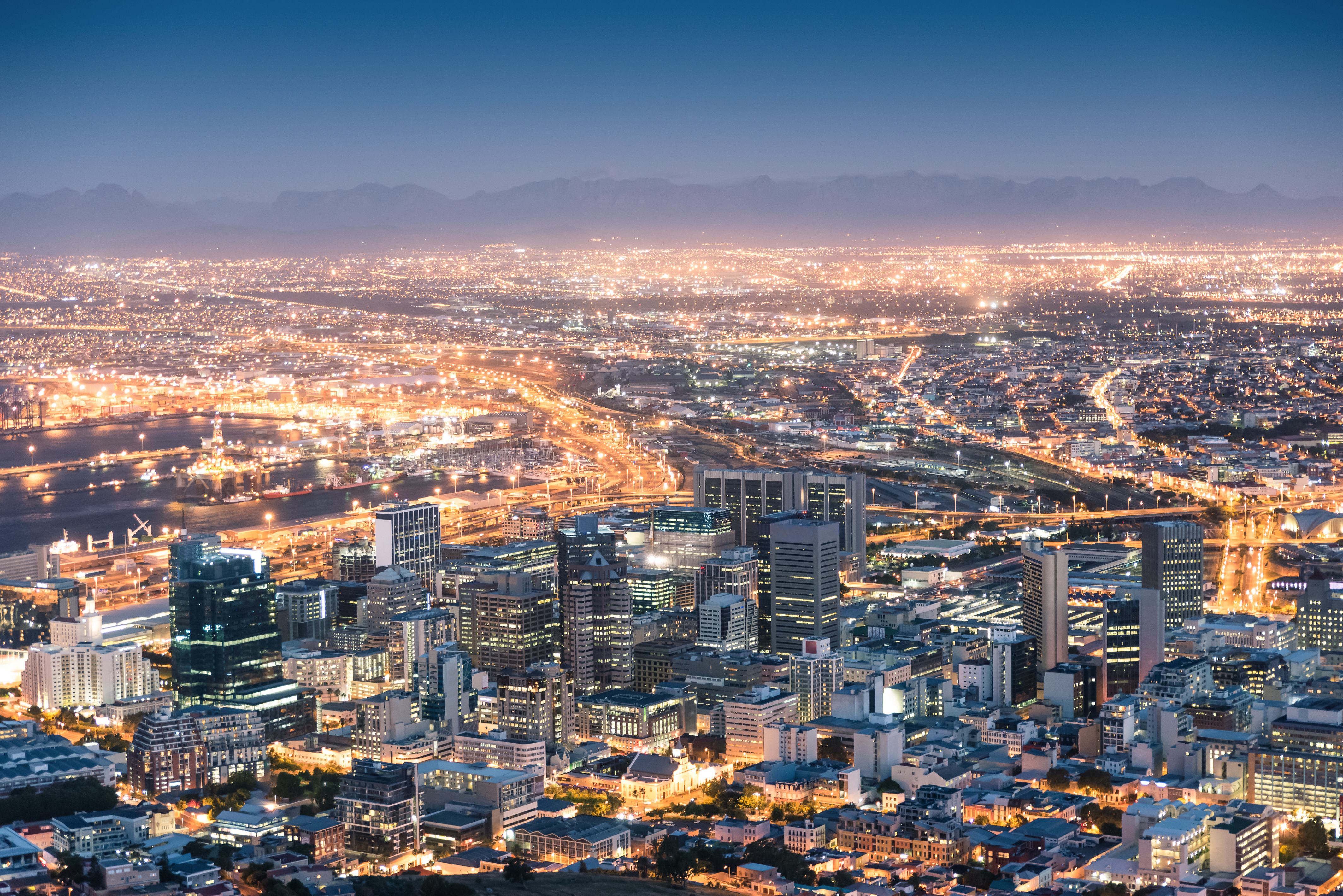
![Aerial view of Cape Town from Signal Hill after sunset during the blue hour - South Africa's modern city with spectacular nightscape panorama. [Stock Photo/Getty Images]](https://ocdn.eu/pulscms/MDA_/ec057bd5740c233a20b64492f7f4f128.jpg)
African development finance institutions are intensifying efforts to mobilise African capital for one of the continent’s most ambitious infrastructure programmes, as leaders seek to connect 300 million people to electricity by 2030.
- African development finance institutions are strengthening cooperation to support Mission 300, an initiative to expand electricity access to 300 million Africans by 2030.
- Leaders say Africa's development finance institutions hold about $250 billion, while commercial banks have an estimated $2.5 trillion that could help fund infrastructure projects.
- The programme is expected to require $238 billion in financing, with private investors providing roughly half of that.
- Delegates called for stronger coordination, blended finance solutions, and risk-sharing mechanisms to attract more investment into Africa's energy sector.
Meeting on the sidelines of the African Development Bank (AfDB) Annual Meetings in Brazzaville, financial leaders called for stronger coordination among African lenders and a greater deployment of local capital to support Mission 300, a joint initiative led by the AfDB and the World Bank.
The appeal comes as Africa faces a financing gap for energy access. Mission 300 is expected to require about $238 billion in funding, with roughly half of that projected to come from private sector investors.
Speaking during a high-level discussion at the Kintélé International Conference Centre, participants argued that African institutions hold significant financial resources that could help close the gap. They pointed to an estimated $250 billion currently held by development finance institutions across the continent.
A key announcement came from the West African Development Bank (BOAD), whose representative, Oumar Tembely, confirmed a commitment of approximately 1.1 billion CFA francs (€1.7 million) to support the initiative.
AfDB Vice President for Power, Energy, Climate and Green Growth, Kevin Kariuki, stressed that no single institution could achieve the programme’s objectives alone. He called for the establishment of a coalition of African development finance institutions to improve coordination, align investment strategies, and increase the impact of financing directed toward energy infrastructure.
The proposed coalition could bring together major regional institutions, including the Trade and Development Bank, Africa50, the African Guarantee Fund, and Cygnum Capital.
Discussions also focused on attracting private investors through blended finance structures and risk-sharing mechanisms. Delegates argued that reducing investment risks would be critical to unlocking large-scale funding for energy projects across the continent.
Constant N’zi highlighted the scale of untapped domestic resources, noting that African commercial banks currently hold about $2.5 trillion in assets. He said directing even a fraction of that liquidity toward infrastructure financing could significantly accelerate economic growth and improve energy access.
Trade and Development Bank Group President Admassu Tadesse reaffirmed his institution’s support for Mission 300, describing access to reliable electricity as essential for economic transformation.
Participants concluded that the initiative’s success will depend on stronger institutional coordination, increased mobilisation of African capital, and expanded use of guarantees and blended finance tools to attract long-term investment into the continent’s energy sector.