Africa's 3-country UN Security Council members at the center of Russia's new security diplomacy push
Russia is moving to deepen its influence over Africa's peace and security agenda by seeking closer coordination with the continent's three elected members of the United Nations Security Council (UNSC), marking the latest step in Moscow's expanding diplomatic and security engagement across Africa.
 Black News

Russia is moving to deepen its influence over Africa's peace and security agenda by seeking closer coordination with the continent's three elected members of the United Nations Security Council (UNSC), marking the latest step in Moscow's expanding diplomatic and security engagement across Africa.
- Russia is seeking closer coordination with Africa's three elected members of the UN Security Council (A3) to deepen its influence over Africa's peace and security agenda.
- The current A3 members are the Democratic Republic of the Congo, Liberia, and Somalia, representing Africa at the UNSC during 2026–2027.
- Russia recently delivered military equipment to Mali and has strengthened ties with Sahel countries following the retreat of Western forces.
- Moscow aims to institutionalize dialogue with the A3, aligning diplomatic initiatives with its expanding military partnerships across Africa.
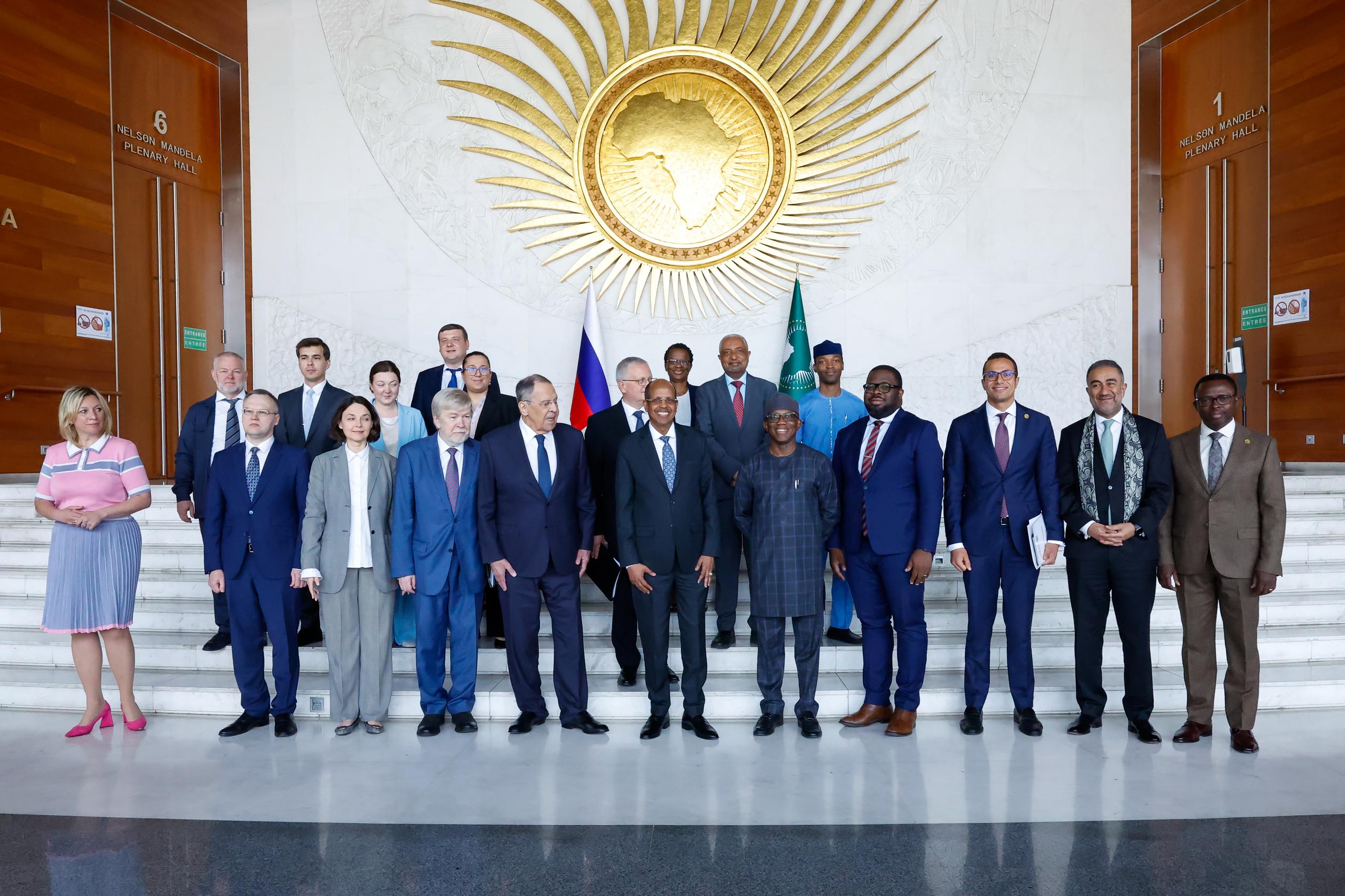
The move was unveiled following high-level consultations between Russian Foreign Minister Sergey Lavrov and African Union Commission Chairperson Mahmoud Ali Youssouf in Addis Ababa on Monday.
In a joint statement, both sides agreed on the importance of "close coordination" between Russia and Africa's A3 - the continent's three elected members of the UN Security Council - on matters relating to peace and security.
DON'T MISS THIS: Russia names 4 African countries where it plans to open new embassies as sanctions and fuel shortages push it beyond the West
The A3 currently comprises Democratic Republic of the Congo, Liberia and Somalia, which together represent Africa's positions on the 15-member Security Council during the 2026–2027 term.
While the joint statement stopped short of committing the A3 to support Russian positions, the agreement signals Moscow's intention to institutionalise dialogue with the bloc that often articulates Africa's collective stance on conflicts before the Security Council.
Russia broadens its Africa security strategy
The latest initiative comes as Russia intensifies its diplomatic and security footprint across Africa, particularly in regions grappling with insurgencies and political instability.
Just this week, Russia confirmed a fresh shipment of military equipment to Mali, reinforcing its role as one of the country's principal security partners as Bamako continues its fight against jihadist groups.
The delivery followed months of expanding military cooperation between the two countries, including training, logistics and defence agreements.
DON'T MISS THIS: Inside the Sahel power race: Russia counters U.S.' $2.3 million Niger security package with major arms shipment to Mali
Moscow has also steadily increased its influence across the Sahel following the withdrawal of Western forces from several countries. Military-led governments in Mali, Burkina Faso and Niger have deepened defence ties with Russia while distancing themselves from traditional Western security partners.
Against that backdrop, the latest outreach to the A3 suggests Russia is complementing its military partnerships with a more structured diplomatic strategy aimed at engaging Africa's collective voice within the UN system.
Unlike bilateral defence agreements, closer coordination with the A3 gives Moscow a direct channel to the African bloc that frequently shapes discussions on conflicts in Sudan, Libya, the Sahel, the Horn of Africa and the Great Lakes region before they reach the Security Council.
The consultations also reaffirmed Russia's support for African-led approaches to conflict resolution and called for the full implementation of UN Security Council Resolution 2719, which establishes a framework for UN financing of African Union-led peace support operations. Both sides further stressed the need for predictable and sustainable funding for AU peace missions.
DON'T MISS THIS: Russia tightens grip on Mali as it trains over 20 airborne troops with Mi-8AMTSh helicopter amid U.S. push to return to the Sahel
Beyond security, Russia and the AU agreed to deepen cooperation on trade, infrastructure, food security, health and reform of the global financial system, while preparing a new 2027–2029 cooperation roadmap ahead of the third Russia-Africa Summit scheduled for October in Moscow.
For Moscow, the significance extends beyond another diplomatic meeting.
As geopolitical competition for influence in Africa intensifies, closer engagement with the A3 positions Russia to work more directly with the countries responsible for projecting Africa's collective peace and security priorities at the UN Security Council, complementing its growing military presence on the continent with a stronger institutional diplomatic foothold.