Africa’s referee of the year barred from U.S. despite World Cup appointment
The United States has denied entry to Omar Abdulkadir Artan, Africa’s reigning referee of the year and the first Somali selected to officiate at a FIFA World Cup, forcing him out of the tournament days before kickoff and raising fresh questions about whether U.S. immigration policies could complicate participation in football’s biggest event.
 Black News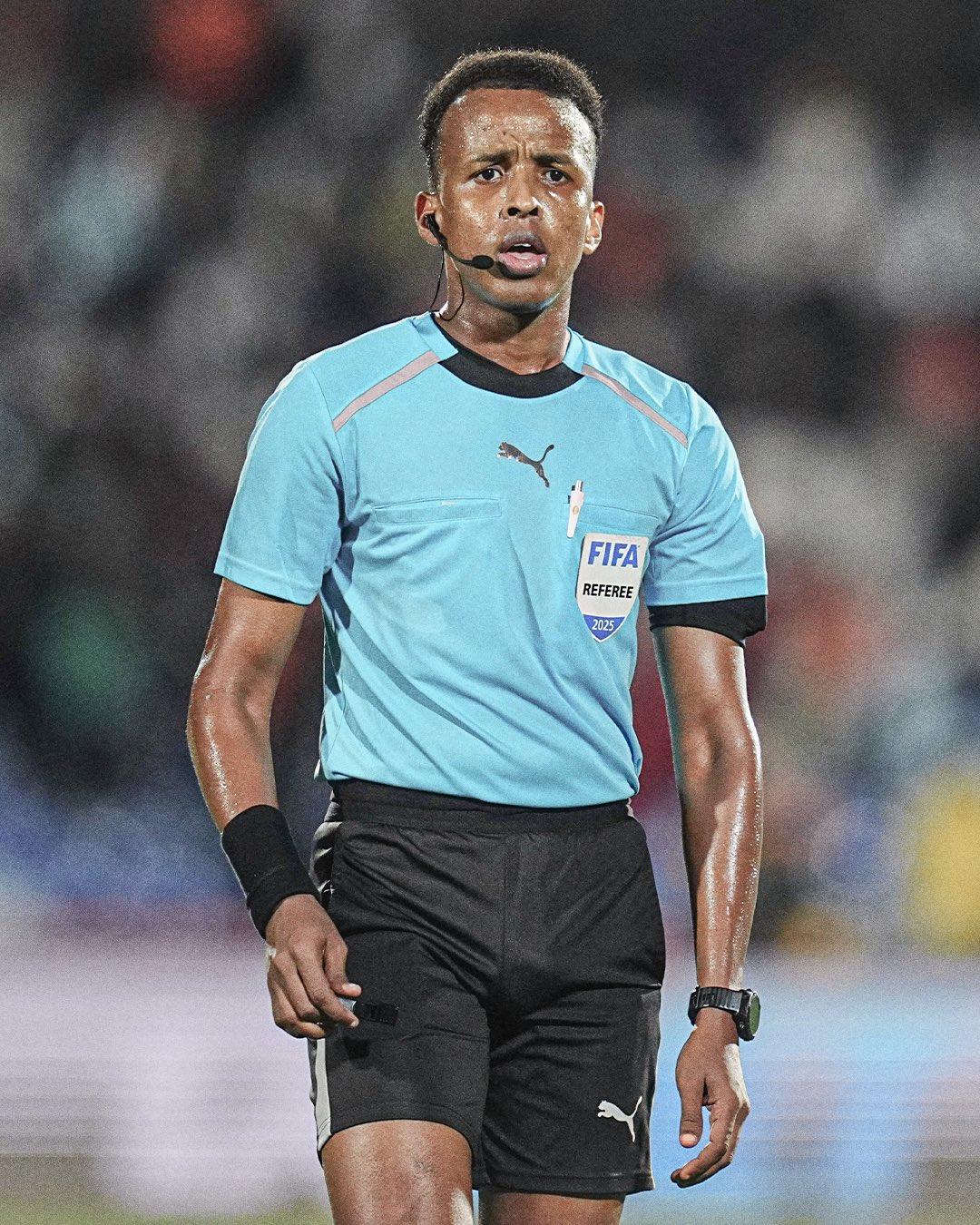

The United States has denied entry to Omar Abdulkadir Artan, Africa’s reigning referee of the year and the first Somali selected to officiate at a FIFA World Cup, forcing him out of the tournament days before kickoff and raising fresh questions about whether U.S. immigration policies could complicate participation in football’s biggest event.
- The United States has denied entry to Somali referee Omar Abdulkadir Artan, ruling him out of the 2026 FIFA World Cup days before kickoff.
- Artan, Africa’s reigning referee of the year, would have become the first Somali to officiate at a World Cup.
- The decision has sparked criticism from Somali officials and rights groups over fairness and travel restrictions.
- It also raises fresh concerns about how U.S. immigration policies could affect World Cup participants.
The decision has drawn criticism from Somali officials and added to growing concerns over travel restrictions affecting some World Cup participants, including members of Iran’s delegation and other visitors from countries subject to heightened U.S. scrutiny.
Artan, one of 52 referees selected by FIFA for the expanded 48-team World Cup, was turned away after arriving at Miami International Airport from Istanbul on Saturday. U.S. authorities said he was deemed inadmissible following additional screening, citing unspecified “vetting concerns”.
The Somali official had been set to make history as the first person from his country to referee a World Cup match.
A spokesperson for the U.S. Department of Homeland Security confirmed that Artan was denied entry after an inspection by Customs and Border Protection officers.
“Admissibility determinations are made on a case-by-case basis using law enforcement, national security and immigration information available at the time of inspection,” the spokesperson said.
The department did not disclose the specific reasons behind the decision.
FIFA confirmed that Artan would no longer participate in the tournament, which begins this week across the United States, Mexico and Canada.
“FIFA can confirm that match official Omar Abdulkadir Artan will be unable to train and officiate at the FIFA World Cup 2026 after he was denied entry into the United States,” a FIFA spokesperson said.
The governing body added that immigration decisions remained the responsibility of host-country authorities.
Africa loses one of its most prominent officials
Artan’s exclusion is particularly significant for African football.
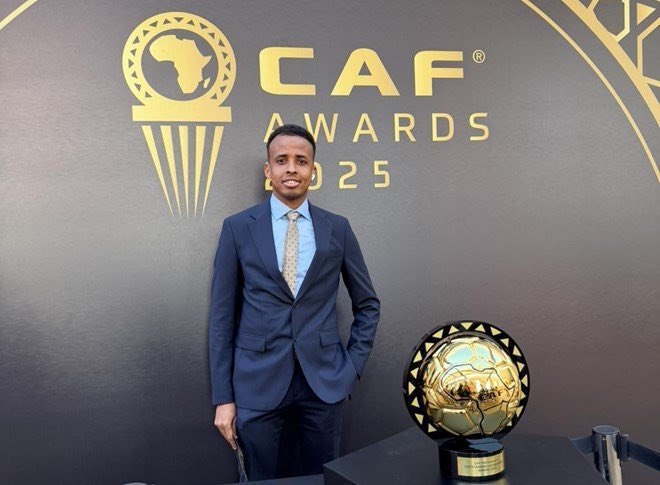
The Somali referee was named the Confederation of African Football (CAF) Referee of the Year in 2025 after overseeing some of the continent’s biggest matches, including Africa Cup of Nations fixtures and major CAF club competitions.
His appointment to the World Cup was celebrated across Somalia, a country that has never qualified for football’s biggest tournament and where decades of conflict have often overshadowed sporting achievements.
Artan had previously described his World Cup selection as a personal milestone and a source of pride for Somalia.
Speaking to Al Jazeera earlier this year, he recalled navigating security challenges and violence at home while pursuing a refereeing career.
“You have to continue, and you have to fight if you want to go to a place like the World Cup,” he said.
“You cannot give up as a referee. You have to have a target. I had this target, but it was not an easy job.”
Ciise Aden Abshir, a senior adviser at Somalia’s Ministry of Youth and Sports and a former national team captain, condemned the decision.
“Denying him entry to the United States and preventing him from officiating scheduled matches harms not only him personally but also undermines football’s commitment to fairness, merit and the spirit of fair play,” he said.
Artan struck a more measured tone, thanking FIFA, CAF and supporters for their backing.
“I thank FIFA and CAF for their support and will maintain my refereeing standards as I look ahead,” he said.
Travel restrictions cast shadow over tournament
The incident comes as the Trump administration faces scrutiny over the potential impact of its immigration policies on the World Cup.
Somalia is among the countries affected by U.S. travel restrictions introduced as part of a broader immigration crackdown, although exemptions can be granted in some cases.
Artan’s case has raised questions about whether athletes, officials, journalists and support staff from affected countries could face additional barriers despite being accredited for the tournament.
The Somali referee’s exclusion is not the only immigration-related issue to emerge ahead of the competition.
Iran’s national team was forced to relocate its World Cup base camp to Tijuana, Mexico, after visa complications affected members of its delegation. Several Iranian officials were reportedly denied visas, while players and coaching staff will only be allowed into the United States on matchdays.
Iran coach Amir Ghalenoei criticised the treatment of his team.
“Usually in these tournaments, before technical matters, ethical and human considerations must be respected, which I think for us it was not the case,” he said.
Iraq has also reported travel difficulties. Striker Aymen Hussein was questioned for several hours after arriving in the United States, while an Iraqi photographer travelling with the team was denied entry.
Civil rights organisations have warned that such incidents risk overshadowing a tournament intended to celebrate football’s global appeal.
The Council on American-Islamic Relations (CAIR) criticised the travel restrictions after Artan’s exclusion.
“Our nation should not ban anyone from our shores simply because of their race or their ethnicity,” CAIR deputy director Edward Ahmed Mitchell said.
An early challenge for FIFA
For FIFA, Artan’s removal presents an uncomfortable challenge before the first match has even been played.
The World Cup is being staged across three countries and will feature a record 48 teams, making it the largest tournament in the competition’s history.
Yet one of Africa’s most respected match officials, selected through FIFA’s own vetting and appointment process, will not take part because of a host-country immigration decision.
The episode highlights the growing tension between FIFA’s ambition to present football as a global sport without borders and the reality of increasingly restrictive immigration policies in some host nations.
For Somalia, meanwhile, the decision has ended what would have been a rare moment of representation on football’s biggest stage.
For the whole tournament, it has created an early controversy that organisers will hope does not become a recurring theme as teams, officials and supporters continue to arrive from around the world.