Africa’s richest man signs China equipment deal as Africa’s largest refinery expansion targets 1.4 million barrels per day
Africa’s richest man, Aliko Dangote is deepening his bet on Nigeria’s refining future with a Chinese equipment deal aimed at turning his Lagos refinery into one of the world’s largest fuel-processing hubs.
 Black News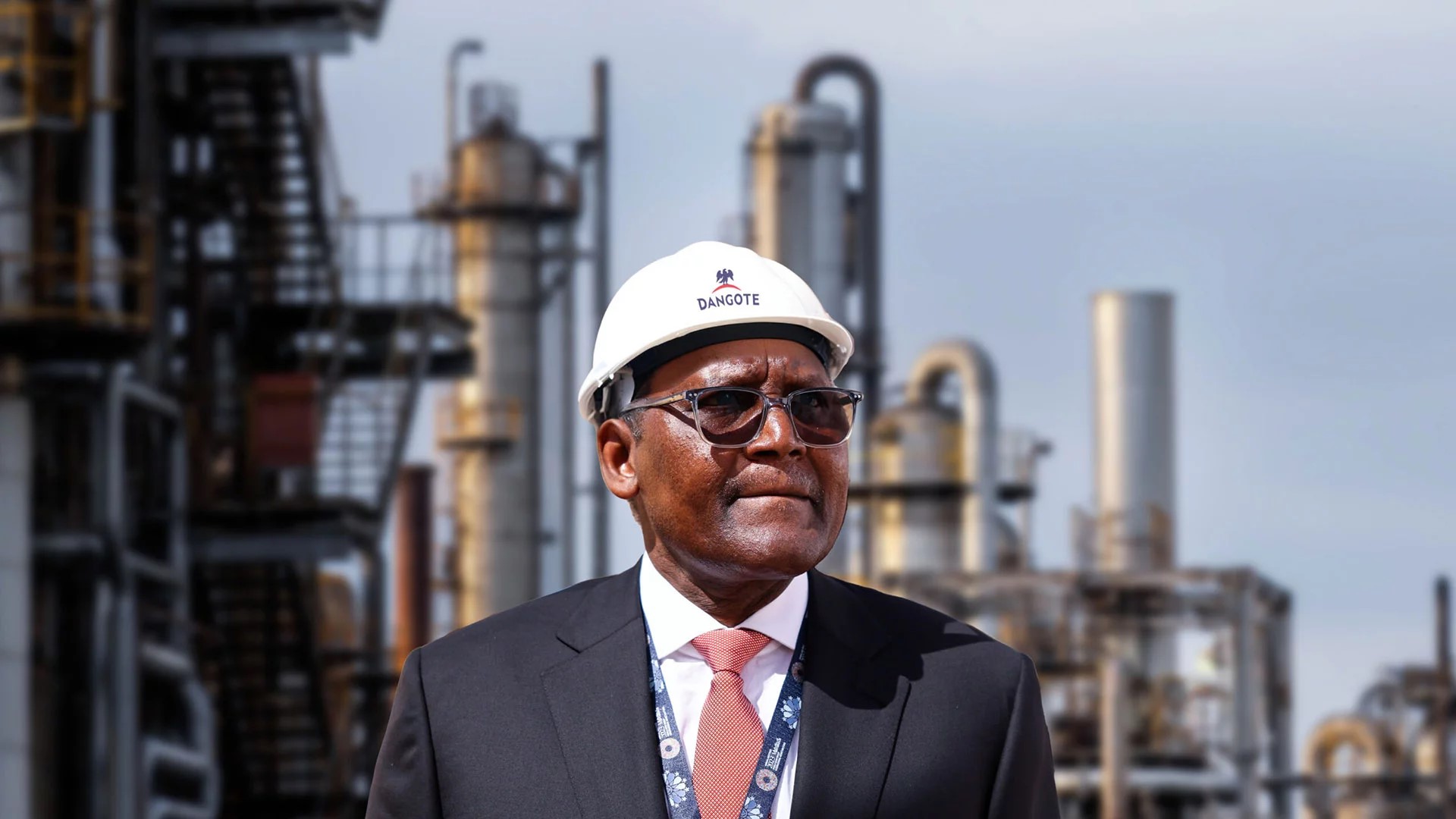

Africa’s richest man, Aliko Dangote is deepening his bet on Nigeria’s refining future with a Chinese equipment deal aimed at turning his Lagos refinery into one of the world’s largest fuel-processing hubs.
- Dangote Group has signed a $400 million equipment agreement with China’s XCMG to support the expansion of its Lagos refinery.
- The company plans to double the refinery’s capacity from 650,000 barrels per day to 1.4 million barrels per day.
- The expansion could place the Lekki facility among the world’s largest refining complexes.
- The deal comes as Dangote Refinery prepares for a major capital raise and possible listing.
Dangote Group signed a $400 million equipment agreement with China’s Xuzhou Construction Machinery Group, known as XCMG, to support the expansion of the Dangote Petroleum Refinery and other industrial projects.
The deal is expected to help the group double the refinery’s capacity from 650,000 barrels per day to about 1.4 million barrels per day within three years.
If completed, the expansion would place the Lekki-based plant in the same league as Reliance Industries’ Jamnagar refinery in India, currently regarded as the world’s largest single-site refining complex.
For Dangote, the agreement is more than a machinery purchase. It is part of a wider plan to turn Nigeria from a fuel-import dependent economy into a major supplier of refined petroleum products across Africa and beyond.
The refinery has already begun changing trade flows in the region. Reuters reported earlier this month that the facility processed 700,000 barrels per day during a performance test, above its official 650,000 bpd nameplate capacity.
The plant, which started operations in 2024, produces petrol, diesel and jet fuel for the Nigerian market while also exporting refined products to other African countries, Europe, the United States and Saudi Arabia.
That shift is significant for Nigeria, Africa’s largest oil producer, which for decades exported crude oil but relied heavily on imported fuel because of weak domestic refining capacity.
The XCMG deal also highlights China’s growing role in Africa’s industrial expansion. Chinese firms have become major suppliers of infrastructure equipment across the continent, offering large-scale machinery at prices and timelines many African companies consider more competitive than Western alternatives.
The refinery is preparing for a major capital raise ahead of a planned listing. The company had earlier this month sought about $1 billion through a private placement, valuing the refinery at about $39.1 billion. Investor demand had already exceeded $2 billion.
That valuation would make the refinery one of Africa’s most valuable privately built industrial assets.
Dangote has framed the refinery as a long-term industrial bet on Africa, not just Nigeria. The planned expansion would increase fuel supply, deepen petrochemical production and strengthen Nigeria’s position in regional energy markets.
However, the scale of the project also comes with risks. The first phase of the refinery took more than a decade to complete and faced delays, funding pressure and crude supply challenges.
The second phase will test whether Dangote can expand faster while maintaining stable crude supply, regulatory support and export demand.
Still, if the expansion succeeds, it could reshape Africa’s fuel market and give Nigeria a rare advantage in a sector where it has long underperformed despite being one of the continent’s biggest crude oil producers.