Africa’s richest man takes $2billion infrastructure push to one of the continent’s smallest economies
Africa’s richest man, Aliko Dangote, is extending his infrastructure investment drive across the continent with a proposed $2 billion commitment to transform The Gambia’s power and fuel sectors, reinforcing his ambition to build industrial assets beyond Nigeria.
 Black News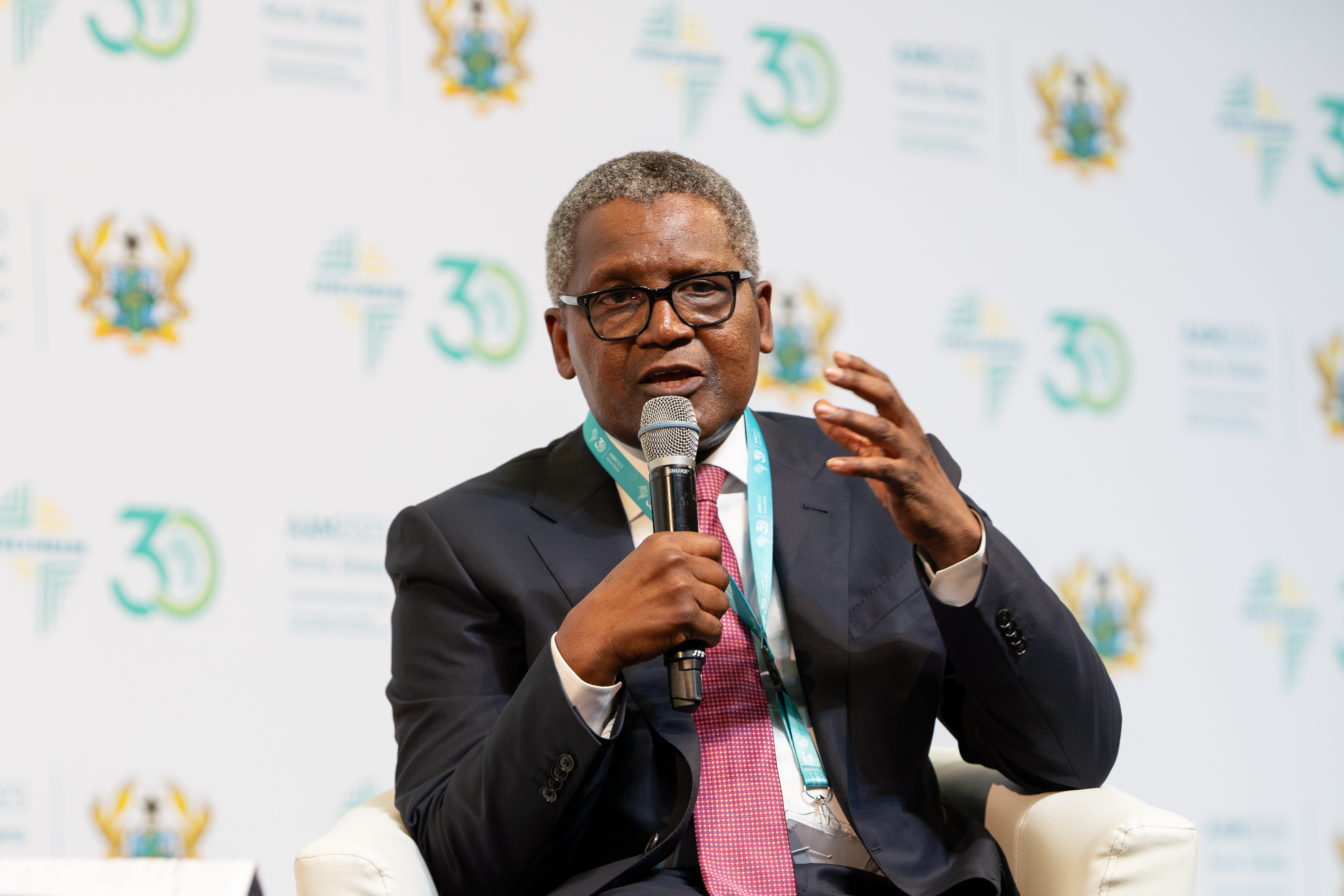
![Aliko Dangote met Gambian President Adama Barrow in Banjul, where he pledged $2 billion for a 250MW solar plant and a fuel storage terminal aimed at strengthening the country’s energy security.[Photo by Noushad Thekkayil/NurPhoto via Getty Images]](https://ocdn.eu/pulscms/MDA_/77a3e398556d218665691f96c6eda4f8.jpg)
Africa’s richest man, Aliko Dangote, is extending his infrastructure investment drive across the continent with a proposed $2 billion commitment to transform The Gambia’s power and fuel sectors, reinforcing his ambition to build industrial assets beyond Nigeria.
- Aliko Dangote has pledged $2 billion to develop a 250MW solar power plant and a fuel storage terminal in The Gambia.
- The projects could significantly reduce the country’s dependence on imported electricity while strengthening fuel security.
- The proposal forms part of Dangote’s broader expansion across Africa, following major investments in refining, fertiliser and manufacturing.
- The projects remain subject to feasibility studies, final agreements and financing before construction can begin.
Gambian President Adama Barrow announced the proposed investment after meeting Dangote in Banjul on Tuesday during the African Caucus 2026 meeting.
According to a State House statement, the proposal includes a 250-megawatt solar power plant and a modern fuel storage terminal designed to strengthen electricity supply and improve the country’s petroleum reserves.
Dangote was accompanied by First Bank Group Chief Executive Olusegun Alebiosu, signalling that financing discussions are already being backed by one of Nigeria’s largest financial institutions.
A transformative project for The Gambia
If delivered, the projects would represent one of the largest private infrastructure investments in The Gambia’s history.
DON'T MISS THIS: Africa’s richest man is now worth more than the economies of 33 African nations
The country continues to depend heavily on imported electricity, particularly from Senegal through the regional power pool, while expanding domestic renewable energy generation remains a key government priority.
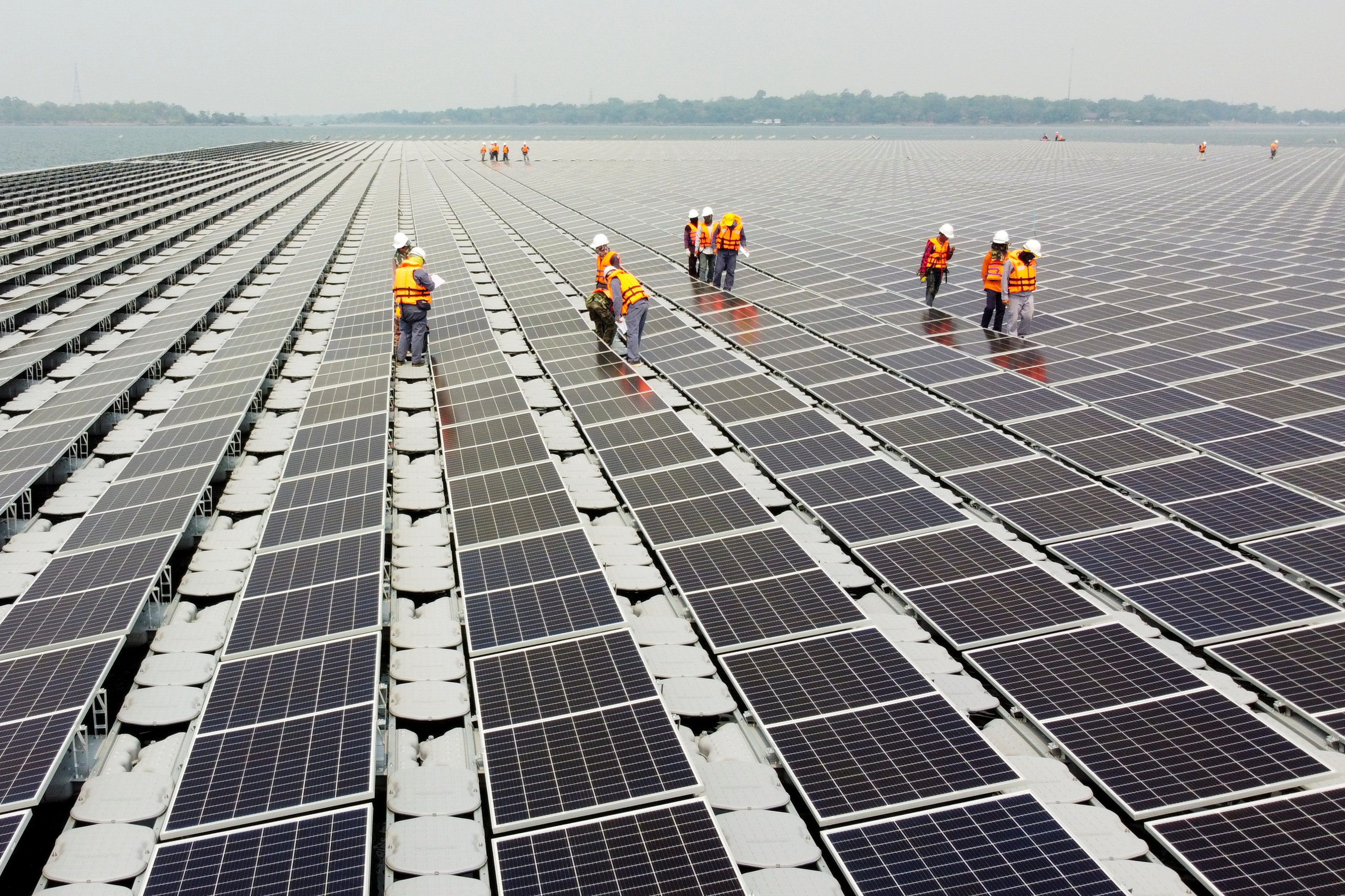
A 250MW solar plant would significantly increase The Gambia’s domestic generating capacity and support its target of raising renewable energy’s share of the electricity mix from 13% in 2024 to 30% by 2030. It would also exceed the capacity of the 150MW Soma Solar Project, currently under development.
The proposed fuel storage terminal would complement the solar investment by increasing strategic petroleum reserves, improving supply security and reducing vulnerability to fuel supply disruptions and international price shocks.
Part of Dangote’s continental expansion
The Gambia proposal is the latest sign that Dangote is broadening his investment strategy beyond Nigeria.
DON'T MISS THIS:Nigeria overtakes U.S. as Europe's top jet fuel supplier with 466,000-tonne June exports from Africa's largest refinery
In recent weeks, the billionaire has confirmed plans for a $17 billion refinery in Kenya, marking what would be his first refining investment outside Nigeria.
The project has already attracted interest from Tanzanian billionaire Mohammed Dewji, who recently said he was prepared to invest $100 million.
Dangote is also expanding fertiliser production and scaling up operations at his Lagos refinery, which has become Africa’s largest with a processing capacity of 650,000 barrels per day.
The refinery has transformed Nigeria from a major importer of refined petroleum products into an exporter of petrol, diesel and aviation fuel to African and international markets.
Taken together, the investments point to a broader strategy of replicating Dangote’s industrial model across the continent through large-scale energy, manufacturing and infrastructure projects.
A proposal awaiting execution
Despite the scale of the announcement, the investment has not yet reached the implementation stage.
No binding agreements have been signed, and the two sides must still complete feasibility studies, technical assessments and financing arrangements before construction can begin.
DON'T MISS THIS:How Dangote plans to transform Nigeria from an oil exporter into a global fuel powerhouse
The Gambian government has also not disclosed how the $2 billion investment will be split between the solar plant and the fuel storage facility or provided a construction timetable.
That distinction matters. Large investment pledges announced during high-level government meetings do not always progress to financial close.
For The Gambia, however, successful delivery would be transformative, strengthening energy security, reducing dependence on imported electricity and attracting additional private investment into the country’s infrastructure sector.
For Dangote, the proposal reinforces a clear shift in strategy. Having built Africa’s largest industrial empire in Nigeria, he is increasingly deploying capital across the continent, positioning his group to play a leading role in Africa’s next phase of infrastructure and industrial development.