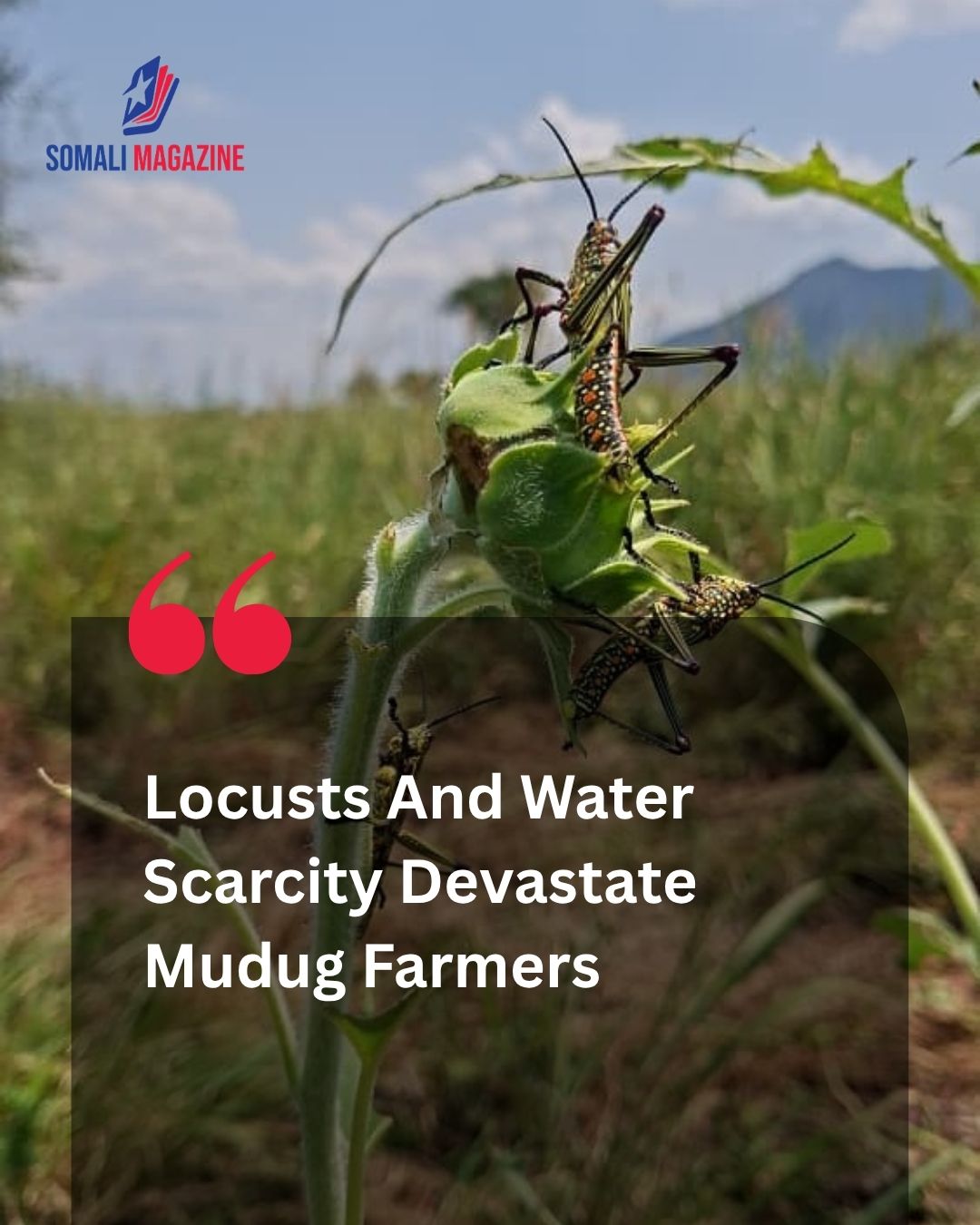
The fragile agricultural network in central Somalia is facing an immediate operational collapse following a devastating seasonal convergence of environmental shocks. In a tragic development for local food systems, a deadly combination of locusts and water shortage devastate Mudug farmers, wiping out vital vegetable and fruit yields just as they were nearing commercial harvest. The dual crisis has completely dismantled the primary source of income for hundreds of families across rural villages, including Hero-Dhagahley, highlighting the severe vulnerabilities of local agropastoral communities operating within the Galmudug State corridors.
The swarms descended rapidly on smallholder plots, with the insects settling heavily across entire hectares of cultivated crops like tomatoes, onions, carrots, and green peppers. Local farmers report that the pests stripped the vegetation bare before laying extensive eggs across the remaining topsoil, guaranteeing prolonged infestations for the upcoming planting cycle. This aggressive biological attack was compounded by a complete breakdown in local irrigation well infrastructure. The primary communal well supplying Hero-Dhagahley has been entirely out of service for over four months due to a broken storage tank and a complete lack of functional pipes and generator fuel, rendering farmers unable to save their drying fruit trees.
The economic fallout from these concurrent crises is driving severe humanitarian food insecurity throughout the immediate sub-region. Because these rural plots serve as the primary supply line for urban markets in nearby coastal towns like Hobyo and Wisil, the sudden halt in production has triggered steep local food shortages. With individual financial losses averaging upwards of $1,300 per farm, families are being forced to ration resources heavily, with many reducing their daily intake to just a single meal. Furthermore, the lack of agricultural income means parents can no longer afford standard primary school or Koranic class fees, disrupting the education of local children.
The broader operational reality reveals that many of the affected farmers are former nomadic pastoralists who only recently transitioned to crop cultivation. Having lost their entire herds of goats and camels to historical droughts, these families utilized micro-loans to establish their small farms as a desperate alternative livelihood. Now, with water prices from private commercial trucks spiking to $5 per barrel, these destitute households must rely entirely on the charity of neighbors for a single jerrycan of drinking water. Without emergency intervention to rehabilitate community water points and implement targeted pest eradication campaigns, the region faces widespread, permanent regional crop failures and secondary displacement.


 Black News