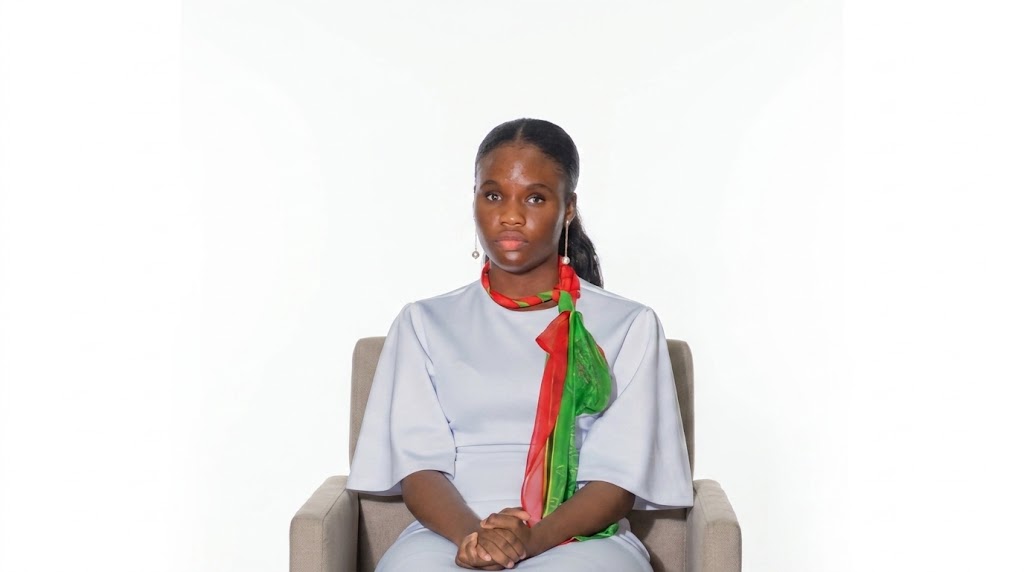
A.I.-Generated Fake Influencers Are Pushing Pro-Trump Messaging On TikTok
Hundreds of A.I.-generated personas are flooding social media with political content, blurring the line between authentic voices and digital manipulation.
 Black News

A wave of artificially generated influencers is flooding social media ahead of the midterm elections, pushing pro-Trump messaging while posing as everyday Americans.
In one TikTok clip, a Black woman in a military uniform claims that “…the left say Republicans aren’t United…that’s funny because I bet I can get a Trump supporter from every state to comment.” Another shows a Black man in a work uniform commenting the exact same phrase. Another shows an older Black woman saying, you guessed it, the exact same thing.
None of them are real.
According to the New York Times, researchers and analysts have identified hundreds of accounts across TikTok, Instagram, Facebook and YouTube featuring A.I.-generated avatars designed to look like attractive, relatable users. These digital personas post rapidly about hot-button issues like foreign policy, abortion and pop culture, often blending political commentary with lifestyle content to maximize engagement.
A review of these accounts done by the Times found at least 300 such TikTok accounts, some of which quickly gained tens of thousands of followers and racked up hundreds of thousands of views. Most were not labeled as A.I.-generated, making it difficult for viewers to distinguish them from real people.
Who is behind the accounts remains unclear. Experts say they could be the work of marketing firms, content farms or coordinated influence campaigns. What is clear is that the barrier to creating these avatars has dropped significantly, allowing companies to mass-produce lifelike influencers at minimal cost.
Officials at TikTok told the Times that it found no evidence of a coordinated political operation — describing the accounts as spam aimed at driving engagement — researchers argue the effect may still be significant. By flooding feeds with consistent messaging, these avatars can create the illusion of widespread support, subtly shaping perceptions.
Some accounts appear less focused on politics and more on boosting metrics, mimicking romance scams or promoting unrelated products. But many lean heavily into political persuasion, often using repeated scripts, shared imagery and recycled personas.
The strategy, experts say, is less about precision targeting and more about volume — saturating platforms with content that feels authentic enough to blend in. Comments on many posts suggest users believe the avatars are real.
As A.I. tools become more advanced, the line between genuine voices and manufactured ones is increasingly difficult to spot. And in an election cycle already crowded with misinformation, these synthetic influencers represent a new and evolving challenge.
“Flooding the zone with content can create a false sense of consensus,” one analyst noted. “It doesn’t have to be perfect — it just has to feel real enough.”
See social media’s reaction to the AI videos below.