Aliko Dangote’s $20 billion refinery helps power Nigeria to first credit rating upgrade in 14 years
Aliko Dangote’s massive refinery complex near Lagos has emerged as one of the main drivers behind Nigeria’s first sovereign credit rating upgrade in 14 years, with S&P Global Ratings describing the project as a growing stabilising force for the country’s economy amid global energy market disruptions.
 Black News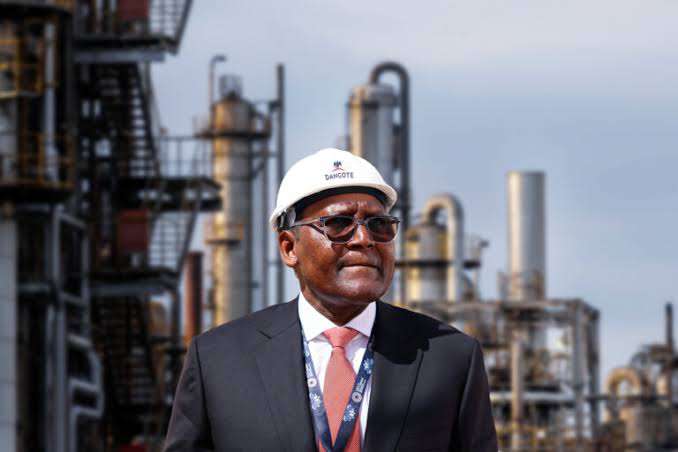

Aliko Dangote’s massive refinery complex near Lagos has emerged as one of the main drivers behind Nigeria’s first sovereign credit rating upgrade in 14 years, with S&P Global Ratings describing the project as a growing stabilising force for the country’s economy amid global energy market disruptions.
- Aliko Dangote’s refinery near Lagos has played a key role in Nigeria’s first sovereign credit rating upgrade in 14 years by S&P Global Ratings.
- The $20 billion refinery, operating near its 650,000 barrels-per-day capacity, reduces Nigeria’s reliance on fuel imports and boosts foreign exchange reserves.
- The facility shields Nigeria from supply shocks due to Middle East conflicts and improves its current account surplus, projected to reach 5.8% of GDP in 2026.
- Dangote plans to expand the refinery’s capacity to 1.4 million barrels per day, making it structurally important for Nigeria’s energy sector and external balance.
The $20 billion refinery, which has ramped up to near its 650,000 barrels-per-day capacity, was highlighted by S&P as a key factor behind Nigeria’s long-term sovereign rating upgrade to B from B- on May 15.
The agency said the refinery is helping cut fuel imports, strengthen foreign exchange reserves, improve the country’s current account position, and shield Africa’s largest economy from supply shocks linked to the Middle East conflict.
“Domestic supply helps ensure the availability of refined fuel, gas, and fertiliser for the Nigerian market, providing a buffer against the global and regional supply constraints caused by the Middle East conflict,” S&P said in the report.
Nigeria’s gross foreign exchange reserves climbed to $50 billion by March 2026, up from $33 billion in 2023, while the country’s current account surplus is projected to rise to 5.8% of GDP this year.
S&P also pointed to Dangote’s planned expansion of the facility to 1.4 million barrels per day, saying the refinery is becoming structurally important not only to Nigeria’s energy sector, but also to its broader external balance and sovereign credit profile.
“The country's refining capacity is also increasing thanks to the new Dangote refinery, and, in early 2026, Dangote unveiled plans to undertake feasibility studies around expanding refining capacity to about 1.4 mbpd, from 650,000 per day currently,” the report stated, adding that the rehabilitation of the Port Harcourt, Warri, and Kaduna refineries could further strengthen Nigeria’s refining capacity and balance of payments in the coming years.
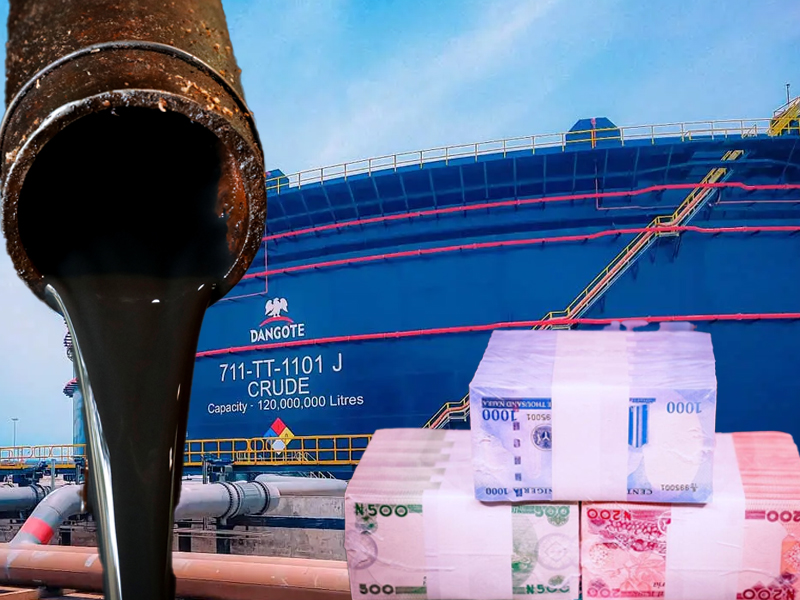
Dangote refinery reshapes Nigeria’s external position
For decades, Nigeria spent nearly $10 billion annually importing refined petroleum products despite being one of Africa’s largest crude oil producers.
S&P Global Ratings said the launch of Aliko Dangote’s refinery has significantly reduced dependence on imported fuel while strengthening the country’s external position.
“We expect Nigeria's current account will maintain a strong surplus position in 2026-2029, and that FX reserves will continue to accumulate through to 2029,” the report stated.
S&P noted that Dangote Industries’ refinery and petrochemical complex has ramped up to near its 650,000 barrels-per-day capacity, helping support Nigeria’s projected current account surplus of 5.8% of GDP in 2026, up from 4.8% in 2025.
The agency added that increased domestic refining capacity is helping cushion Nigeria from the economic spillover effects of the Middle East conflict by ensuring local supplies of fuel, gas, and fertiliser, while stronger oil production is expected to average about 1.66 million barrels per day in 2026.
However, S&P warned that inflation remains a major challenge, although it expects price pressures to gradually ease and fall below 10% by 2028.
The report also highlighted ongoing rehabilitation work at the Port Harcourt, Warri, and Kaduna refineries, which could further strengthen Nigeria’s refining capacity and balance of payments in the coming years.