America wants Africa’s rare earths. Can the continent turn Trump’s $3 billion push into jobs, factories and billions in investment?
For decades, America’s engagement with Africa was largely defined by aid, public health programmes, security partnerships and political diplomacy, but Washington is now making a harder commercial calculation as it seeks to secure critical minerals, opening both direct and indirect investment opportunities for resource-rich African countries.
 Black News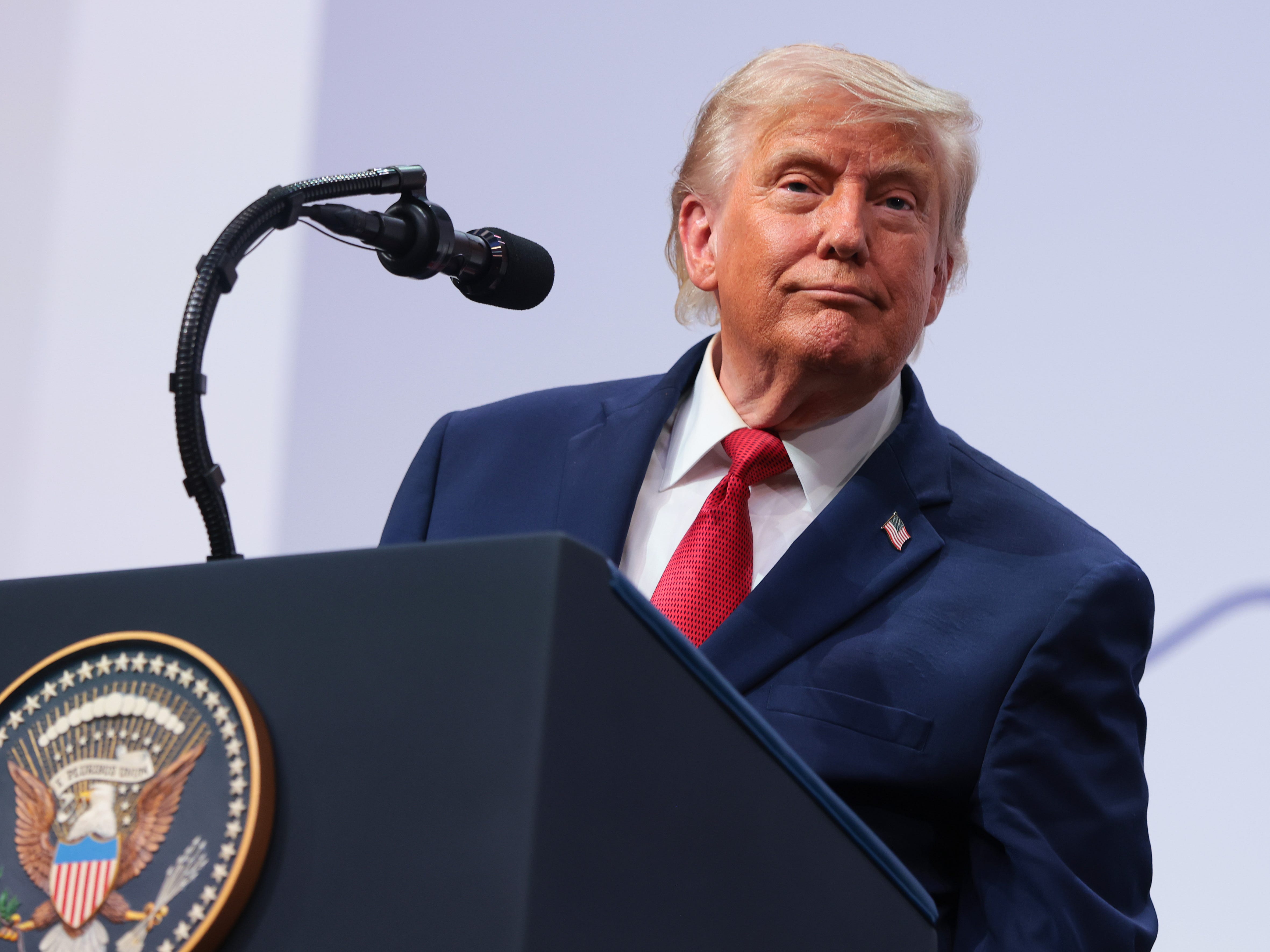


For decades, America’s engagement with Africa was largely defined by aid, public health programmes, security partnerships and political diplomacy, but Washington is now making a harder commercial calculation as it seeks to secure critical minerals, opening both direct and indirect investment opportunities for resource-rich African countries.
- The US is increasing investment in critical minerals to reduce its dependence on China, creating new opportunities for African countries in mining, processing, and infrastructure.
- President Trump announced $3 billion in government-backed funding for critical minerals and battery projects, with a significant focus on Africa as a key supply partner.
- The Democratic Republic of Congo, with an estimated $24 trillion in minerals, is central to this strategy, exemplified by new strategic partnership agreements and infrastructure investments like the Lobito Corridor.
- Competing US and Chinese interests give African governments more leverage to demand greater value from their resources, fostering opportunities for broader industrial and economic development.
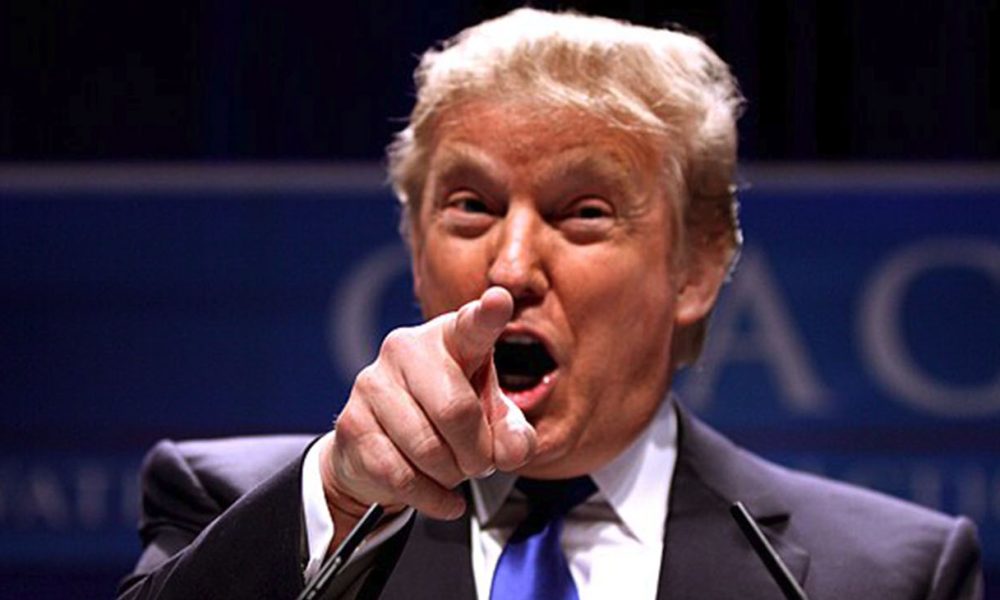
US President Donald Trump on Friday announced $3 billion in government-backed investments in critical minerals, including rare earths, and battery projects, sharpening focus on Africa, which holds about 30% of the world’s mineral reserves.
“We’re reclaiming America’s rightful place as the minerals superpower of the world,” Trump told more than 200 mining executives, investors, educators and politicians at the State Department.
The funding includes a $1.4 billion conditional loan to Sila Nanotechnologies, $400 million for scandium miner Sunrise Energy Metals and $150 million for magnet developer Niron Magnetics.
The US Export-Import Bank is also expanding financing for mineral projects as Washington builds mining, refining and manufacturing capacity at home, while separately courting critical-minerals opportunities in Africa, where it already finances billions of dollars in other sectors.
“Critical minerals are the raw materials of American strength that power everything from advanced weaponry to automobiles, and we want these essential products to be mined, refined and made right here in the USA,” Trump said.
While most of the latest financing is aimed at US projects, Washington has already made clear that Africa will be important to securing the supplies needed to sustain that expansion.
For African countries, the growing US-China rivalry is already creating more leverage, especially for governments willing to look beyond old relationships and weigh which side offers better development terms, as Trump appears serious about closing the gap with Beijing.
DON'T MISS: Trump’s $3 billion minerals push puts Madagascar’s rare earths on the frontline of U.S.-China rivalry

Washington looks to Africa
Earlier this year, Nick Checker, Senior Bureau Official in the US State Department’s Bureau of African Affairs, outlined a commercial strategy for Africa with critical minerals at its core.
“Our goal is to ensure that critical minerals from Africa begin flowing west to the United States. Again, initiatives such as the Lobito Corridor exemplify this model,” Checker said during remarks on the administration’s “America First in Africa” policy.
More broadly, Washington says it wants to shift its relationship with Africa from one traditionally associated with aid and development programmes towards trade and private investment.
“We are engaging African nations not as aid recipients, but as capable commercial partners,” Checker said.
“Our objective put simply—increase U.S. exports and investment in Africa to drive mutual prosperity and harness Africa’s abundant natural resources and latent economic potential to secure our supply chains.”
The approach could benefit mineral-rich countries including the Democratic Republic of Congo, Zambia, Angola, Namibia, Botswana and Tanzania.
Checker said Africa’s growing population and economies also strengthen its appeal to American companies.
“Africa is the world’s next great commercial opportunity. Nine of the 20 fastest growing economies are in Africa, and by 2050, one out of every four people on the planet will be in Africa—2.5 billion consumers with projected purchasing power exceeding $16 trillion.”
DRC’s $24 trillion mineral prize
At the centre of Washington’s strategy is the Democratic Republic of Congo, whose largely untapped mineral resources are estimated to be worth about $24 trillion.
The DRC is already the world’s largest cobalt producer and a major copper supplier, while also holding lithium, tin, tantalum, tungsten and gold.
“One of the most important steps we’ve taken in this area came last year when the United States and the Democratic Republic of the Congo signed a Strategic Partnership Agreement on critical minerals as part of the Washington Accords,” Checker said.
“That agreement reflects a new model for how we engage on minerals. Rather than simply extracting resources, we are working with partners to build secure, transparent, and commercially viable supply chains that benefit both our economies.”
Meanwhile, the DRC has also moved to retain more value from its mineral sector. Kinshasa recently banned exports of copper and cobalt concentrates, with limited waivers, as it seeks to expand domestic processing.
The decision, in turn, adds to efforts by the government to attract investment beyond extraction as demand for strategic minerals rises.
Separately, Washington has identified three projects as central to the agreement: a Virtus-led consortium seeking to acquire Chemaf’s copper and cobalt mines, a DRC Lobito Corridor concession involving Mota-Engil, and a proposed Orion Critical Mineral Consortium deal with Glencore.
DON'T MISS: Japan backs $34 million Namibia rare earth project as race for Africa’s critical minerals intensifies
Lobito opens regional opportunities
The Lobito Corridor is also one of Washington’s biggest infrastructure bets in Africa, backed by $553 million for a railway linking Angola to mineral-rich areas of the DRC and Zambia.
The route is designed to move Central Africa’s copper and cobalt to global markets while attracting investment along the corridor.
Despite China’s more visible presence in African infrastructure and mining, the United States already ranks among the continent’s largest foreign investors, with UNCTAD placing it second by investment stock in 2024, ahead of China.
Private American capital is also following the opportunity, with KoBold Metals, backed by investors including Bill Gates and Jeff Bezos, developing Zambia’s Mingomba copper project and pursuing exploration opportunities in the DRC, Namibia and Botswana.
Beyond mining, KoBold has also sought involvement in digitising colonial-era geological records held in Belgium on the DRC’s mineral resources, underscoring the growing value of geological data in the race to identify future deposits.
Africa looks for a bigger share
As Washington expands its mining, refining and manufacturing capacity at home, its need for secure mineral supplies will also grow, putting greater focus on resource-rich African countries.
Beyond the DRC and Zambia, Kenya, Madagascar, Nigeria, Namibia and South Africa are also positioning themselves in the critical-minerals race, driven by new discoveries and growing calls for investment, particularly from partners seeking supply chains outside China.
For African governments, the opportunity is to turn that demand into processing plants, factories, railways, power infrastructure and jobs rather than another cycle of raw mineral exports.