America’s war in Iran is crushing Black, Latino families Nisa Islam Muhammad
WASHINGTON, D.C.—The shaky truce may have temporarily halted the U.S. bombing in Iran, but for Black and Latino families across America, the economic war continues to devastate them. A recent analysis from the Center for American Progress (CAP) and fiscal experts warns that working-class households are now locked into a cycle of crippling debt, inflation, […] The post America’s war in Iran is crushing Black, Latino families Nisa Islam Muhammad appeared first on Final Call News.
 Black News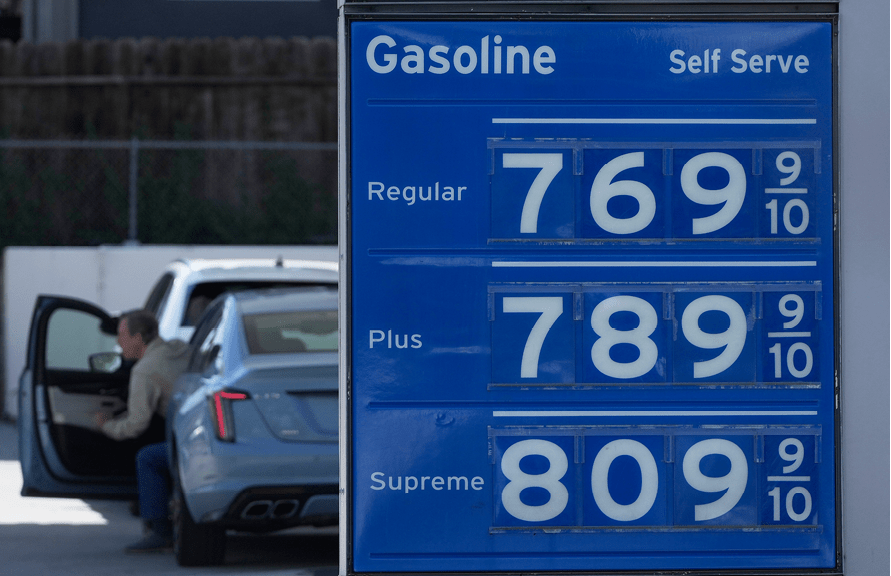

WASHINGTON, D.C.—The shaky truce may have temporarily halted the U.S. bombing in Iran, but for Black and Latino families across America, the economic war continues to devastate them.
A recent analysis from the Center for American Progress (CAP) and fiscal experts warns that working-class households are now locked into a cycle of crippling debt, inflation, and systemic financial pain that may last for decades.
The total price tag for President Donald Trump’s Iran war is projected to reach $1 trillion. However, for families already struggling to buy food, pay for gas, and cover rent, the real cost is measured in hunger pains, rising fuel costs and the dream of homeownership becoming more elusive.
According to CAP’s analysis, “Trump’s War May Be Over, But the Economic Damage is Not,” the disruption of global energy markets has pushed gas prices above $4 per gallon nationally. In March alone, American households spent an estimated $8.4 billion more on gasoline compared to pre-war levels.
For Black and Latino families, who are disproportionately represented among essential workers and long-distance commuters due to a lack of affordable housing near job centers, this spike acts as a regressive tax. The report highlights that the lowest-income families spend more than 30% of their income on transportation.
“When fuel costs explode, we feel it immediately,” a D.C. community organizer told The Final Call, who requested anonymity for safety. “Brothers and sisters are already choosing between fixing the car to get to work or putting dinner on the table.”
“Is this what people voted for with Trump? … What you see is not what you were going to get. It’s so tragic that people actually voted for him. Black men, Latinos, and others. Look what we have.
A president who threatens to destroy a whole civilization. Is that what America is all about? Maybe, look at history. It’s a sad day, and the American people are paying the price.”
According to the U.S. Bureau of Labor Statistics (BLS), the March Consumer Price Index (CPI) rose to 3.3% year-over-year, a sharp increase from 2.4% in February.
This report is the first full reading covering the period since the war with Iran began on February 28. Economists noted that the 21.2% spike in gasoline prices was directly responsible for nearly three-quarters of the total monthly increase in inflation.
While a ceasefire was announced shortly before this data was released, analysts warn that these higher transportation and fuel costs will continue to trickle down to food and consumer goods in the coming months. Consequently, the unsteady truce in Iran has not stopped the bleeding in America’s inner cities and rural farmlands.
“The bombs may have stopped falling on Tehran,” the D.C. organizer added, “but the bill just arrived in our mailboxes.”
The housing crunch gets tighter
The war is also slamming the door on many homeownership dreams. Rising inflation expectations, driven by the energy shock, have pushed mortgage rates higher. CAP estimates this will cost homebuyers tens of thousands of dollars over the life of a loan.
For Black and Latino families, who have historically been steered into higher-cost mortgages and denied wealth-building opportunities through redlining, this new barrier makes an already impossible goal even more elusive. Simultaneously, renters face pressure as landlords passes on higher utility and construction costs.
The hidden mathematics of conflict
Beyond the gas pump, the fiscal mathematics of the Middle East conflict reveal a potential path to national bankruptcy. Experts at Harvard Kennedy School note that during 40 days of active hostilities, the war cost taxpayers roughly $2 billion per day.
Even more alarming is the economic asymmetry: The United States is firing interceptor missiles that cost roughly $4 million each to shoot down Iranian drones that cost as little as $30,000 to manufacture.
The White House has already requested that Congress raise the defense budget to $1.5 trillion, the largest military expansion since World War II, including a $200 billion special reserve for the war in Iran. Even if Congress rejects the full increase, experts agree the baseline defense budget will rise by at least $100 billion annually.
Supply chain pain and farming stress
The war’s disruption of global shipping routes has congested 60% to 70% of major ports, leading to shortages of everyday goods. Meanwhile, U.S. farmers, including many Black farmers who have fought to hold onto their land amid generations of USDA (United States Department of Agriculture) discrimination, are facing fertilizer and diesel prices roughly 50% above pre-war levels.
Global impact of the war
However, the war’s devastation is global. In South Africa, fuel price jumps have triggered cascading increases for food and electricity. Women, who shoulder the majority of unpaid care work, are being hit first and hardest.
Three-quarters of the people living in Qatar and the UAE are migrant workers from large developing countries such as India, Pakistan, Bangladesh, and Egypt. Yale researchers found that the majority of people killed in the Gulf countries are collateral damage, migrant workers.
If the Gulf Cooperation Council (GCC) economies remain blockaded and suffer economic hardship, this will have significant spillover effects on South and Southeast Asian economies, which won’t receive the typical remittances migrant workers send home.
The post America’s war in Iran is crushing Black, Latino families Nisa Islam Muhammad appeared first on Final Call News.




.jpeg?width=1200&height=800&crop=1200:800#)