Annual Bridging Communities Conference strengthens partnerships between Maryland nonprofits and state agencies
The annual Building Bridges Conference took place June 30 at Coppin State University, pulling together nonprofit organizations, state agencies, community advocates and philanthropic leaders looking to strengthen partnerships across Maryland. The post Annual Bridging Communities Conference strengthens partnerships between Maryland nonprofits and state agencies appeared first on AFRO American Newspapers.
 Black News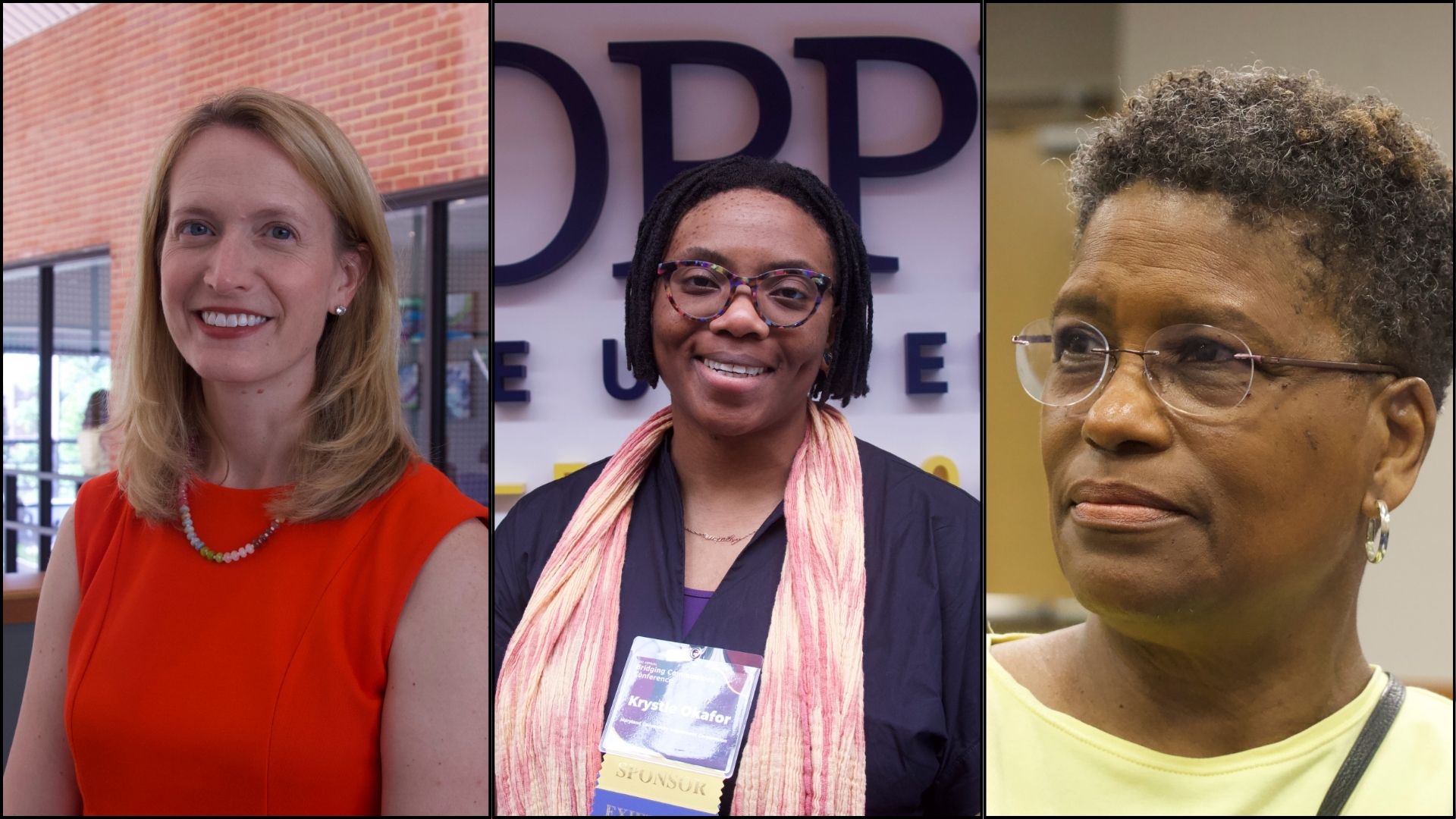

By Makayla Walker
mwalker@afro.com
and
Andrew Hall
ahall@afro.com
AFRO Interns
The office of the Comptroller of Maryland held its third annual Bridging Communities Conference at Coppin State University in Baltimore on June 30. Each year, the event brings nonprofit organizations, state agencies, community advocates and philanthropic leaders together to strengthen collaborative partnerships across Maryland.

This year, the event arrived under a theme of building stronger partnerships between nonprofits and state governments. Attendees engaged in timely conversations and received resources to support their nonprofit organizations.
The conference was kicked off with remarks from several speakers including Sen. Antonio Hayes (D-Md.-District 40), Maryland Nonprofits Interim President and CEO Carmen Marshall and Coppin State President Dr. Anthony L. Jenkins. Maryland Comptroller Brooke Lierman, who also gave welcome remarks, explained the conference’s significance.
“This is our third annual Bridging Communities Conference, which is a conference where we bring together nonprofit organizations from around the state with state leaders and government partners as well as other organizations that support them,” Lierman said. “The goal is to help build capacity at our nonprofit organizations and ensure that they can continue their mission of serving different communities around the state and serving our state while also growing as businesses.”
With over 300 attendees eager to learn more and connect with colleagues, Lierman described the energy as exciting.
“The energy in the room where we have over 300 participants is exciting. People are determined, resilient and dedicated to ensuring that they can fulfill their mission of being responsible small businesses in Maryland with community-based focuses, and that’s what our nonprofit partners are,” Lierman said. “Everybody is eager to learn, eager to partner and excited to continue doing this important work, even during challenging times like the one that we’re in now.”
Partners for the event included Coppin State University nonprofit leadership, Maryland Nonprofits and The Maryland Community Investment Corporation (MCIC).
Krystle Okafor, chief operating officer for MCIC, explained how her organization keeps emerging nonprofits informed.

Okafor specifically mentioned her company’s role in helping nonprofits navigate or reduce processing fees. Nonprofits can reduce processing fees, which are costs that businesses incur for accepting electronic payments, by updating their 501 (c)(3) status.
She also spoke to how MCIC can help nonprofits in securing real estate.
“Our ability to essentially coach them through complex, creative real estate financing, and help them attract redevelopment financing makes their real estate projects possible,” said Okafor.
The MCIC provides a partnership guide titled “Investing in People, Places, and Possibilities,” which further explains how nonprofits can partner with the organization.
After a plenary discussion on managing nonprofits during turbulent times, the conference broke out into four breakout sessions. Each workshop provided tools, skills and knowledge to help nonprofit organizations navigate state funding, compliance, community development and wealth building programs in Maryland.
During the Wealth Building Programs in Maryland session, John Hudgins, associate professor of sociology and human services administration at Coppin, served as the moderator. Panelists included Glenn Simmons, executive director and chief executive officer for Maryland Saves; Mandi Koba, program officer of economic mobility for the Greater Washington Community Foundation; Dani DiPietro, policy research director for the Maryland Comptroller’s office and Kimberley Miller-Tolbert, director of policy for the Governor’s Office for Children.
Panelists, who represented various state agencies across Maryland, highlighted economic disparities in the state. Roughly 18 percent of African Americans and 10 percent of Marylanders have zero or negative wealth returns. To combat that, they shared strategies on how nonprofits can access resources and utilize different programs to build wealth.
The Greater Washington Community Foundation introduced a $1,000 savings program for youth, K-12, aiming to foster a college-bound mindset and community building. They’ve partnered with Montgomery County Public Schools and Prince George’s County Public Schools, and committed to enrolling 400 students between the two districts.
According to data from United Way of Central Maryland, almost 40 percent of Marylanders lack access to basic expenses.
The Maryland State Department emphasized initiatives like tax credit programs, to help combat the financial disparities experienced. The agency provides assistance through Earned Income Tax Credit (EITC), which is designed to reduce or eliminate state income taxes for workers with lower incomes, providing up to $4,000 for eligible Marylanders.
After the session concluded, Hudgins spoke to the AFRO on the importance of nonprofit organizations, particularly those led by Black people, utilizing these programs.
“The Black community has always been involved in nonprofits, whether formally or informally,” noted Hudgins. “A lot of what takes place in the Black community and the success of the Black community is based upon that informal helping, the way we take care of each other and be the best we can, and right now that’s critical, because of what’s going on in D.C.”
Another breakout session focused on how to navigate state funding opportunities. Moderated by Lili Leonard, founder of Black Dog Philanthropic Consulting, the session featured panelists Jessica Doiron, nonprofit navigator for the Maryland Department of Commerce, Jasmine Clemons, assistant secretary for the Maryland Department of General Services; Kate Howard, program officer for the Maryland Department of Housing and Community
Development; Arinze Ifekauche director of communications and deputy director of legislation for the Governor’s Office of Crime Prevention and Policy and Jess Porter, senior program director for the Maryland State Arts Council.

The meeting detailed various wealth building programs in Maryland focusing on grant opportunities and administrative support. Key points included the importance of proper grant application completion and the role of private funding boards and international sponsors.
Ifekauche encouraged nonprofit organizations to be curious and aggressive.
He said he wanted to participate in the panel “to help people understand that there is $300 million annually available.”
Ifekauche said he has found that “a lot of people are so focused on servicing their neighborhood or their corner of the world that they haven’t zoomed out” to make sure they are visible to the people and funders outside of their immediate area.
When asked about challenges faced by Black nonprofits and securing funding, Ifekauche mentioned the need for capacity building in areas like payroll and compliance.
Representatives from the offices of the Maryland Comptroller, Secretary of State and State Department of Assessments and Taxation, urged nonprofits to check their compliance statuses several times per year.
Charity Welch, co-owner of Prime Property Investors, attended the conference hoping to build connections and gain insight on funding opportunities. Welch, who is motivated to provide affordable housing options to the Baltimore community, described her experience.

“I’ve gained so much because my major focus is looking at additional funding sources to alleviate some of the costs families have to provide,” Welch explained. “My biggest takeaway is the many resources, people, agencies and nonprofits across the state of Maryland that are willing to help. A lot of these resources I didn’t know about before, so I’m coming away with an abundance of information that I can use to further my work.”
Sponsors for the Bridging Communities Conference were Maryland Health Connection and Neighborhood Impact Investment Fund.
The post Annual Bridging Communities Conference strengthens partnerships between Maryland nonprofits and state agencies appeared first on AFRO American Newspapers.