Anti-Blackness in the Disability Movement
Anti-Blackness in the Disability Movement Anti-Blackness within the disability movement is not incidental; it is historically produced, structurally maintained, and culturally reinforced. Black disabled people experience compounded marginalization at the intersection of racism and ableism, a condition that exposes the limitations of a mainstream disability rights framework historically centered on white, middle-class experiences (Bell 2011; […]
 Black News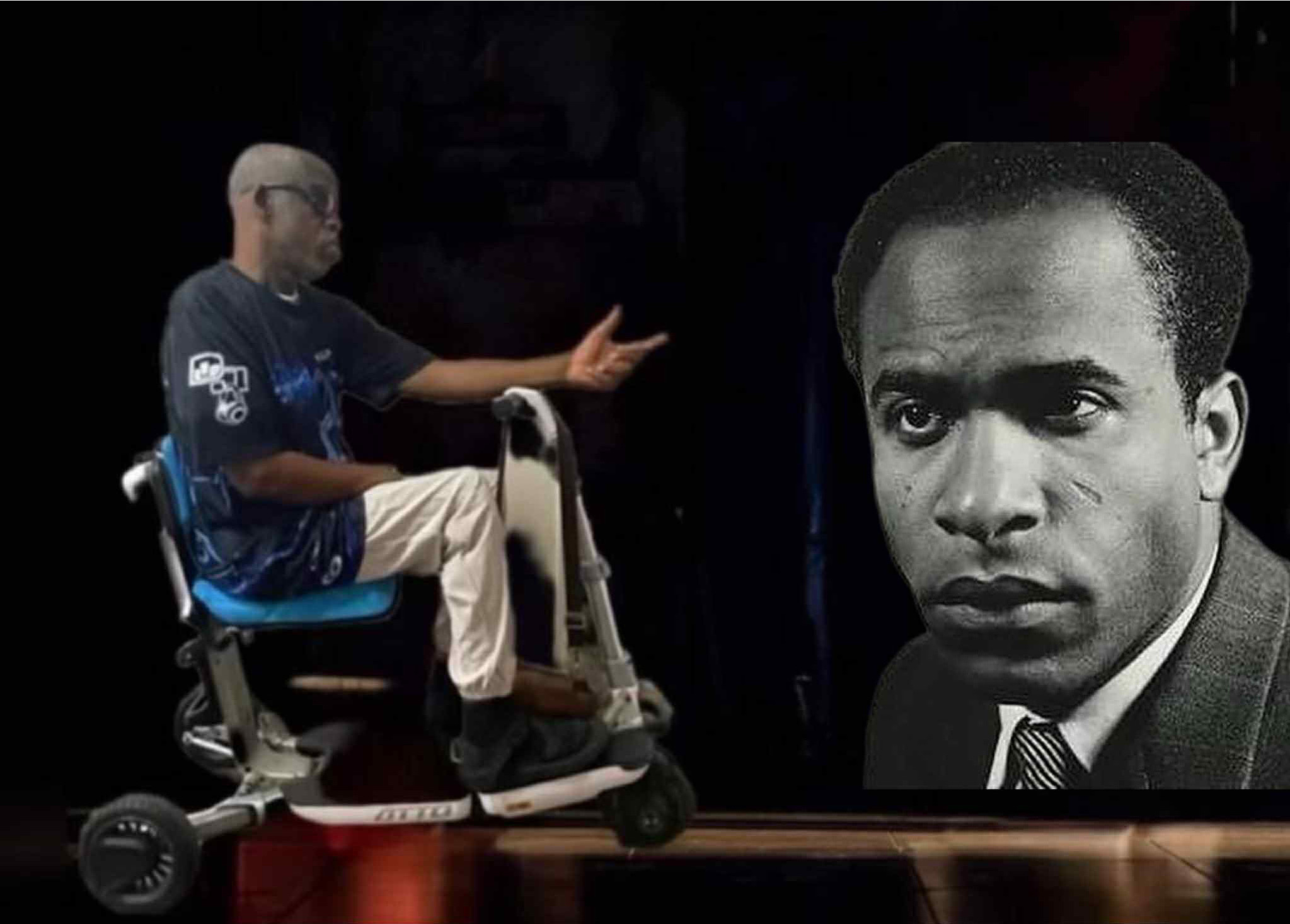
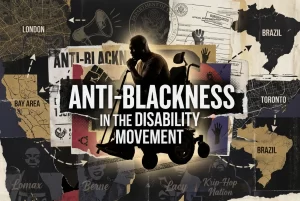 Anti-Blackness within the disability movement is not incidental; it is historically produced, structurally maintained, and culturally reinforced. Black disabled people experience compounded marginalization at the intersection of racism and ableism, a condition that exposes the limitations of a mainstream disability rights framework historically centered on white, middle-class experiences (Bell 2011; Erevelles 2011). While disability movements have challenged ableism, they have often failed to confront anti-Black racism within their own institutions, narratives, and leadership structures. At the same time, stigma surrounding disability within Black communities shaped by histories of colonialism, slavery, and survival can further limit access to resources, care, and collective support (Schalk 2018).
This marginalization is evident in the cyclical emergence and disappearance of Black disability movements across global sites from London to the San Francisco Bay Area. Even where such movements endure, such as in Toronto or Brazil, they remain underfunded, under-documented, and disconnected from broader international Black disability networks. This pattern reflects what can be understood as systemic neglect: Black disabled organizing is often treated as local and temporary rather than foundational to global disability politics.
Recognition disparities further illustrate this inequity. White disabled activists are frequently memorialized through institutional naming practices buildings, fellowships, and awards while Black disabled leaders such as Brad Lomax and Patty Berne receive far less formal recognition despite their transformative contributions to disability justice and cross movement organizing (Berne et al. 2018). This imbalance is not merely symbolic; it reflects broader patterns of resource distribution. The majority of grant funding continues to flow toward white-led disability organizations, while Black disabled people face disproportionate barriers to employment, promotion, and leadership within both nonprofit and advocacy sectors. These disparities have been exacerbated by historical cuts to social programs in the 1980s and more recent rollbacks of diversity, equity, and inclusion (DEI) initiatives.
Several interconnected dynamics define anti-Blackness in the disability movement:
Systemic Erasure. Black disabled activists have been consistently omitted from dominant histories of disability rights, despite foundational figures such as Johnnie Lacy, whose leadership in the Independent Living Movement remains underrecognized (Lacy 1988; Bell 2011).
Racialized Ableism. Ableism itself is deeply entangled with anti-Blackness, eugenics, and colonial ideologies that construct both Blackness and disability as forms of deviation or deficiency (Erevelles 2011; Mbembe 2003). This produces a dual stigmatization in which Black disabled bodies are rendered hypervisible as sites of pathology and invisible as sources of knowledge and culture.
Deficit Framing and Epistemic Exclusion. Black disabled people are frequently positioned through deficit-based narratives, while their intellectual and cultural contributions to movements such as the Black Radical Tradition, the Black Arts Movement, Hip-Hop, and Pan-Africanism remain largely unstudied or uncredited (Robinson 1983; Schalk 2018).
State Violence and Health Disparities. Black disabled individuals are disproportionately vulnerable to police violence and premature death, reflecting what scholars identify as the racialized management of life and death under conditions of structural inequality (Puar 2017). Environmental racism and unequal healthcare access further produce disabling conditions such as asthma at higher rates in Black communities.
Disability Justice Interventions. In response to these exclusions, Disability Justice frameworks have emerged to center intersectionality, leadership of those most impacted, and the inseparability of racial and disability justice (Berne et al. 2018). However, even within these spaces, tensions remain around the depth of engagement with anti-Blackness.
Central to this discussion is the concept of Black ableism, a term developed by activists such as Leroy F. Moore Jr. Black ableism names the specific ways ableist beliefs are internalized and reproduced within Black communities, often shaped by the enduring psychological and material impacts of slavery, colonialism, and racial violence. It describes how disability can be stigmatized as weakness or deviance, leading to exclusion, silence, and lack of support for Black disabled individuals. At the same time, Black ableism must be understood as structurally conditioned rather than individually produced; it reflects survival strategies forged under oppressive conditions, even as it reproduces harm.
Moore’s intervention calls for a decolonization of Black understandings of disability and the development of a distinct Black disability model grounded in African philosophies such as Sankofa and Ubuntu. These frameworks reposition disability not as an individual deficit but as integral to community, kinship, and collective responsibility. In this sense, Afro-Krip and Krip-Hop frameworks extend beyond critique toward cultural and epistemological reconstruction.
Although pivotal moments such as the 1977 Section 504 Sit-in supported by the Black Panther Party and the emergence of Disability Justice in 2007 mark important shifts, Black disabled people continue to lack sustained national and international visibility. Organizations such as the National Black Disability Coalition and movements like Krip-Hop Nation have worked to fill this gap, alongside a growing presence of Black disabled creators on social media. Yet Black disabled voices remain marginalized across Black media, political institutions, cultural industries, and even within the nonprofit disability sector itself.
Globally, conditions of war, occupation, and racial violence such as Apartheid in South Africa and the ongoing oppression in Palestine produce long-term disabling conditions that disproportionately affect Black and racialized populations. Despite international frameworks advanced by institutions like the United Nations and the World Bank, there remains a significant gap between policy and reality, particularly in terms of sustained support and material implementation.
Ultimately, confronting anti-Blackness in the disability movement requires more than inclusion. It demands a fundamental reorientation of the field, one that centers Black disabled knowledge, redistributes resources, and embraces decolonial frameworks such as Afro-Krip and Krip-Hop as essential to the future of disability politics.
References (Chicago Style)
Bell, Christopher M. Blackness and Disability: Critical Examinations and Cultural Interventions. East Lansing: Michigan State University Press, 2011.
Berne, Patty, et al. “Disability Justice – A Working Draft.” 2018.
Erevelles, Nirmala. Disability and Difference in Global Contexts: Enabling a Transformative Body Politic. New York: Palgrave Macmillan, 2011.
Lacy, Johnnie. “Independent Living Movement Contributions.” 1988.
Mbembe, Achille. “Necropolitics.” Public Culture 15, no. 1 (2003): 11–40.
Puar, Jasbir K. The Right to Maim: Debility, Capacity, Disability. Durham: Duke University Press, 2017.
Robinson, Cedric J. Black Marxism: The Making of the Black Radical Tradition. Chapel Hill: University of North Carolina Press, 1983.
Schalk, Sami. Bodyminds Reimagined: (Dis)ability, Race, and Gender in Black Women’s Speculative Fiction. Durham: Duke University Press, 2018.
Moore, Leroy F. Jr. Krip-Hop Nation writings and lectures.