Beyond the headlines, does Kenya have the political will to end femicides?
On June 1st, as Kenya marked Madaraka (self-governance) Day, a different kind of freedom match took place on the streets of Nairobi. Women’s rights organizations, civil society groups, survivors, and concerned citizens gather to demand action against the rising cases of femicide and gender-based violence in Kenya. Their message was simple and urgent. Women should not have to fight for the right to exist. The demonstrations were a sign of mounting national frustration. Women are being killed at an alarming rate, despite public outrage, policy commitments, task forces, and repeated promises from leaders. Every few weeks another family is mourning […] The post Beyond the headlines, does Kenya have the political will to end femicides? appeared first on African Arguments.
 Black News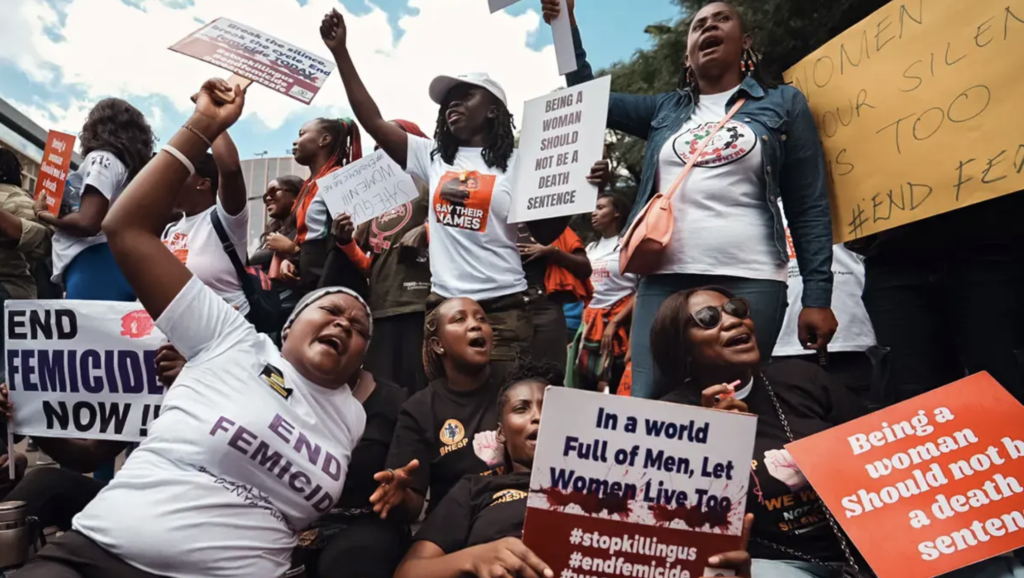
On June 1st, as Kenya marked Madaraka (self-governance) Day, a different kind of freedom match took place on the streets of Nairobi. Women’s rights organizations, civil society groups, survivors, and concerned citizens gather to demand action against the rising cases of femicide and gender-based violence in Kenya. Their message was simple and urgent. Women should not have to fight for the right to exist.
The demonstrations were a sign of mounting national frustration. Women are being killed at an alarming rate, despite public outrage, policy commitments, task forces, and repeated promises from leaders. Every few weeks another family is mourning a daughter, sister, mother, or friend. Missing children’s cases have increased and remain unresolved. Kenyans ask the same question every few weeks. When does enough become enough?
But the protests raised a more profound and more uncomfortable question than the slogans, the hashtags, and the expressions of sympathy. Does Kenya have the political will to put an end to femicide and gender-based violence? And this matters because behind every statistic is a life lost, a family broken, and a community left to deal with the aftermath. Yet despite glowing public concern and repeated commitments from leaders, women and girls continue to be killed, abused, and violated at an alarming rate.
As Kenya moves toward another election cycle, the real test of political will is not whether leaders condemn femicide after each tragedy. It is whether they are prepared to confront the conditions that allow violence against women to thrive in the first place. Recent cases illustrate both the brutality and complexity of the crisis. Earlier this year, a gospel singer reportedly died after being set on fire, with reports suggesting that her public support for a political leader had exposed her to hostility and threats. In another case, a young gospel musician suffered severe acid burns allegedly inflicted by a boyfriend after she sought to end their relationship. While the circumstances of these cases differ, they reveal a troubling reality: women continue to face violence for exercising autonomy, whether in their political expression, personal relationships, or everyday choices. These incidents have reignited public concern about the safety of women and the adequacy of existing measures to prevent gender-based violence.
Statistics show that over 269 women were killed in Kenya in 2024 and 2025 alone. This figure should have jolted the national conscience. Instead, we run the risk of becoming increasingly desensitized. Another headline appears. Another vigil is held. Another promise is made. Then the nation moves on until the next tragedy. For many Kenyans, the murder of university students, professionals, spouses, girlfriends, and young women at the hands of intimate partners has become an all too familiar story. We’ve had the warnings before: controlling behaviors, threats, stalking, emotional abuse, and economic dependence. But too often interventions come only after life has been lost.

As a lawyer who has represented survivors. I have seen first-hand the challenges women face in accessing protection and justice from gender-based violence. Too many survivors are trapped in abusive relationships because they lack the financial independence, safe housing, childcare support, or confidence in the system to protect them when they leave. For some, reporting abuse can lead to more violence rather than safety. This reality compels us to face a hard truth. Femicide is not just a criminal justice problem. It’s the governance issue. It’s about money. It’s a social issue. Most importantly, it’s a leadership issue.
Political will is not measured by speeches but by action. Do you have adequate resources to investigate cases of gender-based violence? Are police officers trained to respond to survivors? Are there shelters for women fleeing violence? Can people seeking protection orders access legal aid? Are perpetrators always prosecuted and convicted? Are we giving the same attention to prevention efforts as we are to the public statements made in the wake of a tragedy? These are the questions that will tell us if a government is serious about ending violence against women.
Kenya has made important strides. The establishment of the President’s Technical Working Group on Femicide acknowledged the gravity and urgency of the crisis. The Constitution ensures equality and freedom from violence. The Protection Against Domestic Violence Act provides legal safeguards for survivors. Yet laws and task forces alone do not save lives. Implementation does.
The challenge becomes even more urgent as the country moves closer to another election cycle. History has shown that elections can create environments where violence is normalized, tolerated, or strategically deployed. Women in politics often face unique forms of intimidation, harassment, threats, and abuse designed to discourage their participation in public life.
Gender-based violence is not always spontaneous. It can be facilitated by cultures of impunity, silence, and power. Where perpetrators believe there will be no consequences, violence flourishes. Where leaders fail to consistently condemn violence, harmful norms become entrenched. Where institutions respond slowly, confidence in the justice system erodes.
To be sure, ending femicide requires more than government action alone. Families, schools, faith communities, employers, media organizations, and citizens all have a role to play. Men and boys must be part of the solution. Communities must learn to recognize warning signs and intervene before violence escalates. We must challenge cultural attitudes that excuse abuse, control, and entitlement.
But leadership matters.
The Ministry of Gender, the National Police Service, the Office of the Director of Public Prosecutions, Parliament, the Office of the President, and county governments all have distinct responsibilities in preventing and responding to gender-based violence. The recommendations of the President’s Technical Working Group on Femicide have yet to produce the level of urgency that the crisis demands. Parliament has not prioritized comprehensive debate on implementation, while funding for shelters, survivor support services, and legal aid remains inadequate.
The true test of political will is whether leaders are prepared to invest political capital, public resources, and institutional attention in addressing violence against women with the same urgency given to other national priorities. Every woman deserves to live free from fear. Every family deserves to know that the law will protect them. Every girl deserves to grow up believing that her life has equal value.
The question before us is not whether femicide is a crisis. The evidence is overwhelming. The question is whether we are prepared to act like it is. Until we answer that question with sustained action, more women will continue to pay the price for our collective failure.
The women and men who marched on June 1 were not simply protesting another tragedy. They were demanding leadership. They were demanding accountability. They were demanding a country where women can move through public and private spaces without fear. Their message should not fade once the placards are put away. The true measure of political will is not how loudly leaders condemn femicide after it happens, but what they do to prevent the next one.
The post Beyond the headlines, does Kenya have the political will to end femicides? appeared first on African Arguments.