Bujumbura Authorities Warn Riverbank Activities Are Shifting Territory Toward DR Congo, Rwanda
As river courses shift along Burundi’s borders, local authorities face accusations of failing to stop farming, mining and sand extraction blamed for the changes.
 Black News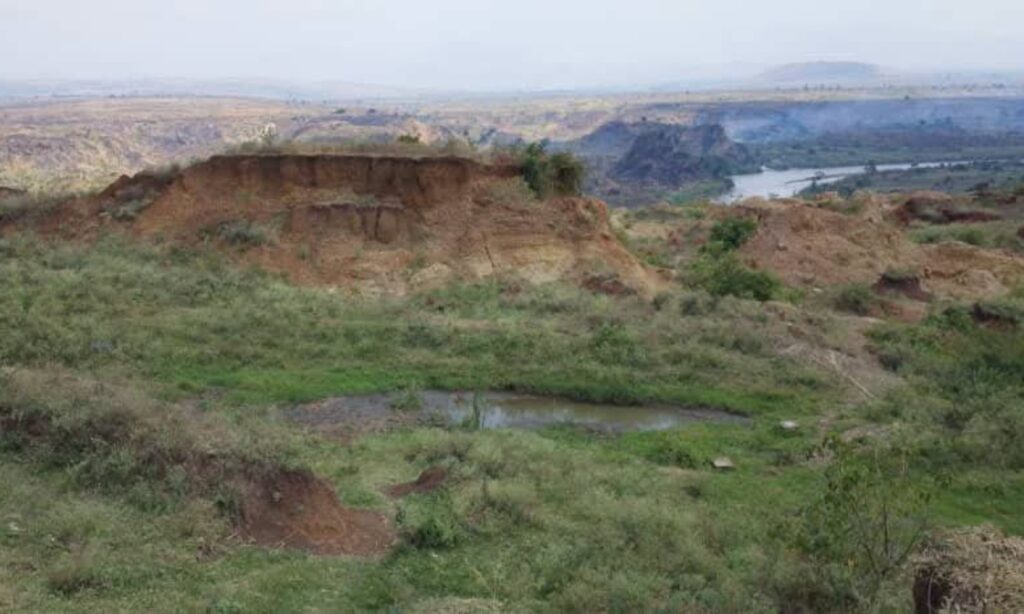

Provincial authorities in Bujumbura have raised concerns over the gradual loss of Burundian territory along the borders with the Democratic Republic of Congo and Rwanda, blaming activities along the Rusizi and Ruhwa rivers for changes in the waterways’ courses.
Environmental actors have also warned that weak enforcement of Burundi’s water protection laws could be contributing to the problem.
In a letter dated August 3, 2026, Bujumbura Provincial Governor Aloys Ndayikengurukiye instructed administrators of the communes of Ntahangwa, Mpanda, Bukinanyana, Cibitoke and Mugina to address the issue.
The governor said the situation was identified by the National Border Delimitation Commission following a field mission conducted from July 13 to 16 along the Rusizi and Ruhwa rivers, which form parts of Burundi’s borders with the Democratic Republic of Congo and Rwanda.
According to the governor’s letter, activities carried out by residents along the riverbanks are contributing to changes in the courses of the two rivers. As the waterways shift, areas that previously belonged to Burundi risk effectively moving toward neighboring countries.
The authorities identified several practices as contributing to the problem, including farming in riverbeds, artisanal gold mining, sand extraction and failure to respect protected areas along riverbanks.
Authorities Accused of Turning a Blind Eye
Governor Ndayikengurukiye expressed concern that some of these activities are taking place in full view of local authorities.
“What is deplorable is that all these things are happening under the watch of administrative officials as if they did not see them,” the governor wrote, adding that in some cases officials themselves allegedly issue permits allowing such activities.
The concerns have prompted environmentalist Innocent Banirwaninzigo to call for greater enforcement of Burundi’s environmental and water-protection laws.
He attributed the loss of territory along the rivers partly to a lack of knowledge and enforcement of existing legislation governing river protection.
Banirwaninzigo pointed specifically to Burundi’s Water Code of March 26, 2012. He said Article 5 requires activities around rivers to leave a five-metre buffer along rivers in the interior of the country and a 25-metre buffer along rivers in the city of Bujumbura.
“We have found that this article is not being respected,” he said.
The environmentalist also expressed concern that some local officials may not be familiar with the provisions of the Water Code.
“From our perspective, administrative officials do not know the content of some environmental laws; otherwise, they would have enforced this code,” he said.
Joint Inspections Recommended
Following the field mission, the National Border Delimitation Commission recommended that administrative, security and intelligence officials working in the affected communes jointly organize field inspections along the Rusizi and Ruhwa rivers.
The officials have been urged to assess the situation on the ground and make decisions collectively to prevent further changes to the river courses and protect Burundi’s territorial boundaries.
The concerns highlight the link between environmental protection and border security in areas where rivers serve as international boundaries. Continued farming, mining and sand extraction along riverbanks could not only damage fragile ecosystems but also have implications for the physical demarcation of Burundi’s borders with its neighbors.