CAB3 passage sparks debate over Zimbabwe’s democratic future
Zimbabwe’s Parliament has passed the contentious Constitutional Amendment Bill No. 3 (CAB3), triggering renewed debate over whether the proposed changes will strengthen governance or erode democratic accountability.
 Black News
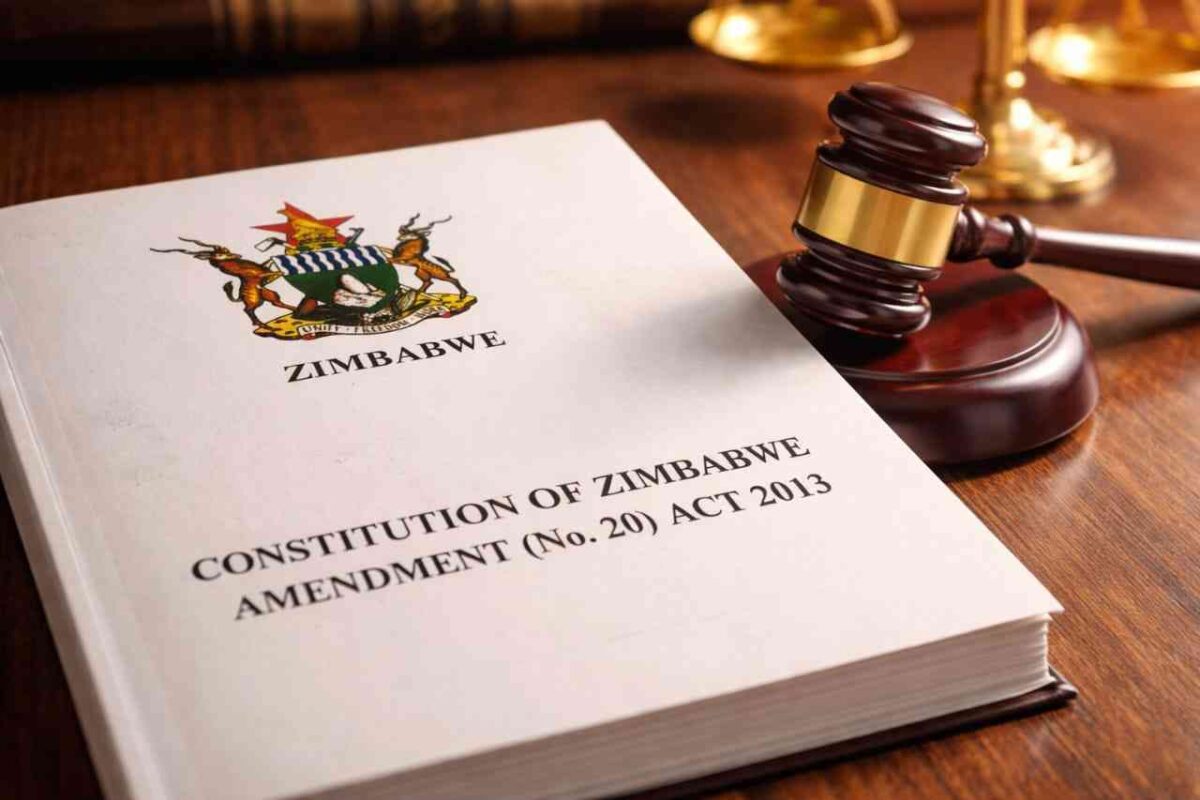
The National Assembly on Thursday passed CAB3 after its third reading, with 216 legislators voting in favour and 42 against, paving the way for significant changes to the country’s Constitution.
Speaking on This Morning on Asakhe, a Current Affairs programme hosted by CITE on X, opposition politician Pashor Sibanda said the amendments were designed to benefit political elites rather than ordinary Zimbabweans.
“One of the things that we must be honest about is that CAB3 is not for the people, and it is not coming from the people. It is purely for the ZANU-PF elites,” said Sibanda.
“Our people are not going to be voting for the President. It’s going to be a few people who take part in that process,” he said.
Sibanda questioned the constitutional model proposed under the bill, saying it creates an unusual concentration of power.
“Where else in the world have you seen Parliament elect a President and that President goes on to appoint other Members of Parliament? It’s only in Zimbabwe,” he said.
He warned that the reforms could create what he described as a “dangerous presidency”, where leaders could potentially prolong their stay in office through constitutional amendments rather than direct public endorsement.
Sibanda also questioned why such major constitutional changes were not being subjected to a referendum.
“If this is what the people want, why are they not taking it to a referendum?” he asked.
He said public resistance to the amendments could grow.
“Zimbabwe does not belong to ZANU-PF, and ZANU-PF is not Zimbabwe.”
However, constitutional lawyer and political commentator Kudzai Mutisi defended the amendments, arguing that elected representatives have a democratic mandate to make constitutional changes on behalf of citizens.
“The issue of whether people agree with these amendments was settled in the previous election,” Mutisi said.
He argued that representative democracy does not require citizens to vote directly on every major decision.
“Imagine if every time something needed to be changed, the whole country had to go for a referendum. That is not how a country functions,” he said.
Mutisi said elections are the primary mechanism through which citizens delegate authority to lawmakers.
“They represent the voice of the people, and that voice is expressed during elections,” he said.
He added that political parties that win elections should be allowed to implement their policies.
“If you fail to win, you should allow those who won to implement their manifesto,” he said.
Mutisi dismissed claims that CAB3 would disenfranchise citizens, noting that regular elections would still take place.
“We are not taking away the power of the people. We are not banning elections,” he said.
He argued that reducing frequent electoral processes could allow Zimbabwe to redirect resources toward development.
“We need to focus on development. That money can build hospitals and roads. We are a developing country, and we need to prioritise that,” he said.
Mutisi said concerns about disenfranchisement would only be valid if elections were abolished altogether.
“If CAB3 was banning elections outright, then there would be a strong argument that people are being disenfranchised, but that is not the case,” he said.
The bill remains one of Zimbabwe’s most divisive political issues, exposing deep disagreements over governance, constitutional reform and the balance between democracy and state efficiency.