“You leave your ego at home”: Inside fell running’s culture of community
Winner Gets Cake: After the Stickle Grind 650 in Great Langdale, runners and spectators gathered for a screening of a film by Rab and TCO. We spoke to the athletes about rivalry, community and why fell running keeps pulling them back to the hills.
 Black News
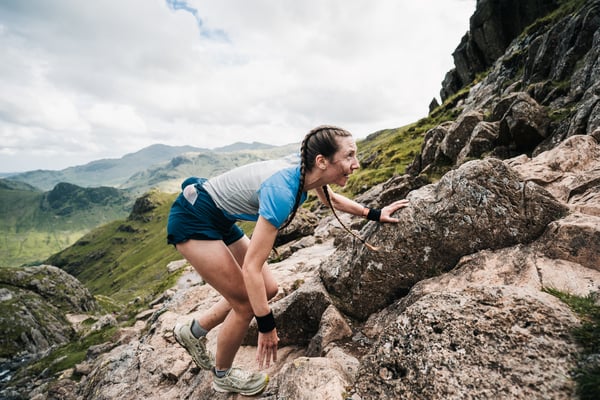
Winner Gets Cake: After the Stickle Grind 650 in Great Langdale, runners and spectators gathered for a screening of a film by Rab and TCO. We spoke to the athletes about rivalry, community and why fell running keeps pulling them back to the hills.
As dusk settled over Great Langdale, runners still caked in mud and spectators fresh off the fells drifted into Lanty Slee’s for a screening of Winner Gets Cake – TCO and Rab’s short film about a corner of British sport that’s as much about ritual and community as it is competition.
The screening followed the Stickle Grind 650, Lake District Sky Trails’ brutal vertical race: 2.4km of climbing and 650m of ascent straight up to Harrison Stickle – the sort of leg-shaking effort that gets close to the heart of fell running’s appeal. Technical and stripped back, it embodies the fell ethic: suffer now, socialise later. On the night, Rab athlete Sara Willhoit, who also features in the film, set a new course record.
Shot across a summer season of races in Kettlewell, Borrowdale and Kilnsey Crag, Winner Gets Cake follows the rivalry between Ben Rothery and Finlay Grant as they chase the English fell running championship. But beyond the competition, the film captures a world of post-race pints, river washes and people who keep returning year after year.
Following the screening, we spoke to Rab athletes from the fell running community about competition, camaraderie and why they keep coming back.
Read next: The wild, gruelling beauty of fell running
Steph Knapman, 29, Winchester
Fell running for six years
What keeps bringing you back to fell running? For people watching and thinking, why would you put yourself through this – what’s the appeal?
Steph: There were two words that came up a lot tonight. The first was simplicity – the raw side of running up and down a hill, then having a pint and washing off in the river with your mates afterwards. There aren’t big sponsorship deals attached to these things. You’re running for the pure love of it.
The other is community. Being able to do this with people you know well, and also meeting new people getting into the sport. I think the post-race coffee and cake is something everyone looks forward to.
You’ve been doing it for six years now. Have you noticed any changes in women’s participation? Does fell running ever feel inaccessible?
Steph: I think fell running is one of the better disciplines within trail and mountain running for attracting people from different backgrounds, including women, because generally it’s not that expensive to enter races, and that’s why you don’t get big cash prizes at the back.
You’ll see a lot of races with a good split between men and women on the start line. There’s definitely a desire to attract more people from different backgrounds and more women as well.
Read next: The rogue runners taking on New York state
Fell running often gets framed as highly competitive, but you’re talking a lot about community. Are those things mutually exclusive?
Steph: It’s funny because there is a huge community around it, but you’re also running against some of the fittest people in the country. That’s what makes it such a nice challenge when you’re standing on that line: you want to stretch yourself, but the people around you are also going to stretch you.
Then you come together at the end and share those stories: someone had a really good climb today, someone beat their PB from last year.
Do you think Winner Gets Cake captures anything about fell running that outsiders often miss?
Steph: Yeah, there’s a lovely rivalry in the film between Finn and Ben. They’re running uphill together and exchanging little jokes or words of encouragement, then they get to the top and it’s full gas down the hill.
There’s no holding hands across the finish line. You encourage people out there, but at the end of the day it’s still a race. The competition feeds into the community.
What was it like watching a film about your community while surrounded by the people in it?
Steph: This is the second time I’ve done the Q&A and presented the film. Both times the room’s been full of people who are really keen to ask questions and understand what’s changed in the sport over the years.
Ted in the film, for example, has been doing this for 20 years. One of the key things he talked about was how simple it is, and how that’s continued all the way through. It’s rooted in tradition and having a really strong, like-minded community around it, and you could see that in the room.
What would you hope someone completely new to fell running takes away from the film?
Steph: I’d hope they’d pick up the parachute and give it a go, because sometimes these things seem completely inaccessible, but when you watch a film like this, you realise no one’s doing it for the glory.
There’s a moment in the film where they say you don’t really know who the winner is. You have to leave your ego at home with these races because you’re going to get humbled. It’s there because you love running.
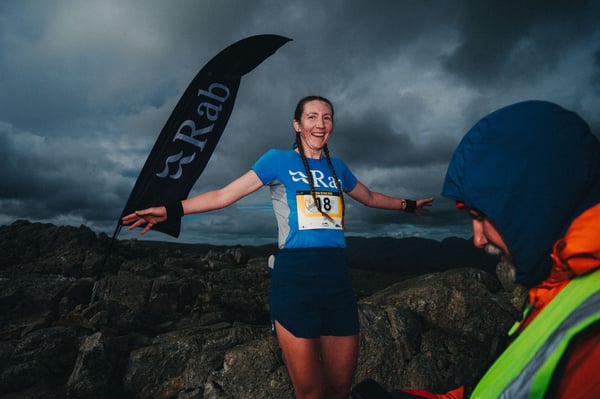
Sara Willhoit, 37
Started running in 2014
Harry Holmes, 34
Started running in 2014
Both featured in Winner Gets Cake
For people watching and thinking, why are you putting yourselves through this? What keeps bringing you back to these races?
Harry: It’s quite nice pushing hard. In the moment your legs are hurting and you’re feeling pretty rubbish, and then when you finish you think, “I could have pushed harder.” It’s proper type-two fun. Afterwards you look back and think: that was pretty good, wasn’t it?
Sara: I think it’s also the views at the top – for me that’s a big part of it.
The film shows the competition, but also the community around fell running. How do those fit together?
Harry: I’ve got an example of this. There was a race in Yorkshire a few years ago: I was in third place and Joe Baxter was running just ahead of me. He fell over. I stopped and made sure he was alright, and then I still went on to win the race.
People do look out for each other. They will then carry on, though. [laughs]
You’ve both been involved in the sport for over a decade. Have you noticed changes in participation, especially for women, or barriers that still exist?
Sara: I think there are things that can make it harder: caring responsibilities, pregnancies, post-pregnancy and things like that. That’s probably the biggest thing I notice. When I look back at old results lists, there were fewer women.
Harry: It’s usually around 20 percent women. I think there’s definitely a push to increase the numbers of women – an active push. I don’t know whether it’s actually happening.
What was it like being part of a film like this, and then watching it back with the community around you? Was it strange seeing yourselves on screen?
Sara: It’s hard to know what something like this is going to come out like. But it really did come across like how I experience the sport and that world of fell running.
Then again, it’s a short film, so there’s only so much that can be portrayed.
What would you hope someone new to fell running takes away from the film?
Sara: I’d like them to feel like it’s something they could get involved in.
I remember when I wasn’t a fell runner: I’d started doing parkruns and someone mentioned fell running and I didn’t actually even know what a fell was.
What attracted me was that it seemed informal and low-key – not flashy, just chilled out. But I also wanted to learn how to get around mountainous or hilly landscapes because I used to feel really out of place in them.
Harry: It’s just fun. I think that comes across well. There are loads of diverse, interesting characters in there. Diverse in the sense of personalities, it was admittedly fairly white.
But yeah – fun, and the people. That’s what makes it.
For updates on Rab athletes and upcoming events, follow Rab UK on Instagram. To watch Winner Gets Cake and keep up with future releases, head to Rab on YouTube.
Ella Glossop is Huck’s social editor. Follow her on Bluesky.
Buy your copy of Huck 83 here.
Enjoyed this article? Follow Huck on Instagram and sign up to our newsletter for more from the cutting edge of sport, music and counterculture.
Support stories like this by becoming a member of Club Huck.