Chinese vs traditional car brands in Namibia What changed in five years? Part 1
The Namibian vehicle market has changed significantly between 2021 and 2025. Five years ago, established Japanese, German, American and Korean brands dominated new-vehicle sales. Chinese brands were present, but they occupied a much smaller part of the market. By 2025, Chinese manufacturers had become a serious competitor. Their combined share reached 9.1% of Namibia’s new-vehicle […] The post Chinese vs traditional car brands in Namibia What changed in five years? Part 1 appeared first on The Namibian.
 Black News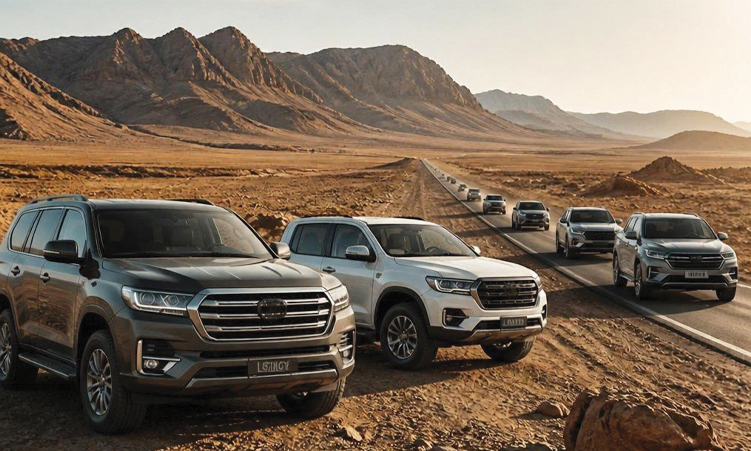
The Namibian vehicle market has changed significantly between 2021 and 2025.
Five years ago, established Japanese, German, American and Korean brands dominated new-vehicle sales. Chinese brands were present, but they occupied a much smaller part of the market.
By 2025, Chinese manufacturers had become a serious competitor. Their combined share reached 9.1% of Namibia’s new-vehicle market, compared with 7.5% in 2024. Chinese brands sold 1 320 vehicles in 2025, while Toyota alone sold 8 226.
The important point is that Chinese brands have not replaced traditional brands in Namibia. They have taken a growing share of a market that is still dominated by established manufacturers.
The Namibian market in 2021
Traditional brands controlled the market. In 2021, Namibia sold about 9 428 new vehicles.
Toyota was the clear market leader with 34.9%, followed by Volkswagen at 13.7%.
Nissan, Ford and Kia completed the top five. Together, those five brands accounted for 65.7% of all vehicles sold. Chinese brands were nowhere near the level they reached later in the decade.
The market was heavily influenced by established brands with long histories in Namibia.
Toyota, Volkswagen, Nissan and Ford already had large dealer networks, established parts supply, familiarity among buyers, strong resale markets, established relationships with banks and finance companies, and years of experience supplying vehicles for Namibia’s roads and working conditions.
This gave traditional brands a major advantage. Haval was already starting to make an impact and was the important exception.
The brand was already gaining ground in Namibia around this period, and, according to later market analysis, maintained about 4% market share from 2021 onward.
That is important because it shows that the Chinese-brand story in Namibia did not suddenly begin in 2025. The shift started earlier, with Haval establishing a foothold before other Chinese brands arrived in greater numbers.
2022: Chinese brands start getting attention
Haval showed that Chinese brands could compete. Namibia’s new-vehicle market recovered in 2022.
A total of 10 923 vehicles were sold, compared with 9 427 in 2021. That represented growth of about 16%. Haval’s sales increased by 24.9% during that year.
That mattered because it demonstrated that a Chinese manufacturer could compete successfully in Namibia rather than simply sell a few low-volume vehicles. At the same time, consumers were under increasing financial pressure. Vehicle prices were rising, interest rates were increasing, and household budgets were being squeezed.
Chinese manufacturers had an obvious advantage in this environment. Price and equipment became important. Chinese brands began attracting attention by offering combinations of competitive pricing, more standard equipment, longer warranties, modern SUV designs, and technology normally associated with more expensive vehicles.
Local analysts were already describing Chinese vehicles as competitive alternatives for price-conscious Namibian buyers.
This created the first serious question for established manufacturers: Could traditional brands continue charging a premium simply because buyers trusted the badge?
2023: The gap starts closing
Traditional brands were still comfortably ahead. By 2023, established manufacturers remained dominant, with Toyota continuing to lead Namibia’s passenger and commercial vehicle market.
During the first part of 2023, Toyota held 38.0% of the passenger vehicle market, while Volkswagen had 22.4%. Kia and Haval followed at 8.3% and 5.1%, respectively.
Haval was therefore still nowhere near Toyota’s overall position, but it had become a meaningful competitor. Haval became more than a niche alternative. Its growing presence was particularly important in SUVs and crossovers.
The brand’s Jolion and H6 models gave Namibian buyers alternatives to established vehicles in popular segments. The competition was no longer simply Toyota versus Volkswagen versus Nissan versus Ford.
It was becoming Toyota versus Volkswagen versus Ford versus Nissan versus Haval versus other emerging brands.
That increased consumer choice.
2024: Chinese brands gain a larger footprint
Chinese brands reached 7.5% of the market. The year 2024 was difficult for Namibia’s vehicle market.
Total vehicle sales fell to about 8 451 units, compared with 11 918 in 2023, but Chinese manufacturers continued gaining ground.
Their combined market share reached about 7.5% in 2024. This is an important distinction.
Chinese brands increased their market position even while the overall Namibian vehicle market contracted. That suggests their growth was not simply caused by a larger market.
They were winning customers from competing brands.
The post Chinese vs traditional car brands in Namibia What changed in five years? Part 1 appeared first on The Namibian.