Dance, Distance and Disability
Thankfully this was true. I felt included from the start. Often, I didn’t even have to ask for an easier variation of a movement because the teacher naturally provided it.
 Black News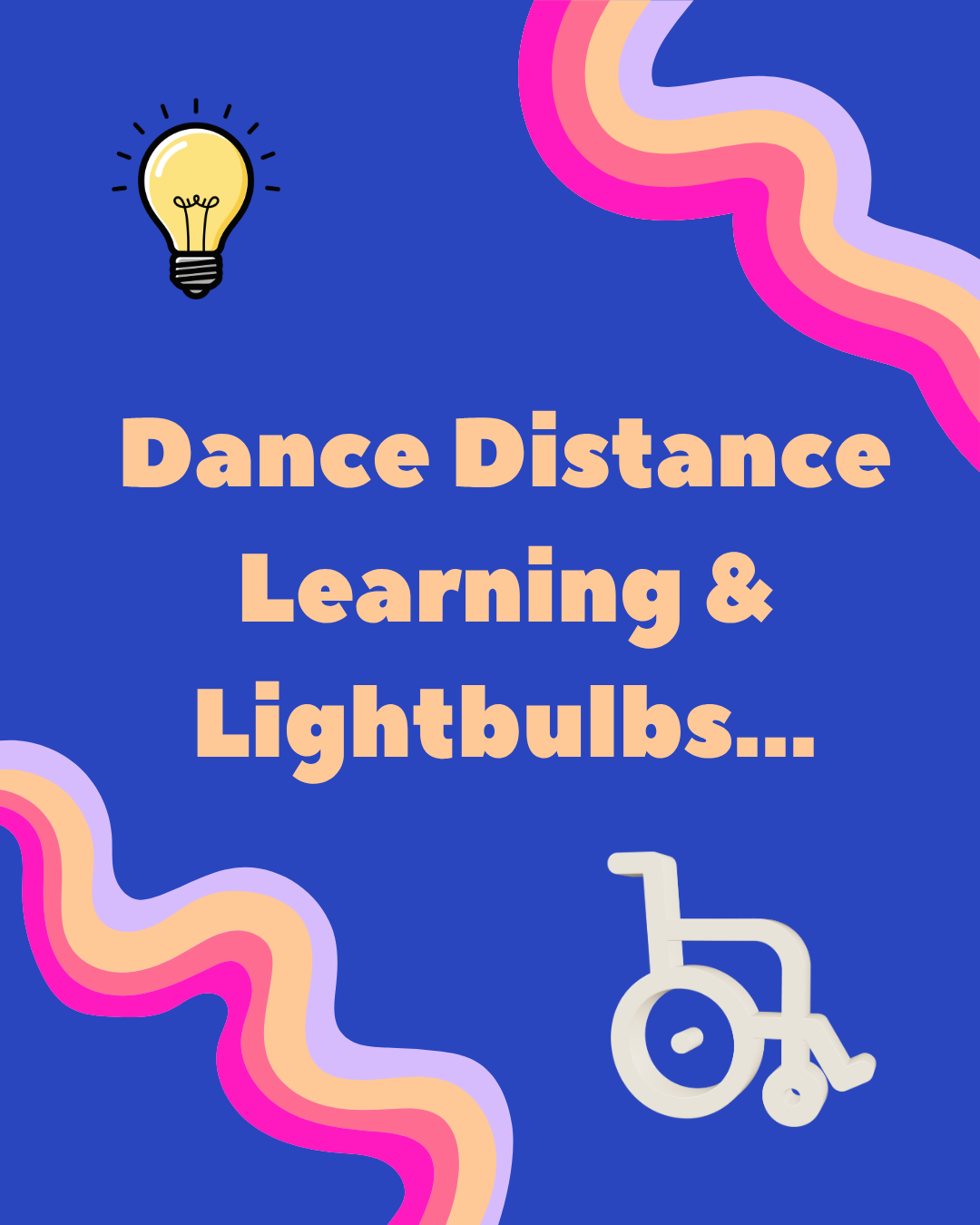
It’s been far too long since posting for DAO. It’s great to be back! I hope this post gives you an insight into what it is like to dance using a wheelchair.
Prologue Pointed Pain:
This may seem strange, but my chronic pain was the reason that I started to search for inclusive dance classes. I was struggling to maintain a set of exercises prescribed to me by my pain management team. After a few months, my routine began to feel lonely, repetitive and flat. Before I continue, I want to make it clear that this is not a piece of writing that proclaims a ‘cure’, I still have chronic pain and discussed potentially taking dance classes with my health care team beforehand. This is standard advice for anyone with long term health conditions and should always be adhered to. Being pain free was never an aim and is not a possibility for so many different reasons. I still take my medication as prescribed each day; the only aim was to remain as mobile as possible.
Disclaimers aside, I completed many internet searches. I looked for classes designed for wheelchair users or those who needed to complete exercise routines seated. At this point, it is worth mentioning that some wheelchair users can weight bare (meaning they can stand or walk a little) whilst others, like me, cannot. Additionally, I would be dancing in my everyday electric wheelchair (which is naturally more restrictive) and not a manual or custom sports wheelchair. Therefore, it was important that the live class had room to discuss adaptions or variations in chorography if I required it.
Chapter One: Dancing at a Distance.
By the end of June 2025, I had found my first class and was offered a free trial lesson. It took place online every other Monday. Even though I was hoping to find something locally, this scheduling was perfect. I would be able to ease myself back in slowly. I hadn’t taken any formal dance lessons since 2008. Even then, these weren’t completely accessible because they took place when I was in mainstream education as part of my A Level Performing Arts qualification. I was the only person in my school (at that time) using an electric wheelchair every day. Therefore, it was impossible not to feel like a spare part or spend sixty percent of the time just watching others at a distance. So, whilst these classes were not in person, I would be dancing while experiencing a different kind of distance. Plus, I was assured by my ‘soon to be’ first regular teacher that classes were very easy going and inclusive. There would never be any pressure to do any movements that were uncomfortable.
Chapter Two: Dancing to my Own Rhythm.
Thankfully this was true. I felt included from the start. Often, I didn’t even have to ask for an easier variation of a movement because the teacher naturally provided it. For example, when I first started lessons, I found it difficult to move my arms over my head repeatedly. I am naturally quite stiff in all my limbs due living with cerebral palsy. Therefore, I would complete the same number of repetitions as the group but in front of me. I used this approach until I felt able to do them above my head without it feeling physically uncomfortable, and like all dancers, I needed time to develop my flexibility. Also, because my electric chair is quite big and moves at a set speed, I could perform wrist rolls instead of turning the wheelchair.
I may have been physically distance from my classmates and my teacher, but I was present and engaged in healthy dance practice from day one. This was a huge advantage because I had no unhealthy techniques to break. Plus, classes turned out to be really enjoyable.
It didn’t take me long to recognise ‘the quirks’ of learning dance over Zoom. Such as, the internet lag, which causes the music to randomly slow down, and your left being someone else’s right; because Zoom sometimes acts as a mirror, not because you are wrong. However, when you do go wrong and you’re with a group of people that are learning the same sequence as you, it’s funny. Or when your teacher names a move to the new Ed Sheeran song; ‘screw in the lightbulb’, you can’t help but giggle. Dance classes became a space that was guaranteed to make me laugh, which, because I am a natural loner, isn’t something that happens regularly.
Chapter Three: Balance and Ballet.
Monday dance classes became such a positive part of my fortnight, I started to look around for another class. I found one that took place every Wednesday. I had a little more confidence and flexibility after several months of the Monday class. Naturally, I came across the same ‘quirks’, due to this class also being on Zoom, but was surprised to learn some of the fundamentals of ballet. For example, holding both arms in front of you like you are holding a large beach ball is known as first position. Holding both arms slightly above the head, palms down, with your hands slightly apart is fifth position. Like others in the Wednesday class, my legs remain static, but I can learn a ballet-based routine. Therefore, it probably won’t surprise you that my flexibility improved even further through this exercise. Ballet is probably my favourite style aside from contemporary. It slows my brain and body down, helps with my general stiffness and naturally looks polished. It has also helped with my general sense of balance.
Chapter Four: Here and Now.
I have been taking dance classes for almost a year now and I hope to keep dancing for many more to come. I have improved my mental and physical condition, made friends with others in the disability community and learned different types of chorography. Sometimes I even remember routines for weeks after I’ve started learning a new one. I have also done something I told myself I’d never be good enough to do, entered a dance competition! Specifically, an inclusive competition.
Importantly, it has different classes for a variety of dancers with different disabilities. For example, I entered the class for dancers who use an electric wheelchair to ensure I am judged fairly. This year the organisers offered a video entry option suitable for individuals like me who live far away from the competition location, so even though the live competition hasn’t taken place yet, my entry is in…Honestly, I’m excited to see what the judges think. I don’t expect to win anything, but I did construct all the chorography myself which is a completely new experience for me. So, no matter the result, as my first competitive piece, it will always hold a special place in my heart.
Thank you so much for reading this blog. I will let you know what the judges think of my dance piece and even share a clip or two when the competition is over.
If you have enjoyed this blog, or have any other questions please leave a comment below.