D.C. group brings Black women from the Civil War era to life
FREED (Female RE-Enactors of Distinction) is a non-profit organization of Black women who portray Black women from the Civil War era to honor their stories and contributions to the Union cause. The post D.C. group brings Black women from the Civil War era to life appeared first on AFRO American Newspapers.
 Black News


By D. Kevin McNeir
Special to the AFRO
In 2005, several Black women from the Greater Washington Area were asked by officials at Washington, D.C.’s African American Civil War Museum to serve as hostesses for an event.

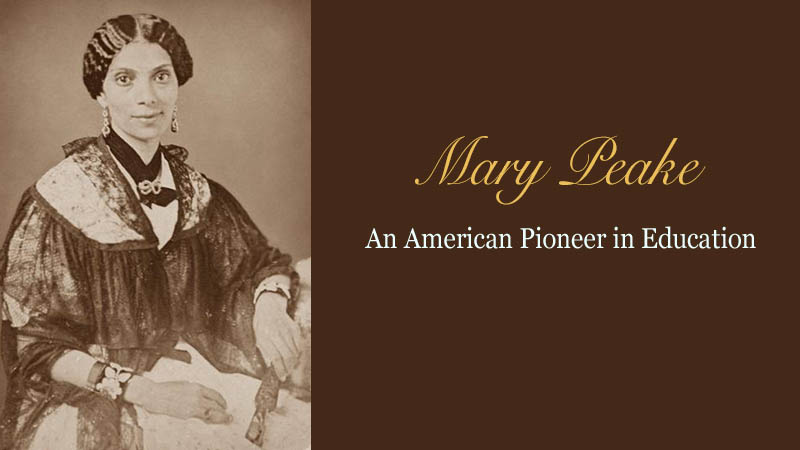
But instead of simply showing up in their Sunday best, the volunteers decided to don the personas of little-known Black women who were prominent during the Civil War era.
Dressed in garb commonplace for Black women during that time period, the hostesses made such an impression that they formed an organization, FREED (Female RE-Enactors of Distinction), that continues to make appearances at schools, businesses, private affairs and other organizations throughout the D.C area.
Joyce Bailey, 82, who was born in Freedman’s Hospital in the District and now lives in Greenbelt, Md., said joining the group has been one of the high points of her life.
“I portray Elizabeth Keckley, who was the dressmaker for Mary Todd Lincoln, the wife of former president Abraham Lincoln and who became Mrs. Lincoln’s confidante,” Bailey said.
“Elizabeth was a renowned dressmaker in those days, a Black woman, but well respected. Just think ‘Gone With the Wind.’ Those are the kinds of dresses she made.”
Bailey said the women collectively decided that they wanted to honor those whose stories are rarely told.
“We wanted to do more than talk about Sojourner Truth or Harriet Tubman,” she said, “because Black women were just as important to the cause for freedom and victory by the Union as Black soldiers. They were a lot more than cooks and caregivers. That’s the story we tell.”
Bailey was formerly the executive director of the Black Fashion Museum in D.C., which her mother originated in New York City. Its contents have since been transferred to the District and are housed as the Smithsonian’s National Museum of African American History and Culture.
She said history has long been important to her and she’s proud to continue sharing stories about African American culture.
“I only live a few blocks from the African American Civil War Museum and remember the day I went down there to volunteer,” Bailey said. “They were honoring the more than 200,000 Black men who fought in the Civil War. But more than that, they were honoring the Black women, some of whom even dressed as men so they could fight, who were part of the American story and legacy. I knew I had to be a part of that.”

Pat Tyson, 84, a native Washingtonian now living in Silver Spring, Md., worked for the Department of State before retiring. She said telling the history of our ancestors has been especially well received by children in the D.C. Public School system.
“I portray Hallie Quinn Brown, who was born in 1850 and died in 1949,” Tyson said. “She was a teacher, an author, a community activist and a club woman. In those days, women who wanted to work on a specific issue formed a club. She was determined to help her people rise from the dungeon of poverty and to be able to use their talents for the benefit of their families and their country.
“We’ve performed at churches, social groups and government agencies. Sometimes we run into children who have exhibited discipline problems in school. But once they see us dressed up, and then are allowed to touch some of the artifacts we bring with us, we have their undivided attention.”
Tyson said that on some occasions, FREED teams up with other local organizations, usually composed of men, who bring trunks full of Civil War artifacts – a real treat for the children.
“Visual aids really help,” Tyson said. “One time, a man opened his bag of tricks and took out a cap, a uniform and a ‘hard tack’, which was a replica of the kind of hard biscuit that the soldiers carried with them while in the field. Until they could find a tree with fruit or berries on plants, it served as the only food they had.”
Marcia E. Cole, a native Washingtonian who portrays Charlotte Smith, said she’s learned a lot since joining the ranks of FREED.
“Charlotte was a former slave who was one of the first women to propose a statue of Abraham Lincoln,” Cole said. “She was so grateful for being freed from slavery, that she reportedly donated $5 toward the monument of Lincoln that now stands in Lincoln Park. Black women did extraordinary things in those days, and their stories deserve being told.”
Bailey said it makes a difference – telling the stories of people that the history books routinely omit.
“Hollywood wants you to believe that Black women were only cooks or worked in the fields, or took care of little white babies, but were more than that,” Bailey said. “And while America’s leaders may want to erase or ignore our history, we’re making sure that people don’t forget the truth.”
The post D.C. group brings Black women from the Civil War era to life appeared first on AFRO American Newspapers.