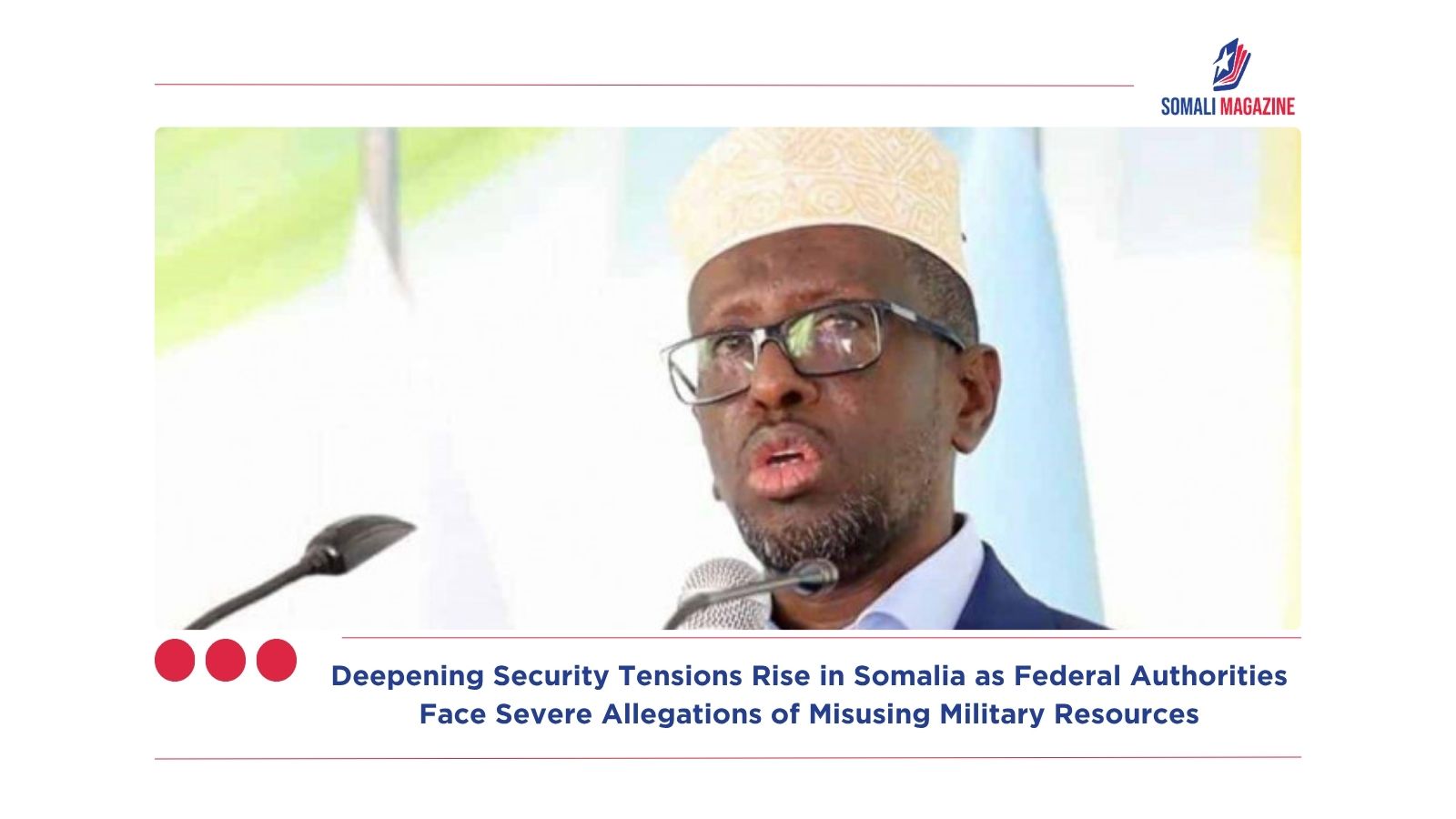
Allegations of misusing military resources have triggered intense public debate across the Horn of Africa as prominent opposition figures accuse the federal administration of misallocating critical defensive assets. Former Somali President Sharif Sheikh Ahmed issued a stern warning to the current leadership, asserting that diverting highly trained personnel and heavy weaponry away from vulnerable front lines undermines the collective effort to stabilize the territory. Addressing a high-level press briefing in the capital city of Mogadishu, the former head of state expressed deep institutional concern over what he characterized as a dangerous fragmentation of the national defense apparatus. According to his formal assessment, a substantial portion of the country’s tactical forces is increasingly being utilized to resolve localized political disputes and execute controversial domestic actions rather than addressing the primary insurgent networks threatening state sovereignty.
The critical pronouncement arrives amid a visible escalation of political tensions inside the regional administrative capital following successive days of armed friction between state forces and security blocks aligned with opposition candidates. Local independent reports indicate that heavily armed units engaged in brief firefights across several metropolitan neighborhoods, causing temporary transport suspensions and generating widespread anxiety among residents. Opposition leaders claim that federal authorities have routinely deployed advanced hardware, originally provided by international defense partners for anti-terrorism campaigns, to intimidate political rivals and suppress peaceful civic demonstrations. The government, however, has firmly rejected these accusations, maintaining that its tactical deployments are strictly intended to uphold public order, dismantle unauthorized militias, and enforce urban planning regulations against illicit land transactions.
Independent security analysts observe that the domestic controversy surrounding the potential of misusing military resources significantly complicates the broader offensive against the resilient al-Shabaab threat. With international peacekeeping contingents systematically drawing down their physical footprint, the institutional responsibility for safeguarding recovered agricultural zones falls squarely upon the Somali National Army. Critics emphasize that allowing political fragmentation to erode the morale of frontline troops risks forfeiting hard-won territorial gains, particularly along vital economic corridors in the southern provinces. Preserving the structural integrity of the security infrastructure remains a vital necessity as the country seeks to transition toward a fully autonomous security architecture capable of resisting asymmetric attacks without permanent foreign intervention.
As federal lawmakers and regional elders initiate mediation efforts to de-escalate the volatile standoff in Mogadishu, international stakeholders continue to urge all factions to exercise maximum operational restraint. Safeguarding the country’s democratic evolution requires a unified political settlement that synthesizes constitutional reforms with transparent defense management practices. Moving forward, establishing independent oversight mechanisms to verify that strategic defense assets are utilized exclusively for counter-insurgency operations will be essential to restoring institutional trust. The current administration faces growing pressure to address these profound governance concerns, balancing the immediate demands of domestic law enforcement with the overarching imperative of preserving national security across the fragile federal member states.


 Black News