Burkina Faso's administration asserts 100% state control over the new $68 million gold mine
The Captain Ibrahim Traoré-led government of Burkina Faso has officially awarded an industrial mining permit to its state-owned mining company, SOPAMIB, for the development of the Bouboulou gold project.
 Black News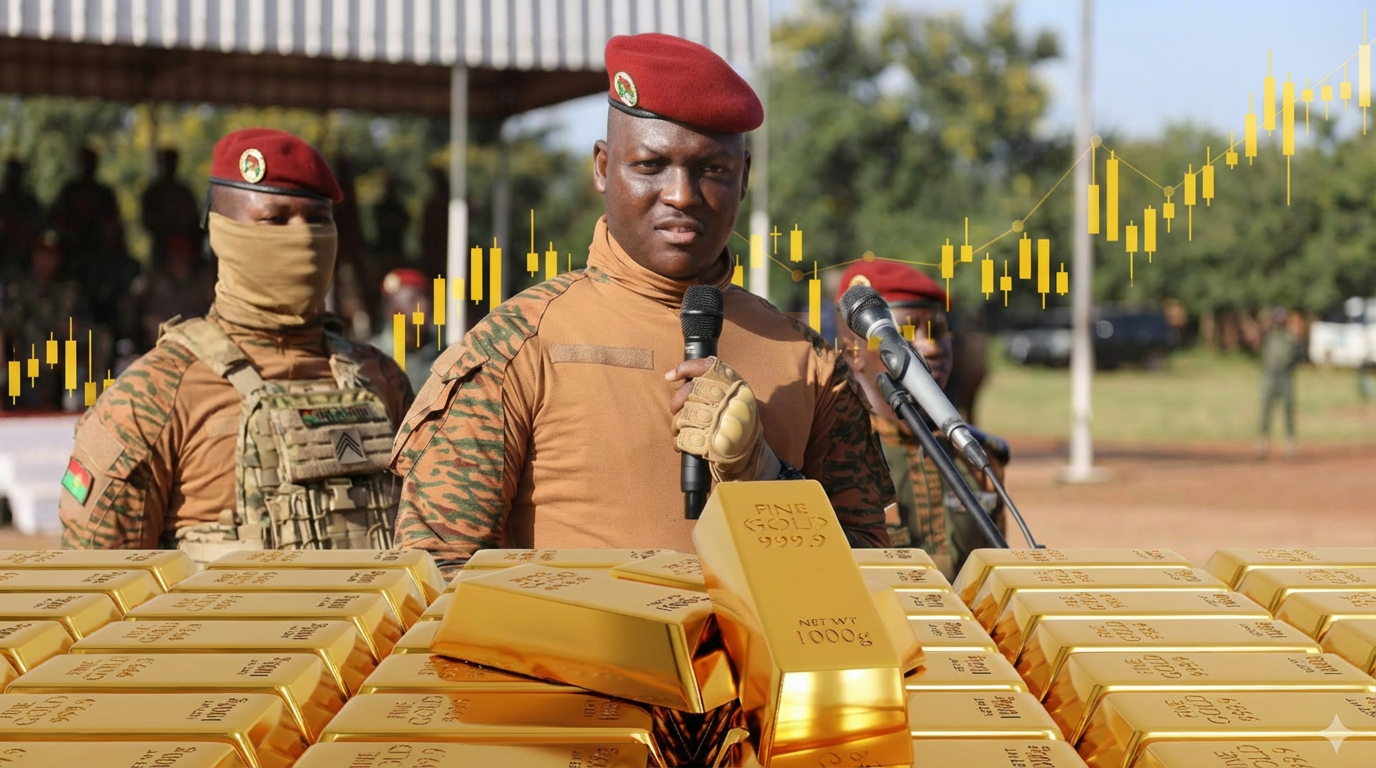
![Burkina Faso is increasing state and local ownership of its gold mines as President Ibrahim Traoré advances an economic sovereignty agenda to reduce foreign control over the country’s mining sector. [Getty Images/AI]](https://ocdn.eu/pulscms/MDA_/0aec3a9e39a43e8f81f09c42b2c7435c.jpg)
The Captain Ibrahim Traoré-led government of Burkina Faso has officially awarded an industrial mining permit to its state-owned mining company, SOPAMIB, for the development of the Bouboulou gold project.
- Burkina Faso's government granted its state-owned company SOPAMIB the mining permit for the Bouboulou gold project, marking a move away from foreign and private control.
- The project in north-central Yako commune is set to run for over 15 years, with an initial investment of approximately $56.1 million USD.
- Estimates suggest the site will produce more than 7 metric tons of gold and generate at least $68.4 million USD for public funds via fees and taxes.
- This state-led initiative is described as a structural revolution, aiming to maximize local benefit and reduce reliance on private and foreign companies.
The move signals a bold departure from decades of relying heavily on Western and private corporations to extract the country’s mineral wealth.
A "Revolution" in the mining sector
The Bouboulou gold extraction site is located within the north-central Yako commune and will operate under a specialized domestic subsidiary known as SOPAMIB Bouboulou.
Following an executive session on Thursday, July 9, 2026, Burkina Faso's Council of Ministers confirmed that the commercial venture is slated to span more than 15 years.
In a report by CBNC, it was noted that launching the project will require an initial capital allocation of 32 billion CFA francs, which equals roughly $56.1 million USD.
Over the course of its operational lifecycle, geological assessments estimate the site will yield upwards of 7 metric tons of gold.
The executive branch projects that this production volume will inject more than 39 billion CFA francs, or approximately $68.4 million USD, straight into public funds via baseline regulatory fees and local taxes.
Mines Minister Yacouba Zabre Gouba described the framework as a structural revolution because it deliberately breaks away from legacy concessions that left domestic mineral processing in private hands.
Furthermore, this financial estimate excludes upcoming corporate dividends, meaning the state treasury will secure even higher returns once total net profits are distributed to the government.
DON'T MISS THIS: Burkina Faso signs key nuclear safety treaty amid growing partnership with Russia
Previous operations
Before this state takeover, the Bouboulou concession was subject to typical private-led exploration frameworks common under former administrations.
Foreign junior mining firms, notably Canada's Nexus Gold Corp, previously held the exploration permits to map out and test the gold-rich trends across the property.
Under that traditional concession model, foreign private entities retained full operational control over project development while the Burkinabè state was relegated to collecting minor royalties and holding non-controlling equity stakes.
Traoré's drive for self-reliance
This operational pivot reflects the core economic philosophy of the Ibrahim Traoré administration, which prioritizes pan-African self-reliance alongside strict local content mandates.
Since assuming leadership, Traoré has focused on rewriting resource management laws to keep resource wealth within local borders.
By revitalizing SOPAMIB, an entity that sat largely inactive following its establishment in 2014, the government is systematically substituting international dependence with state-backed capacity.
The strategy ensures that resource profits are channeled back into civic infrastructure, regional security initiatives, and community development programs.
This legislative trajectory mirrors a broader shift across the Sahel. Neighboring countries, including Guinea, are steadily empowering their state enterprises to secure equitable shares of national mineral output.
By retaining full structural ownership of the Bouboulou development, Burkina Faso emphasizes a shifting regional reality where African nations transition from centers of foreign extraction to primary managers of their own natural assets.
Victor Awogbemila