Colombia Marks First Holiday Dedicated to Nation’s Patroness, the Virgin of Chiquinquirá
On Monday, Colombians will celebrate a new national holiday for the first time in the country’s history, honoring Our Lady of the Rosary of Chiquinquirá, the patroness of Colombia, in a commemoration that blends centuries of religious tradition with a renewed political symbolism under President-elect Abelardo De la Espriella. Established under Law 2578 of 2026, […]
 Black News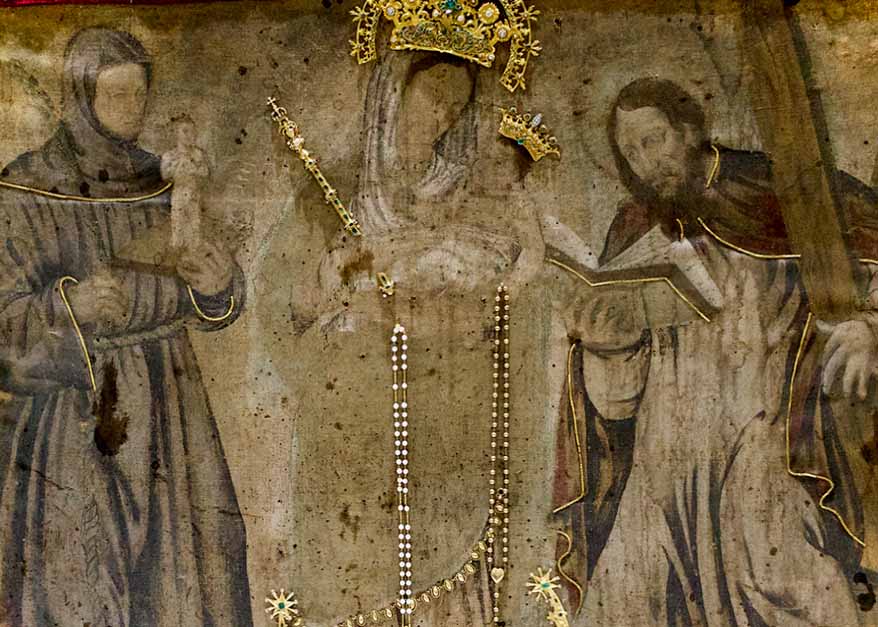
On Monday, Colombians will celebrate a new national holiday for the first time in the country’s history, honoring Our Lady of the Rosary of Chiquinquirá, the patroness of Colombia, in a commemoration that blends centuries of religious tradition with a renewed political symbolism under President-elect Abelardo De la Espriella.
Established under Law 2578 of 2026, the holiday moves the annual July 9 feast day to the nearest Monday under Colombia’s Emiliani Law, creating a long weekend dedicated to one of the nation’s most revered religious and cultural symbols. The legislation recognizes Chiquinquirá, in the central department of Boyacá, as a pilgrimage destination that has played a defining role in Colombia’s national identity.
The inaugural celebration comes at a moment of political transition.
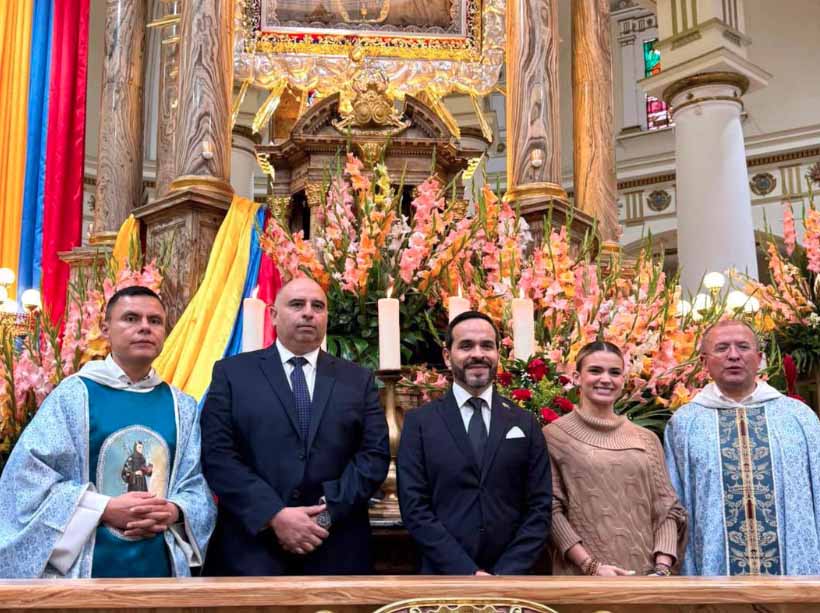
Only days before the first national observance, De la Espriella traveled to the Basilica of Our Lady of the Rosary of Chiquinquirá, where the celebrated image of the Virgin has drawn pilgrims for more than four centuries. In a message posted on social media following his visit on July 9, the president-elect said he had “placed in her hands our Homeland, Colombian families and our institutions,” expressing confidence that God would continue to guide the country’s future.
“May under her protection we find the strength, reconciliation and hope to build the Miracle Homeland that we all long for,” he wrote, referring to one of the central themes of his presidential campaign.
The pilgrimage formed part of what his office described as a broader “spiritual agenda” launched during his first week as president-elect. The initiative also included a visit to the Basilica of the Lord of Miracles in Buga, one of Colombia’s most important Catholic shrines, where he concluded his campaign before the June 21 presidential runoff by praying for “the healing of our nation” and what he described as a “spiritual battle against evil.”
For observers, the visits underscore De la Espriella’s willingness to publicly embrace Catholic symbolism in a country where nearly two-thirds of the population identifies as Catholic, according to recent surveys.
A miraculous image
At the center of Monday’s celebration is an image whose history stretches back to the earliest decades of Spanish rule in what was then the Kingdom of New Granada. According to historical accounts and the book Nuestras Señoras by Germán Izquierdo and Juan Esteban Duque, the original painting was commissioned around 1555 by Spanish encomendero Antonio de Santana. The work was painted by Alonso de Narváez and depicts the Virgin Mary flanked by Saint Andrew and Saint Anthony of Padua.
The unusually wide canvas led the artist to include the two saints on either side of the Virgin, creating the composition that remains instantly recognizable today. After years of neglect, the painting had nearly disappeared before an event Catholics regard as miraculous transformed it into Colombia’s most important Marian image.
In December 1586, according to tradition, Spanish settler María Ramos prayed before the deteriorated canvas in Chiquinquirá. An Indigenous woman named Isabel is said to have witnessed the faded image suddenly restored to its original brilliance while appearing to radiate light. The event marked the beginning of widespread devotion to the Virgin of Chiquinquirá and established the town as Colombia’s foremost Marian pilgrimage site.
Today, the painting remains inside the Basilica of Our Lady of the Rosary in Chiquinquirá under strict security and conservation measures. The image has left the sanctuary only on exceptional occasions, including the visits of Pope John Paul II in 1986 and Pope Francis in 2017.
Patroness of a nation
The Virgin of Chiquinquirá has occupied a unique place in Colombian history for nearly two centuries.
Pope Pius VII proclaimed her the Patroness of Colombia in 1829, while on June 9, 1919, the image was transported to Bogotá’s Plaza de Bolívar, where she was solemnly crowned Queen and Patroness of Colombia before President Marco Fidel Suárez, military authorities and Church leaders.
During the ceremony, she received an elaborate crown fashioned from 450 grams of gold, 140 emeralds and 78 diamonds – an enduring symbol of both Colombia’s Catholic heritage and its renowned emerald wealth.
The Basilica’s altar continues to display the image beneath the ornate crown, making it one of the country’s most recognizable religious treasures. The Archdiocese of Bogotá has encouraged Colombians to mark this year’s historic holiday with a special prayer asking the Virgin to protect the nation, strengthen faith and promote reconciliation.
Beyond Religion
Although rooted in Catholic devotion, the new holiday also reflects the government’s intention to recognize Chiquinquirá’s wider cultural significance. The law establishing the celebration describes the municipality as a national center of pilgrimage whose influence extends beyond religion into Colombian history, identity and cultural heritage.
Authorities expect over one million visitors this weekend to attend processions, Masses, concerts and artisan fairs, while tourism officials anticipate a surge in visitors to nearby destinations in Boyacá, among them, Raquira, Sutamarchán, Villa de la Leyva and Moniquirá.
For De la Espriella, whose presidency begins amid expectations of profound political change, the symbolism of the occasion is unmistakable. His public invocation of Colombia’s patroness—and his pledge that Boyacá “will be a protagonist in the reconstruction of Colombia”—signals that religion is likely to play a more visible role in the national narrative under his administration.
Whether viewed as an act of personal faith, a gesture toward national reconciliation or a reaffirmation of Colombia’s cultural traditions, Monday’s inaugural holiday marks the beginning of what may become one of the country’s defining annual civic observances, linking history, spirituality and national identity in a single celebration.
[contact-form]