Dr Ibrahim Bangura Urges Salone To Turn Peace Into Progress
“Sierra Leone must move beyond simply preserving its hard-won peace and focus on converting stability into tangible development, social justice, opportunity, and a stronger sense of national belonging”, renowned international peace scholar Dr Ibrahim Bangura has said. Dr Bangura made the call on Monday 21 September 2026, while delivering the keynote address […]
 Black News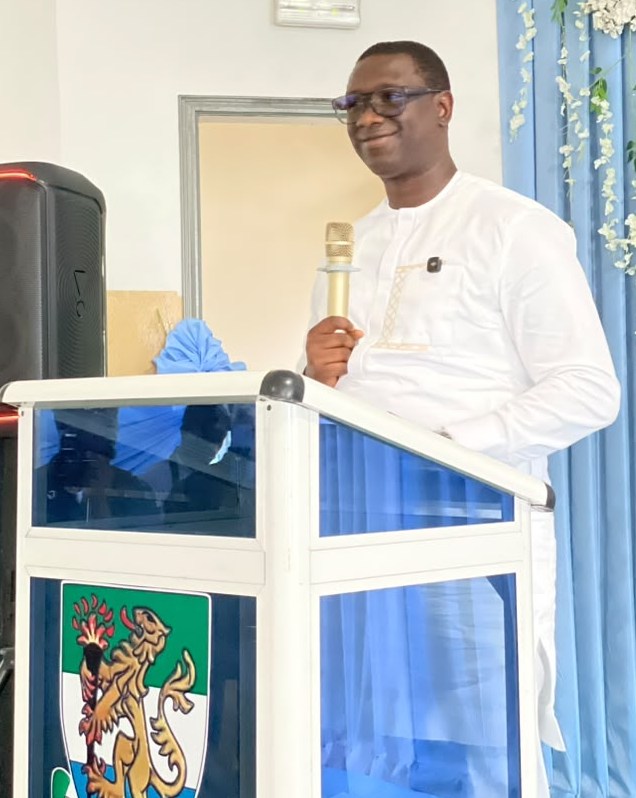
“Sierra Leone must move beyond simply preserving its hard-won peace and focus on converting stability into tangible development, social justice, opportunity, and a stronger sense of national belonging”, renowned international peace scholar Dr Ibrahim Bangura has said.
Dr Bangura made the call on Monday 21 September 2026, while delivering the keynote address at the International Day of Peace commemoration organised by the Peace Society of Fourah Bay College, University of Sierra Leone.
The event was held under the theme, “Peace Is a Choice We Make Every Day,” with Dr Bangura’s keynote focusing on “Building Sustainable Peace to Enhance Social Development.”
In a wide-ranging address, Dr Bangura argued that the real measure of peace should not be limited to the absence of armed conflict, but should be assessed by what citizens and institutions “are able to build because peace exists”.
He said peace should create the conditions for children to receive quality education, families to plan their futures, businesses to grow, institutions to strengthen and communities to rebuild trust. For Sierra Leone, he maintained, the central question was no longer simply whether the country could preserve peace, but what it would build with the peace it had secured.
Drawing on his experience in peacebuilding and field engagements, including in countries such as South Sudan, Dr Bangura stressed that sustainable peace ultimately had to be people-centred. He noted that peace agreements could be negotiated at the highest political level, but their success depended on whether ordinary citizens saw themselves in the peace process, felt heard and experienced tangible improvements in their lives.
He further argued that security measures alone could not guarantee lasting peace, stressing the need to connect disarmament and reintegration with education, livelihoods and economic opportunity, while linking security with justice and peacebuilding with access to essential social services.
Dr Bangura identified justice, opportunity, inclusion, strong institutions and social cohesion as critical foundations for sustainable peace. He cautioned that economic growth could still generate grievances if citizens believed that opportunities, justice and public resources were distributed unfairly.
He, therefore, challenged policymakers and citizens to ask not only how much development the country was achieving, but also who were benefiting and who were being left behind, particularly young people, women, persons with disabilities and communities outside the centres of national development.
Reflecting on Sierra Leone’s civil war, he urged the country to remember its painful history without remaining imprisoned by it. He said the lessons of conflict should be used to strengthen institutions, address exclusion and unresolved grievances, and prevent future generations from repeating the mistakes of the past.
The peacebuilding practitioner also made a strong appeal for responsible democratic citizenship, particularly in an increasingly polarised information environment. He said Sierra Leoneans must learn to disagree without dehumanising one another and warned against allowing ethnicity, regional identity or political affiliation to determine how citizens view their fellow Sierra Leoneans.
He urged citizens to verify information before sharing it, noting that misinformation and manipulated content could inflame tensions both online and offline.
Turning particularly to young people, Dr Bangura rejected the tendency to describe them merely as “leaders of tomorrow,” saying they were already citizens and important agents of peace and social transformation.
He called for greater investment in education, skills, employment and enterprise, alongside meaningful opportunities for young people to participate in decisions affecting their lives. He also encouraged the younger generation to think critically, question information, listen to divergent views and resist inheriting divisions that could constrain their future.
For Fourah Bay College, Dr Bangura challenged the academic community to deepen the institution’s contribution to conflict prevention, early warning, mediation, peace research and youth leadership. He argued that Sierra Leone’s own experience of conflict and peacebuilding constituted an important body of knowledge that should be studied, applied and shared, while also contributing to wider peace and stability efforts across West Africa.
The occasion carried a personal significance for Dr Bangura, as September 21 also marked his birthday. Reflecting on the coincidence, he said birthdays provided an opportunity not merely to count years but to consider what had been learned, whom one had served and what one had helped to build.
He used that reflection to frame a broader national challenge, saying that after more than two decades across academia, peacebuilding, governance, human rights, security and development, he had come to regard the improvement of the human condition as the ultimate purpose of knowledge, leadership and institutions.
In his concluding remarks, Dr Bangura called for a Sierra Leone in which diversity became a source of strength rather than division, institutions earned public trust, development reached communities and citizens could genuinely feel that they belonged to the country and had a stake in its future.
He said the country’s next challenge was to demonstrate not merely that a nation could emerge from devastating conflict and rebuild, but what a nation could build with peace.
“Peace is not simply something we inherit. It is something we build, protect and renew,” Dr Bangura said, urging Sierra Leoneans to choose dialogue over dehumanisation, inclusion over exclusion, justice over vengeance, evidence over misinformation, civic responsibility over indifference and opportunity over hopelessness.