Eritrea’s “Low-Cost” Destabilization Strategy Poses Serious Security Threat: Getachew Reda
US embassy urges dialogue in Tigray Eritrea’s primary security threat to Ethiopia no longer lies in conventional warfare but in organizing, financing, and coordinating armed groups operating inside the country, says Getachew Reda, advisor to the Prime Minister and former leader of the Tigray Interim Administration. Speaking at the Annual National Security Conference of the […]
 Black News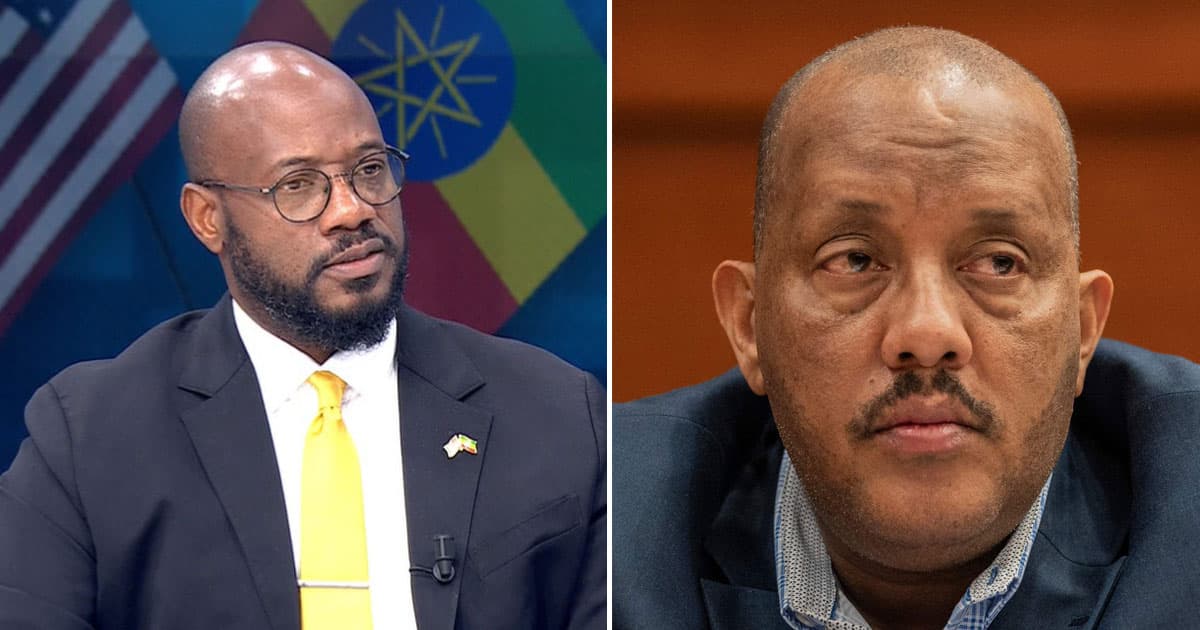
US embassy urges dialogue in Tigray
Eritrea’s primary security threat to Ethiopia no longer lies in conventional warfare but in organizing, financing, and coordinating armed groups operating inside the country, says Getachew Reda, advisor to the Prime Minister and former leader of the Tigray Interim Administration.
Speaking at the Annual National Security Conference of the Ethiopian National Defense College on June 25, Getachew argued that the greatest danger facing Ethiopia is the deliberate exploitation of its internal divisions.
He specifically mentioned the Eritrean government as an agitator, noting that while the country lacks the demographic, economic and military capacity for sustained direct conflict, it continues to pursue “a low-cost strategy of destabilizing Ethiopia” through proxy forces.
“The national security threat that Eritrea poses to Ethiopia does not require extensive analysis. In practice, it has repeatedly demonstrated itself across almost generations. In my view, the greatest threat is its effort to organize disgruntled and rebellious forces within Ethiopia so that there can never be any stability in the country,” said Getachew.
According to the advisor, Eritrea has increasingly relied on indirect methods rather than conventional military confrontation.
“Right now, if you observe carefully, because they prefer cheap methods,” he said, “Eritrea will not openly send troops to support directly. Instead, they send heavy weapons operators, mechanized trainers, and specialists. Their entire approach is low-cost implementation.”
He further alleged that Eritrea intends to employ multiple armed organizations simultaneously.
“Because Isaias [Afwerki] has long experience in cheaply implementing his objectives, he will continue trying through proxies: Fano, Shene, Benishangul movements, and countless other groups, what foreigners call ‘alphabet soup’ movements. The effort is to destabilize Ethiopia using all these fragmented actors,” said the advisor.
He argued that the country’s response should focus first on addressing domestic vulnerabilities rather than concentrating exclusively on external threats.
“Our weakness is the only factor that can become a strength for all hostile forces including Eritrea,” he said, “therefore, we must focus on fixing our own internal issues.”
He cautioned against assuming that an adversary’s weakness automatically strengthens Ethiopia.
The adviser said the security assessment should be viewed within a broader historical context, arguing that Ethiopia’s handling of Eritrea has repeatedly shaped the country’s political trajectory over the past century.
“As a starting point,” he said, “in our recent history, in what we call the last hundred years of our history, the rise and fall, the coming and going, of Ethiopian governments has had a direct connection with how they handled the Eritrean question.
The path Emperor Haile Selassie’s government took in attempting to resolve the Eritrean question contributed to its downfall. The process followed by the Derg government in trying to resolve the Eritrean question also greatly contributed to its collapse. Likewise, the approach pursued by the EPRDF government regarding Eritrea and its relationship with Eritrea also made a major contribution to its own downfall.”
According to the advisor, Ethiopia’s relationship with Eritrea extends beyond bilateral relations into a broader question of national survival.
“At the present time, our relationship with Eritrea is not merely a direct national security issue. Beyond the relationship itself, and beyond the character of the Eritrean government, history also shows that the process through which we respond to the Eritrean question is tied to our overall national existence.”
The advisor turning to Eritrea’s internal situation argued that the country faces severe structural challenges affecting its demographic, economic and political future.
“The current situation is this,” he said. “Eritrea lacks the capacity to sustain itself militarily. It has no economy. Diplomatically, it is isolated. Demographically, it is in crisis. Politically, perhaps it is best not even to discuss it.”
He also claimed that Eritrea’s demographic situation had become an existential challenge.
“The Eritrean state itself has fallen into a crisis,” he said. “Many people look at this demographic crisis, it is an existential crisis. Only the elderly are left inside Eritrea.”
“Currently, 30 percent of all African refugees in Europe are Eritreans. When you hear that 30 percent of refugees come from this tiny nation out of 54 African countries, it shows that you cannot sustain this country on a Sahel mentality for long,” he added, referring to migration.
Getachew argued that Eritrea’s economy had effectively ceased functioning.
“As I said earlier,” he stated, “‘Eritrean economy’ is an oxymoron. Eritrea has no economy. It is a country run according to the wishes of one man, used for contraband and smuggling activities. As a country, it has no universities, no factories, no industrial activity worth mentioning.”
He also offered a long-term assessment of Eritrea’s political future following President Isaias Afwerki.
“Personally, I believe that after President Isaias is gone, Eritrea will not continue as a country. There is no remaining material basis capable of sustaining it as a state.”
Getachew, discussing Ethiopia’s diplomatic posture, called for a distinction between Eritrea’s government and its people.
“Our diplomatic efforts must become stronger. We must work to isolate the Eritrean government, I mean the Eritrean government, not the Eritrean people. Any arrangement that benefits the Eritrean people can be pursued because the Eritrean people are our friends.”
On a related note, on Friday, the US embassy in Addis Ababa issued a statement urging dialogue and the implementation of the Pretoria Agreement as tensions continue to flare in Tigray.
“Those who are actively undermining peace processes must urgently cooperate with efforts led by the African Union to promote dialogue,” reads the statement.
Last week, the US State Department announced visa restrictions of hardline members of the TPLF and their immediate family members in response to clashes with federal forces that have reignited concerns over the return of a full-blown conflict to the region.