EU, Gambia strengthen cooperation through Interreg MAC projects
The launch event, held on Wednesday in Banjul, brought together a wide mix of stakeholders, government officials, EU representatives, Spanish and Canary Islands delegations, development partners, and academia. The programme’s structure includes multiple funding calls. The first call allocated 60% of available financing, while a second call focused on capitalisation projects built on results from the 2014–2020 programme cycle. A third call is currently under evaluation, and a fourth joint call combining EU funding instruments is expected in 2026. A special €10 million capitalisation window will also help maximise lessons learned from previous projects, particularly in climate resilience. Director General for Relations with Africa of the Government of the Canary Islands, Luis Padilla, described the event as a major milestone, particularly because it is the first time The Gambia is fully participating in this Interreg MAC cycle. The programme connects the Canary Islands, Madeira, and the Azores with West African countries to support joint development efforts. He underscored that with an overall budget of about €200 million, the programme focuses on innovation, climate action, governance, and migration and mobility – basically all the big issues that no single country can solve alone, no matter how optimistic the policy documents sound. Deputy Head of Mission EU delegation to The Gambia, Raphael Brigandi, explained that migration is not a new phenomenon. “It is as old as humanity itself,” he said, adding it must be properly managed through cooperation and policy coordination. “The projects such as COMPASS, AGAMENON, and SEIMLab were highlighted as practical tools to support safer migration, reduce risks associated with irregular routes, and build skills for young people, especially through vocational training and education,” he added. Raphael also stressed that while migration can be challenging, it can also be beneficial when managed properly, contributing to both sending and receiving countries especially in the context of Europe’s ageing population. “RENATURMAC in particular was presented as a driver of sustainable tourism, linking environmental protection with job creation. The idea is simple: protect natural resources, attract visitors, and create income for local communities preferably without turning paradise into a parking lot, he said. Raphael noted that other initiatives, such as ADAPTaRES WATER, will focus on improving water management and climate resilience, while the SMART MAC initiative aims to boost digital skills, innovation, and entrepreneurship among young people. Charge d’Affaires, Embassy of Spain in The Gambia, Violeta Insa, emphasised on the strong tourism potential the country holds, noting its natural beauty, climate, and stability. She stressed that experience sharing between Spain and The Gambia could help strengthen the sector and create more jobs, especially for young people. Permanent Secretary Ministry Of Finance and Economic Affairs, Lamin Singateh, mentioned that the initiative is a “window of opportunity” for national development. He noted that several Gambian institutions are already benefiting under the second call for proposals, while more projects are currently under evaluation. Singateh also highlighted that the programme aligns with The Gambia’s National Development Plan (2023–2027), particularly in areas such as employment, trade, and sustainable development.
 Black News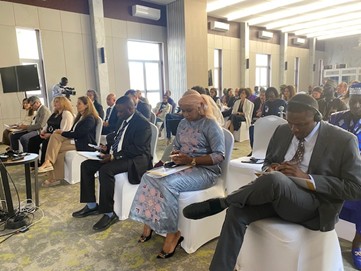


The launch event, held on Wednesday in Banjul, brought together a wide mix of stakeholders, government officials, EU representatives, Spanish and Canary Islands delegations, development partners, and academia.
The programme’s structure includes multiple funding calls. The first call allocated 60% of available financing, while a second call focused on capitalisation projects built on results from the 2014–2020 programme cycle.
A third call is currently under evaluation, and a fourth joint call combining EU funding instruments is expected in 2026. A special €10 million capitalisation window will also help maximise lessons learned from previous projects, particularly in climate resilience.
Director General for Relations with Africa of the Government of the Canary Islands, Luis Padilla, described the event as a major milestone, particularly because it is the first time The Gambia is fully participating in this Interreg MAC cycle. The programme connects the Canary Islands, Madeira, and the Azores with West African countries to support joint development efforts.
He underscored that with an overall budget of about €200 million, the programme focuses on innovation, climate action, governance, and migration and mobility – basically all the big issues that no single country can solve alone, no matter how optimistic the policy documents sound.
Deputy Head of Mission EU delegation to The Gambia, Raphael Brigandi, explained that migration is not a new phenomenon. “It is as old as humanity itself,” he said, adding it must be properly managed through cooperation and policy coordination.
“The projects such as COMPASS, AGAMENON, and SEIMLab were highlighted as practical tools to support safer migration, reduce risks associated with irregular routes, and build skills for young people, especially through vocational training and education,” he added.
Raphael also stressed that while migration can be challenging, it can also be beneficial when managed properly, contributing to both sending and receiving countries especially in the context of Europe’s ageing population.
“RENATURMAC in particular was presented as a driver of sustainable tourism, linking environmental protection with job creation. The idea is simple: protect natural resources, attract visitors, and create income for local communities preferably without turning paradise into a parking lot, he said.
Raphael noted that other initiatives, such as ADAPTaRES WATER, will focus on improving water management and climate resilience, while the SMART MAC initiative aims to boost digital skills, innovation, and entrepreneurship among young people.
Charge d’Affaires, Embassy of Spain in The Gambia, Violeta Insa, emphasised on the strong tourism potential the country holds, noting its natural beauty, climate, and stability.
She stressed that experience sharing between Spain and The Gambia could help strengthen the sector and create more jobs, especially for young people.
Permanent Secretary Ministry Of Finance and Economic Affairs, Lamin Singateh, mentioned that the initiative is a “window of opportunity” for national development. He noted that several Gambian institutions are already benefiting under the second call for proposals, while more projects are currently under evaluation.
Singateh also highlighted that the programme aligns with The Gambia’s National Development Plan (2023–2027), particularly in areas such as employment, trade, and sustainable development.